

Key Points
Balance furniture placement throughout the room for an optimal result.
Tailor furniture layout to suit your space and lifestyle.
Anchor larger pieces against the wall and float smaller pieces to create flow.
I read this article HERE. By Kristin Hohenadel
Home decorators often tend to push every piece of furniture against the walls in a misguided effort to create a more spacious look and feel. But furniture layout is a balancing act that requires more finesse.
We asked a designer to explain why lining your walls with furniture never works—and how to arrange furniture correctly for an inviting space that flows well and is visually pleasing.
Meet the Expert
Laura Brophy is principal designer and creative director at Laura Brophy Interiors.
Should Furniture Touch Walls?
:max_bytes(150000):strip_icc():format(webp)/DBurnsInteriorsBedroomAccentWall-9d758b6b1978473e9c98ce68acbc0c1e.jpg)
“Absolutely,” says interior designer Laura Brophy. “Design isn’t about hard rules, it’s about balance. A bed can sit against a wall if it anchors the room beautifully, or a console can live along a wall when it creates a grounding moment.”
But even in smaller spaces, furniture should be arranged to create an airy feel rather than be crowded together.
“In tighter rooms, it’s perfectly fine for a sofa to brush the wall,” Brophy notes, “just make sure there’s breathing room somewhere else so the space doesn’t feel static. The key is intention. If it touches, it should feel purposeful, not like default placement.”
Want more design inspiration? Sign up for our free daily newsletter for the latest decor ideas, designer tips, and more!
Create Balance and Flow
:max_bytes(150000):strip_icc():format(webp)/LauraBrophyInteriors-5a671d5a2bcb471da900f862e69df398.png)
If your instincts are telling you to push every piece of furniture up against the wall to create a more spacious feel, ignore them in favor of a more balanced approach.
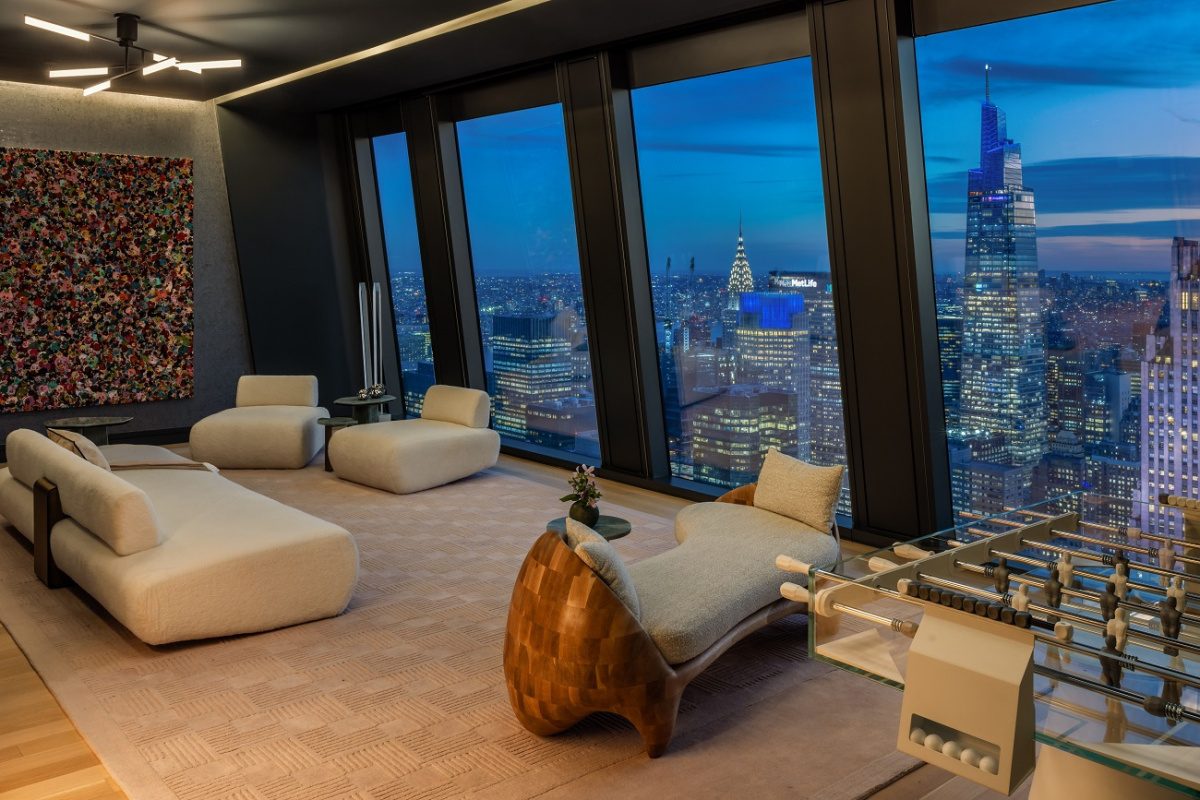
Floating furniture is crucial in open-plan spaces to create distinct zones and organize the space. A long, rectangular living room will resemble a bowling alley if you push everything up against the walls, rather than breaking up the linear proportions and allowing the eye to move naturally around the room.
“When everything is lined up along the perimeter, you lose the energy of the room,” Brophy explains. “Bringing pieces inward can create conversation, intimacy, and flow. It’s how you make a space feel designed. I always say, let your furniture talk to each other.”
When everything is lined up along the perimeter, you lose the energy of the room.
How to Arrange Furniture
:max_bytes(150000):strip_icc():format(webp)/DesireeBurns_Boston_1Franklin_1-7ec6e4ed3ec147e9971d7a61feb3eb42.jpg)
Before you start laying out furniture, Brophy suggests asking yourself how you want to live in the space.
“Do you want conversation, comfort, or flexibility?” she says. “Float pieces where they naturally form connection points. Create pathways that invite movement, and always think in layers—rugs to define zones, side tables to hold a moment, lighting to pull it all together.”
:max_bytes(150000):strip_icc():format(webp)/LauraBrophyInteriors-8f37aa5885804fabbd5f17bb59632327.jpeg)
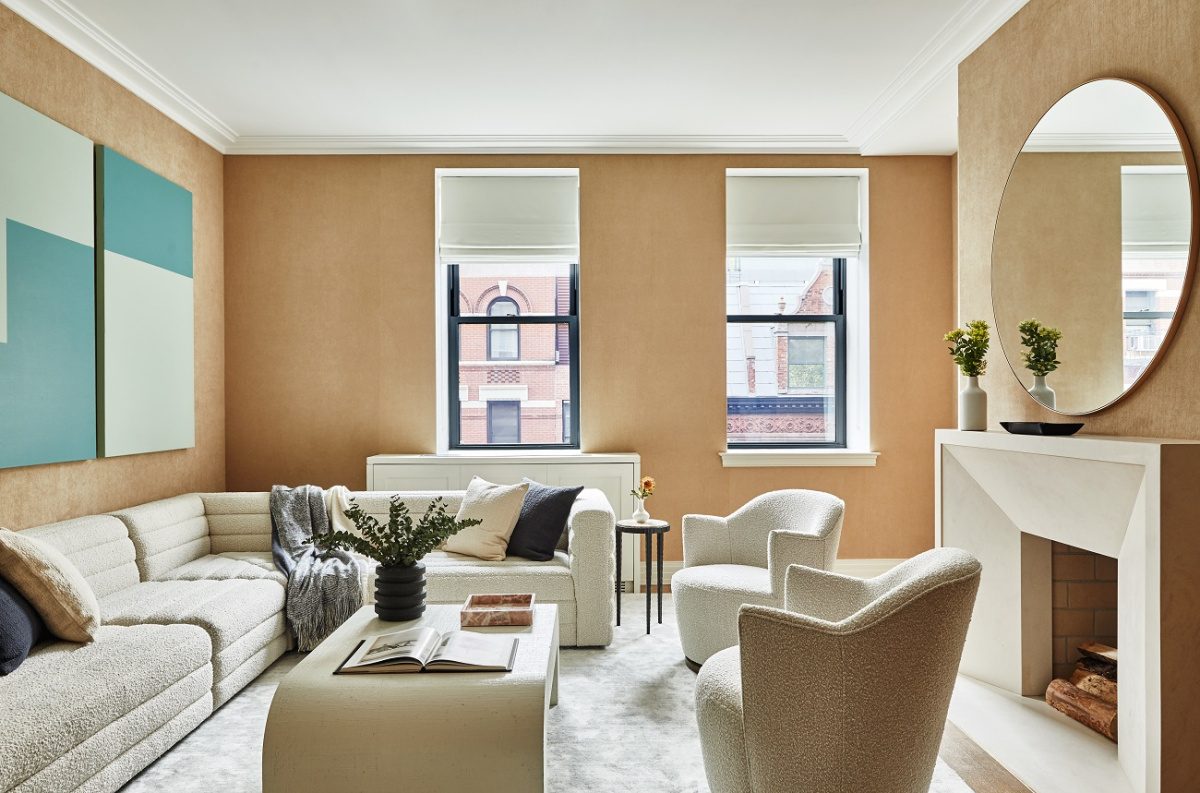
This could mean setting up a conversation area by placing a sofa against the wall and arranging a pair of armchairs with a small side table opposite and a coffee table in between. Or positioning a play table for kids in the middle of a playroom and a seating area for adults with armchairs and a small table nearby.
In a dining room, balance a central dining table and chairs with a buffet against the wall to create a focal point while leaving plenty of room around the table to allow people to move in and out.
Install a reading nook in the bedroom with a comfortable armchair hovering in the corner alongside a small side table, and a floor lamp that will create a second zone and make it feel more functional and cozy.
“The goal is to create harmony between function and feeling,” Brophy says. “When it’s right, you can sense it the moment you walk in.”
Got Questions? The Caton Team is here to help.
Cell| Sabrina 650.799.4333 | Susan 650.796.0654 | EMAIL | WEB | BLOG
We love what we do and would love to help you navigate your sale or purchase of Residential Real Estate. Please reach out for a personal consultation. Please enjoy our free resources below and get to know our team from our TESTIMONIALS.
Effective. Efficient. Responsive. The Caton Team 🏡
How Can The Caton Team Help You?
TESTIMONIALS | HOW TO SELL | VIRTUAL STAGING | A GUIDE TO BUYING | BUYING INFO | MOVING | TRUST AGREEMENTS | HEALTH CARE DIRECTIVES | TESTIMONIALS










Get exclusive inside access when you follow us on Facebook & Instagram
TESTIMONIALS | HOW TO SELL | VIRTUAL STAGING | A GUIDE TO BUYING | BUYING INFO | MOVING | TRUST AGREEMENTS | HEALTH CARE DIRECTIVES | TESTIMONIALS
Got Real Estate Questions? The Caton Team is here to help.
We strive to be more than just Realtors – we are also your home resource. If you have any real estate questions, concerns, need a referral, or some guidance – we are here for you. Contact us at your convenience – we are but a call, text, or click away!
The Caton Team believes, in order to be successful in the San Francisco | Peninsula | Bay Area | Silicon Valley Real Estate Market, we have to think and act differently. We do this by positioning our clients in the strongest light, representing them with the utmost integrity, while strategically maneuvering through negotiations and contracts. Together we make dreams come true.
A mother and daughter-in-law team with over 35 years of combined local Real Estate experience and knowledge – wouldn’t you like The Caton Team to represent you? Let us know how we can be of service. Contact us any time.
Cell | Sabrina 650.799.4333 | Susan 650.796.0654 | EMAIL | WEB| BLOG
The Caton Team – Susan & Sabrina
A Family of Realtors
Effective. Efficient. Responsive.
What can we do for you?
Website | The Caton Team Testimonials | Our Blog – The Real Estate Beat | Search for Homes | Facebook | Instagram | HomeSnap | Pinterest | LinkedIn Sabrina | Photography | Photography Blog





Berkshire Hathaway HomeServices – Drysdale Properties, Redwood City Ca.
DRE # | Sabrina 01413526 | Susan 01238225 | Team 70000218 | Office 01499008
The Caton Team does not receive compensation for any posts. Information is deemed reliable but not guaranteed. Third-party information not verified.


:max_bytes(150000):strip_icc():format(webp)/SOS_PalmSprings0237_HDR-760448ef77fd44b198cd34c373fb1ffb.jpg)


:strip_icc():format(webp)/NozDesign_PurpleRoom-1_preview-932f7fb192dd40659018abe10c566c59.jpg)
 Carmel Brantley
 David Tsay
 William Waldron
 Alison Gootee for VERANDA
 Annie Schlechter
 Max Kim-Bee
 Douglas Friedman
 Annie Schlechter for VERANDA
 Annie Schlechter

 The Real Estate Beat
You must be logged in to post a comment.