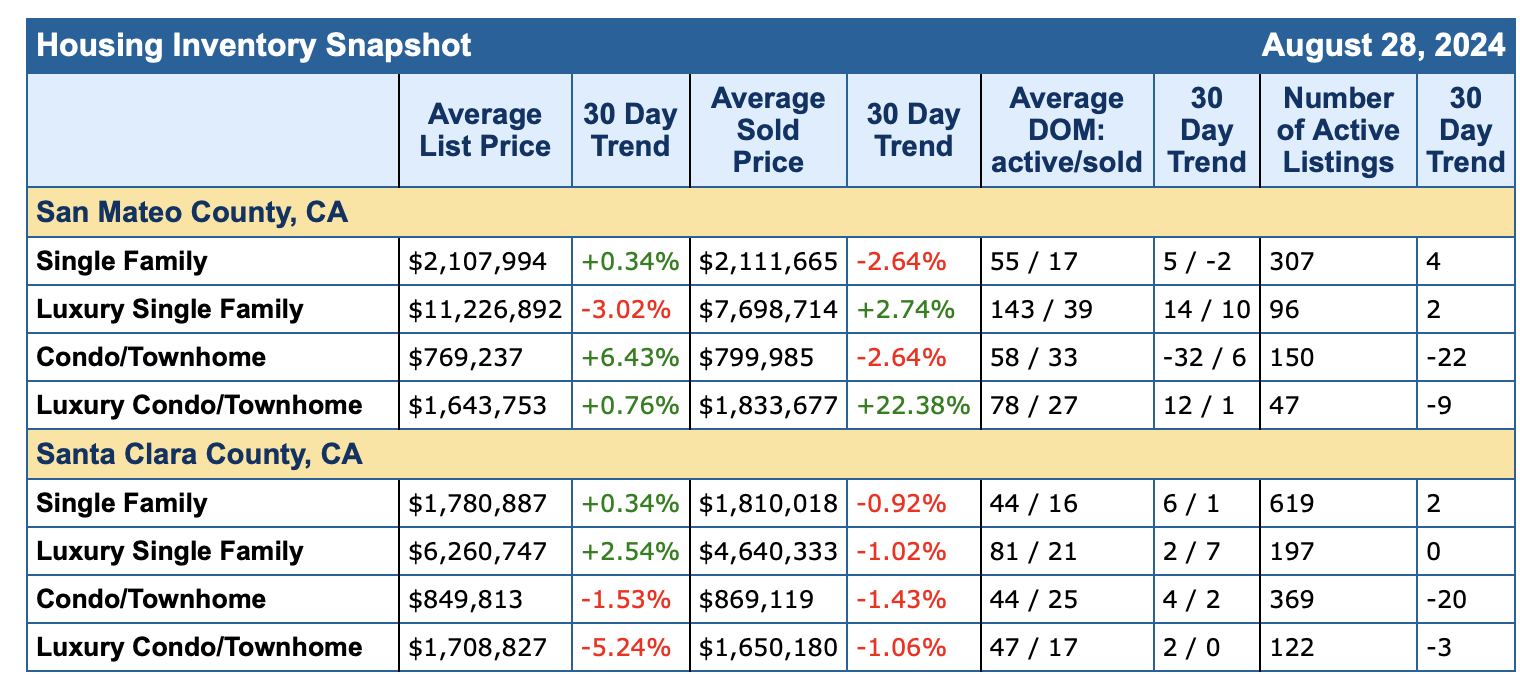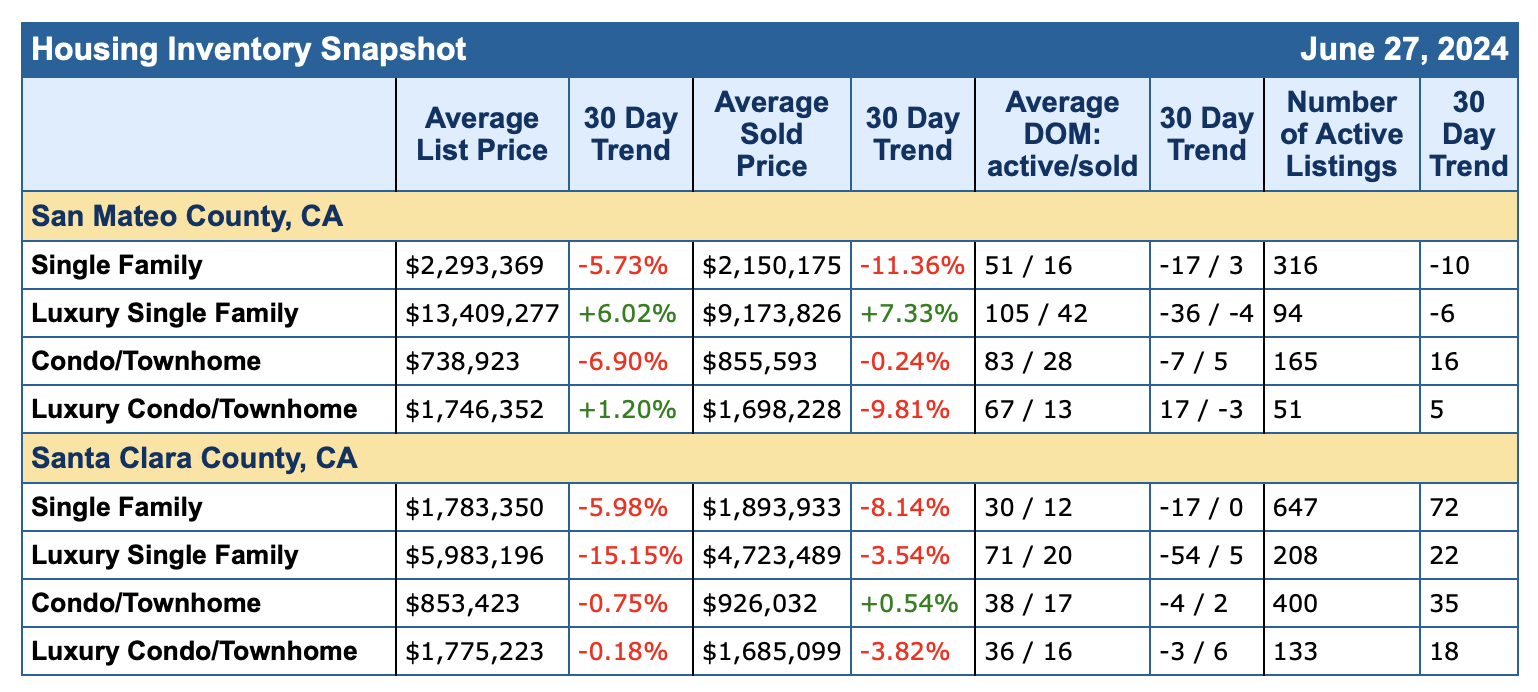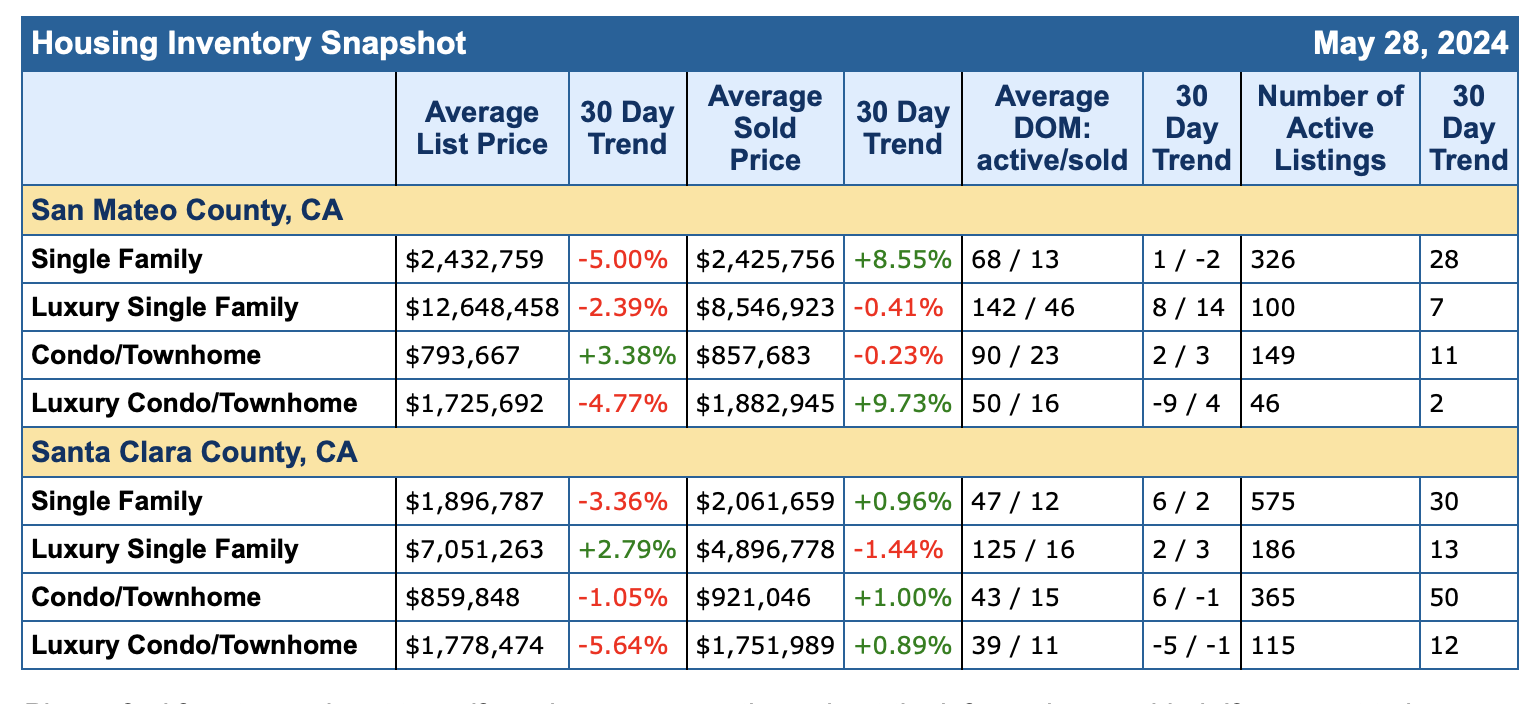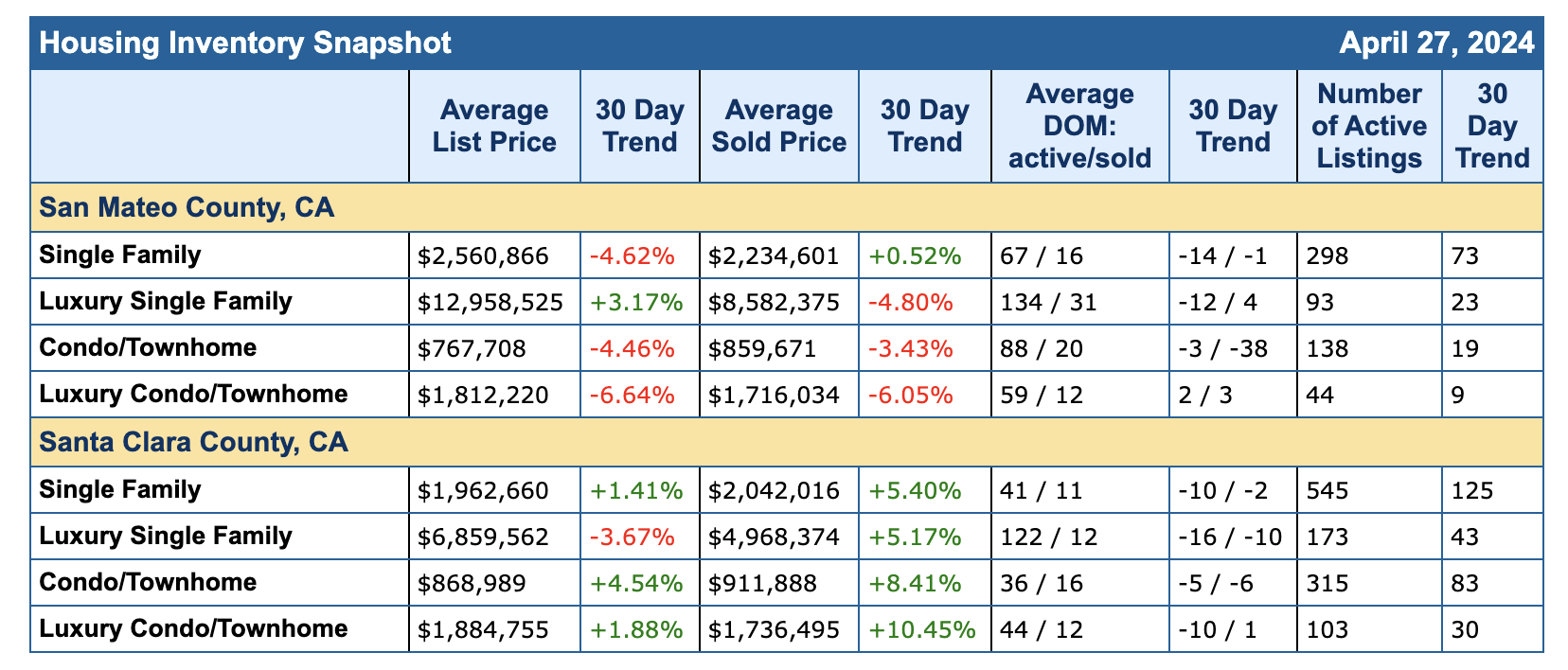

Keeping a Pulse on The San Francisco Bay Area | Peninsula | Silicon Valley | Real Estate Market
Author: The Caton Team - Realtors
Sabrina & Susan are native Californians - born and raised in the Silicon Valley with a passion for Residential Real Estate. A mother and daughter-in-law duo called - The Caton Team. With over 35 years of combined, local Real Estate experience and knowledge – would’t you like The Caton Team to represent you? Let us know how we can be of service. Contact us any time. Call | Text at: 650-799-4333 | Email Info@TheCatonTeam.com
The Caton Team believes, in order to be successful in the San Fransisco | Peninsula | Bay Area | Silicon Valley Real Estate Market we have to think and act differently. We do this by positioning our clients in the strongest light, representing them with the utmost integrity, while strategically maneuvering through negotiations and contracts. Together we make dreams come true. The Peninsula is our backyard - let us help make it yours. We represent Buyer’s and Seller’s throughout the Bay Area.
The Caton Team – Susan & Sabrina
A Family of Realtors
Effective. Efficient. Responsive.
What can we do for you?
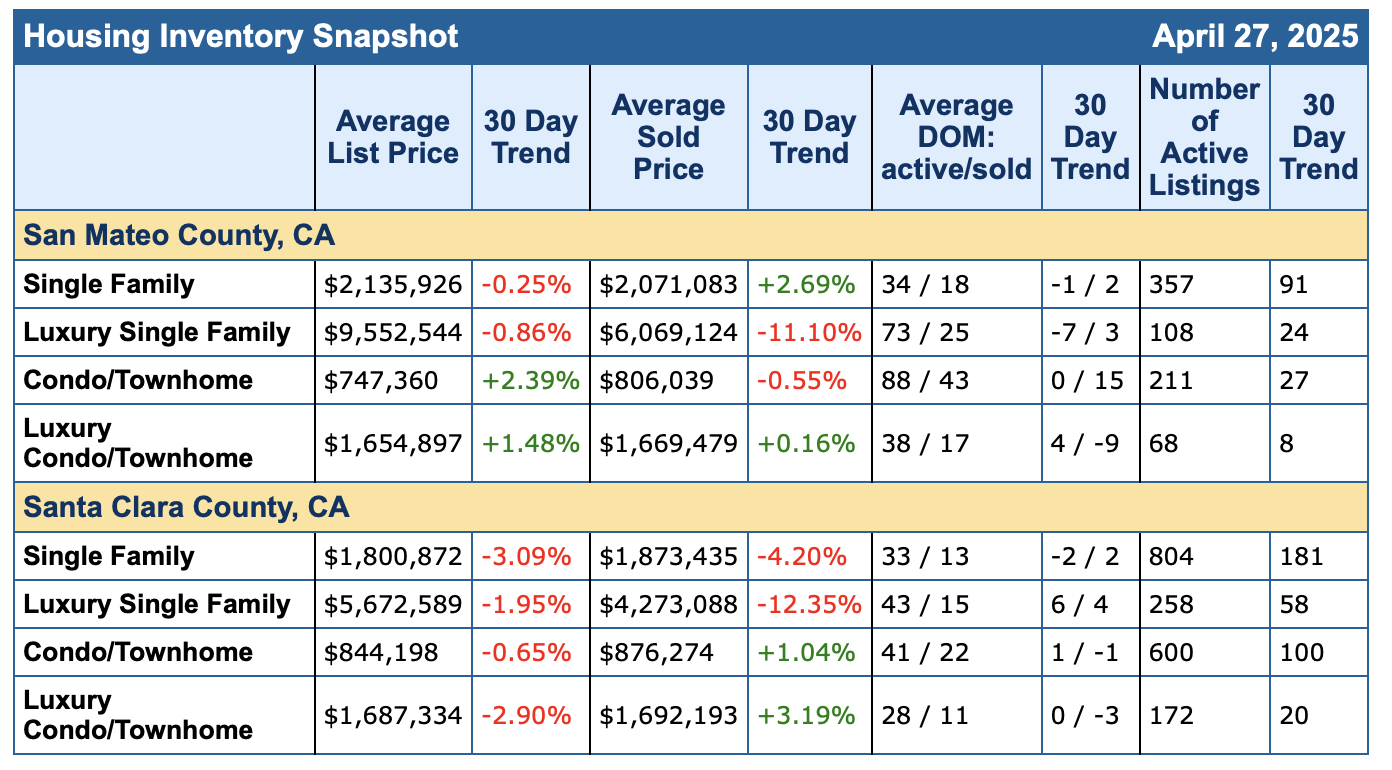
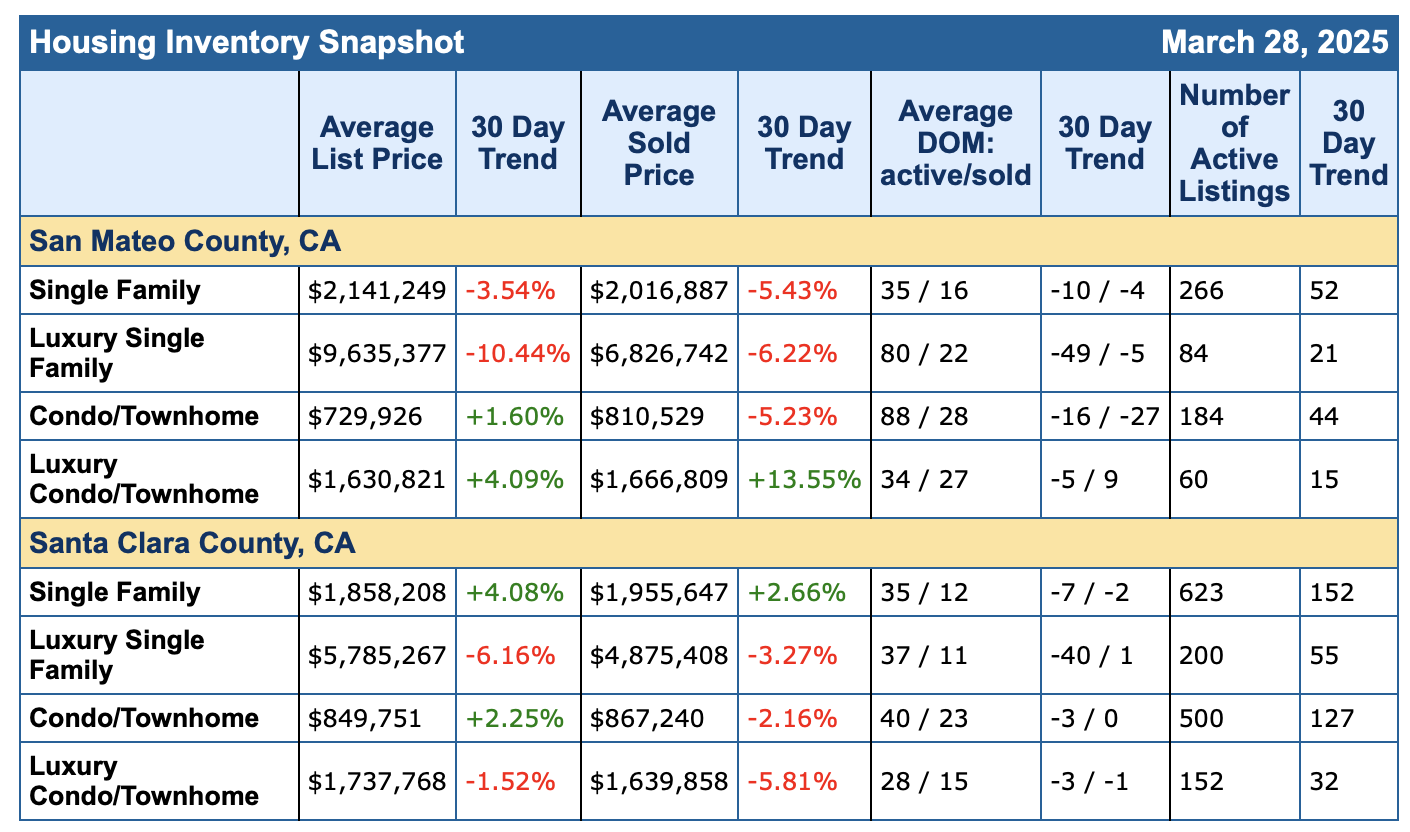
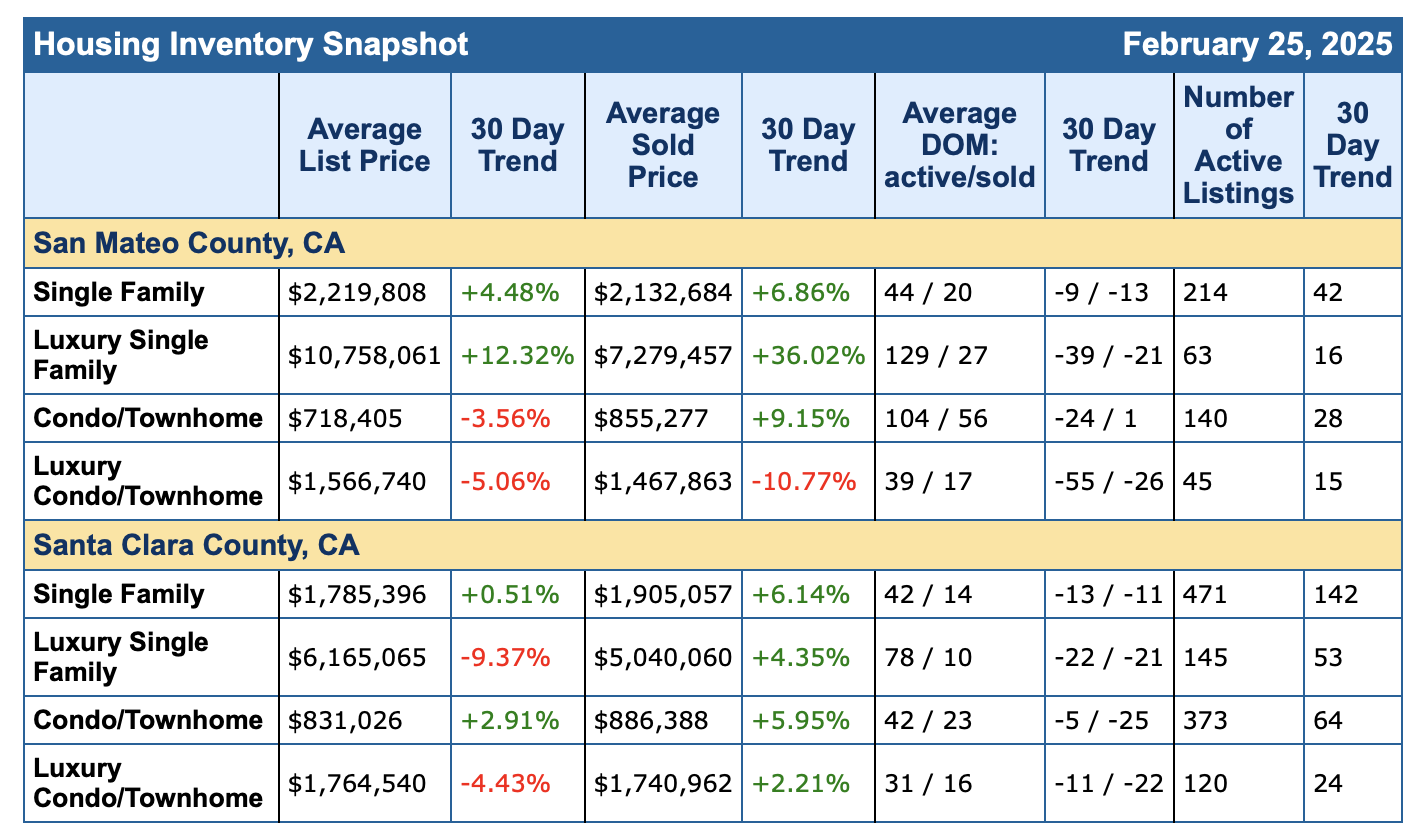
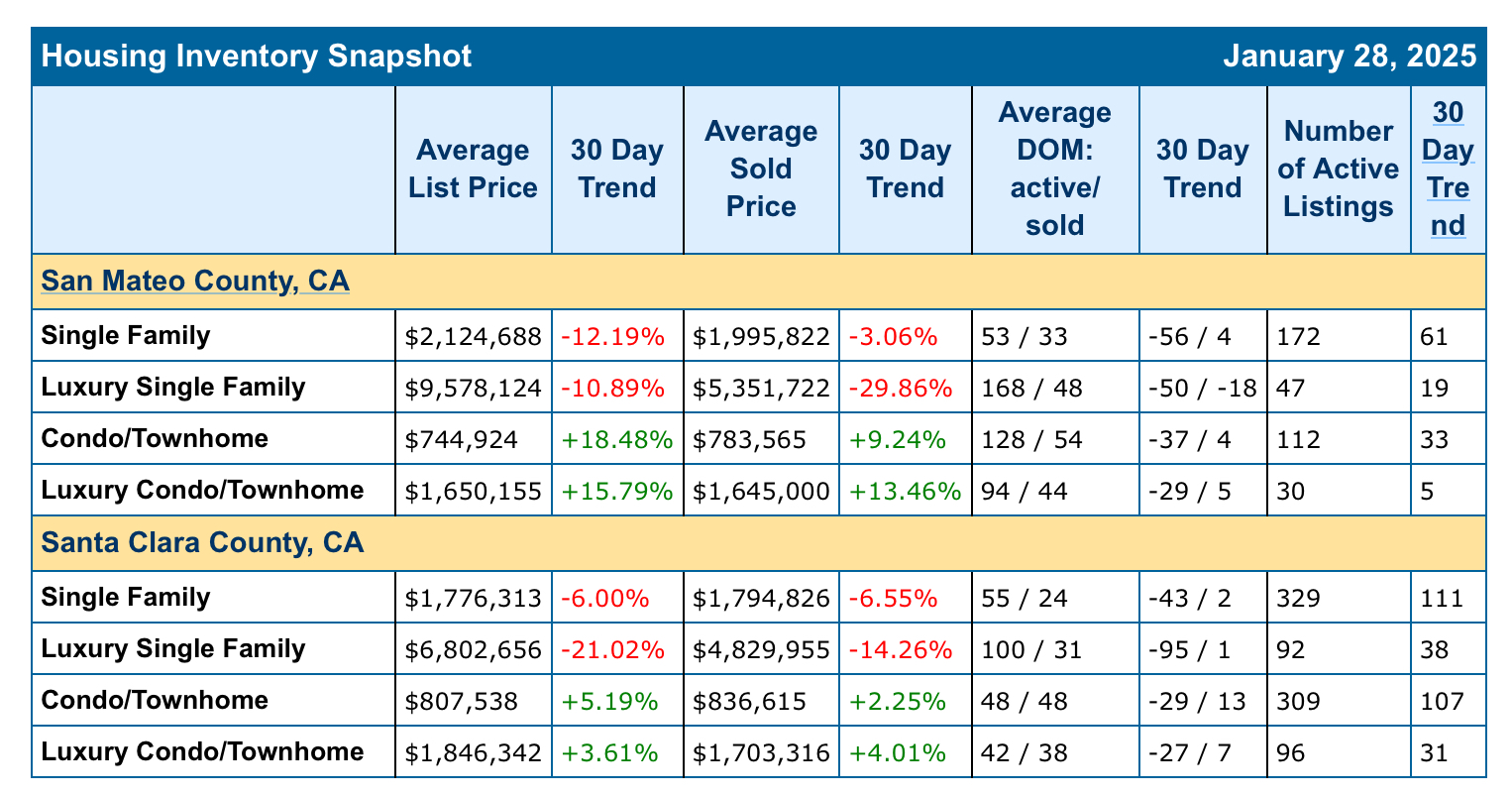
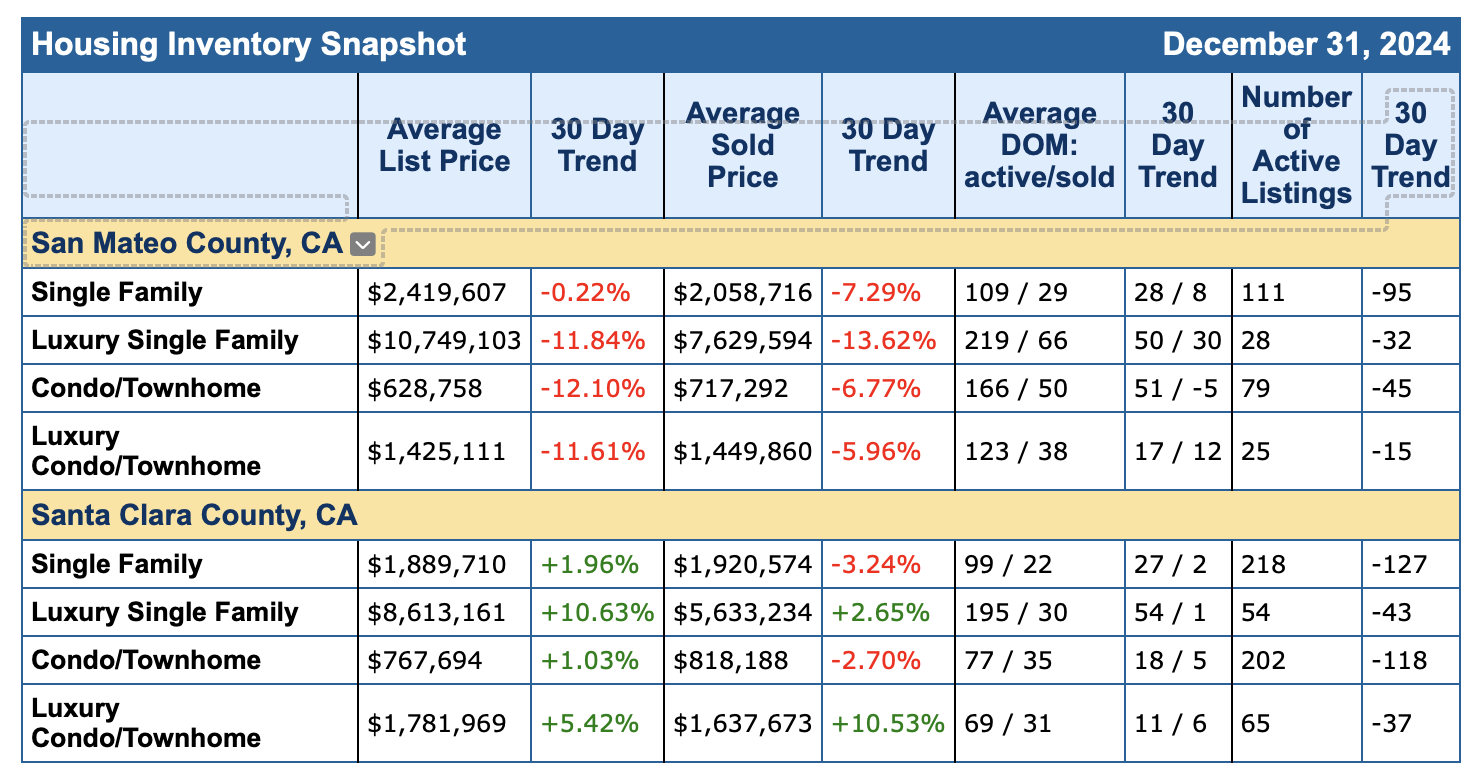
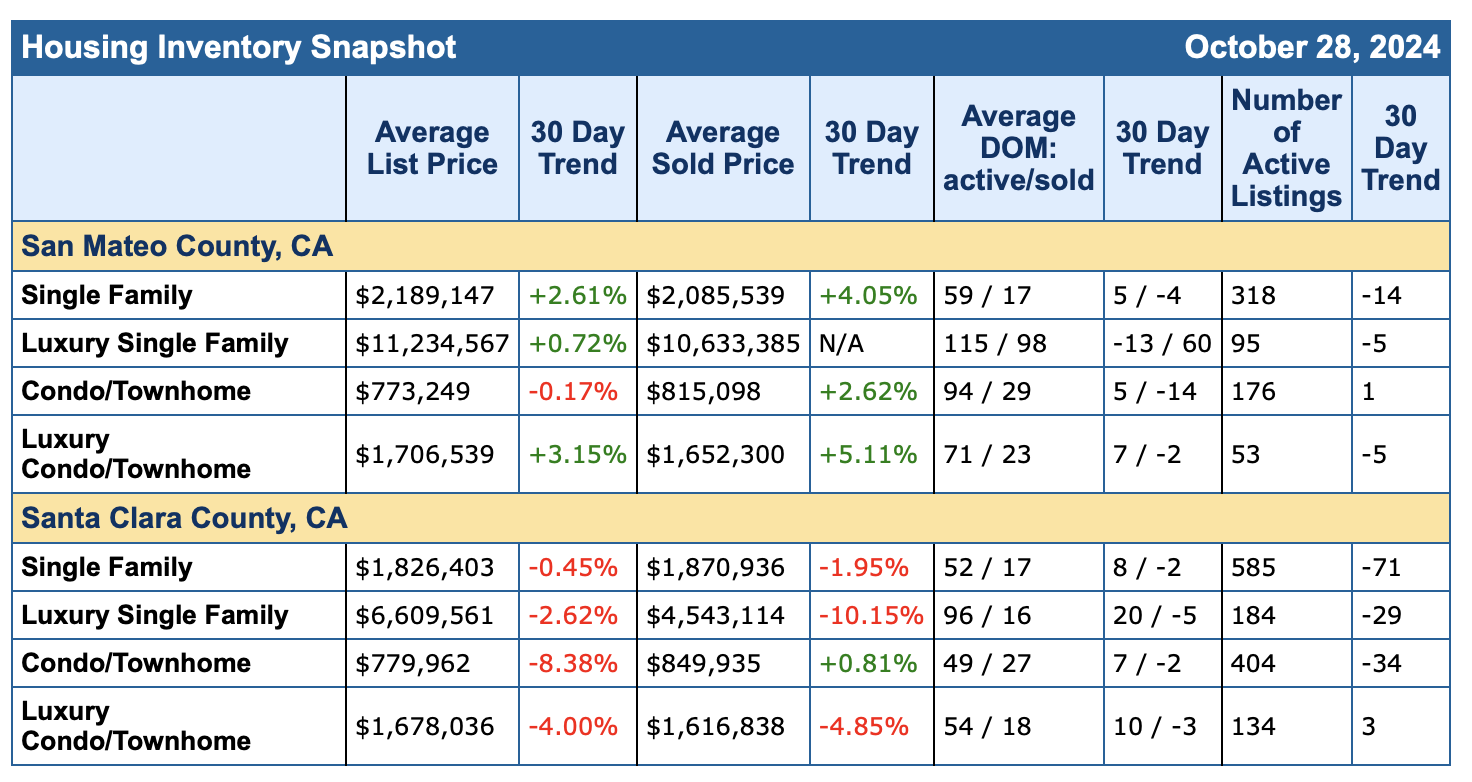
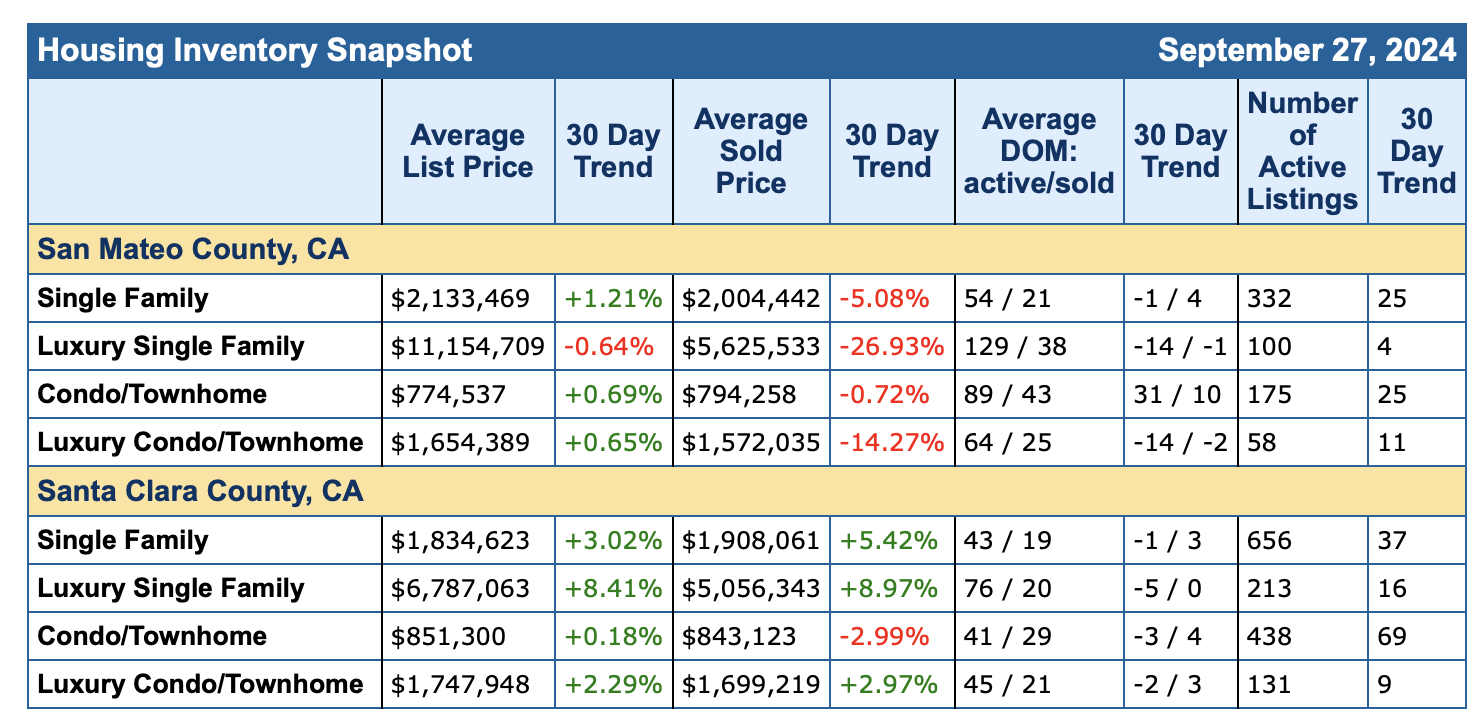
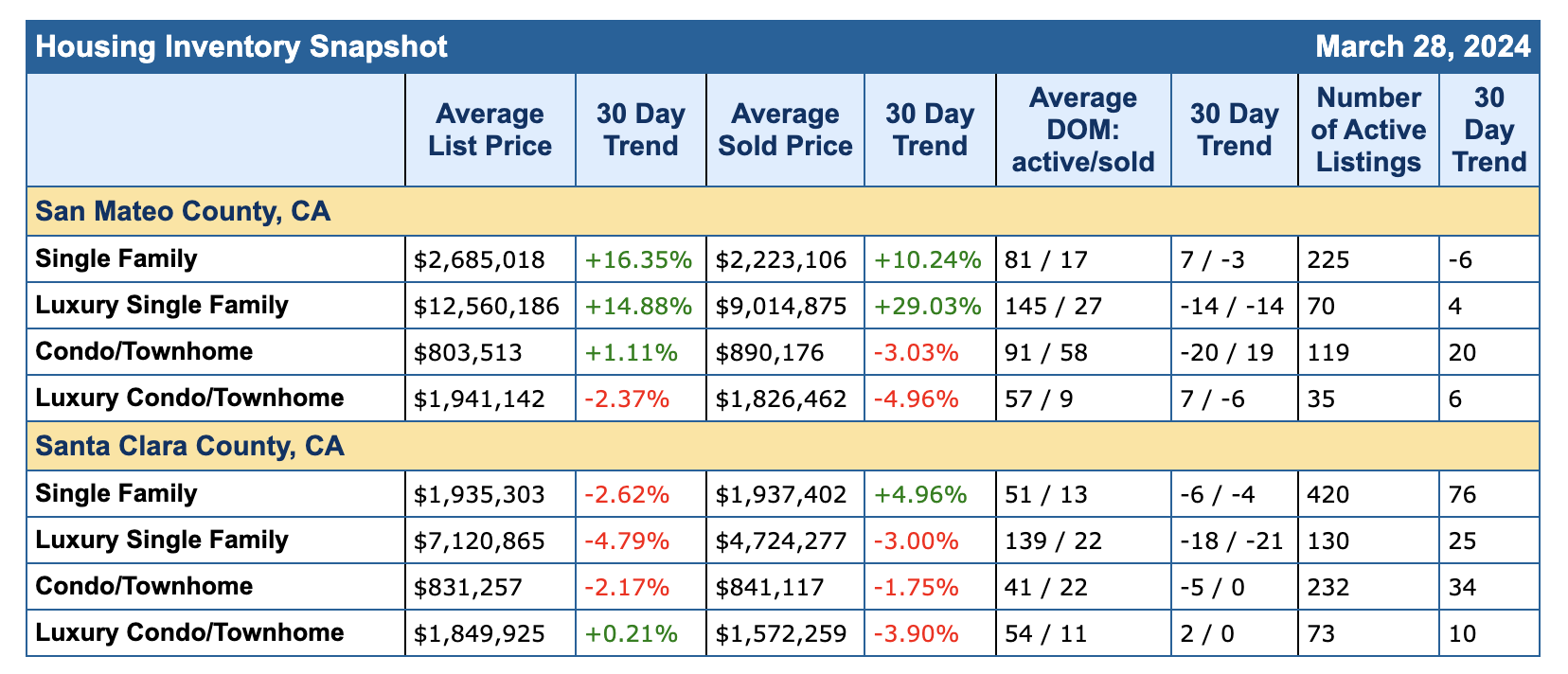
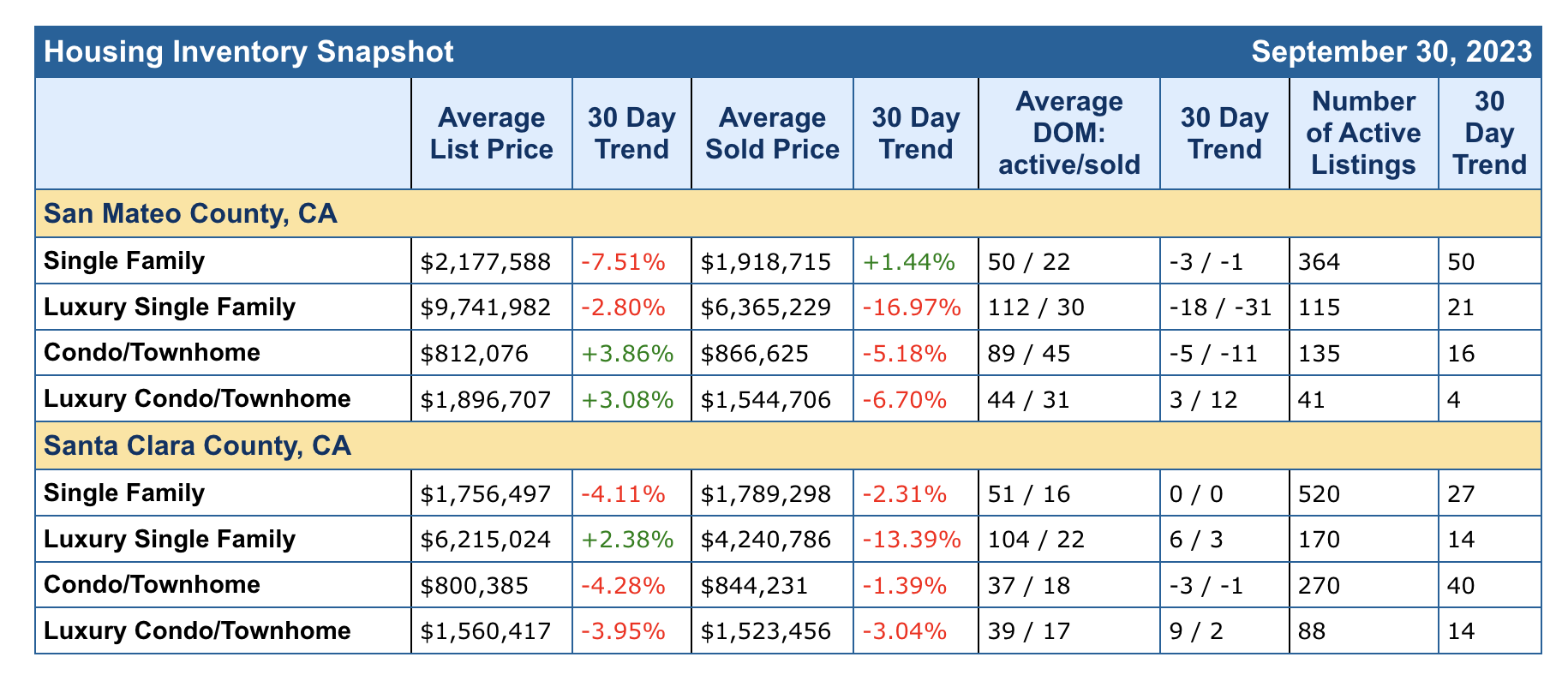
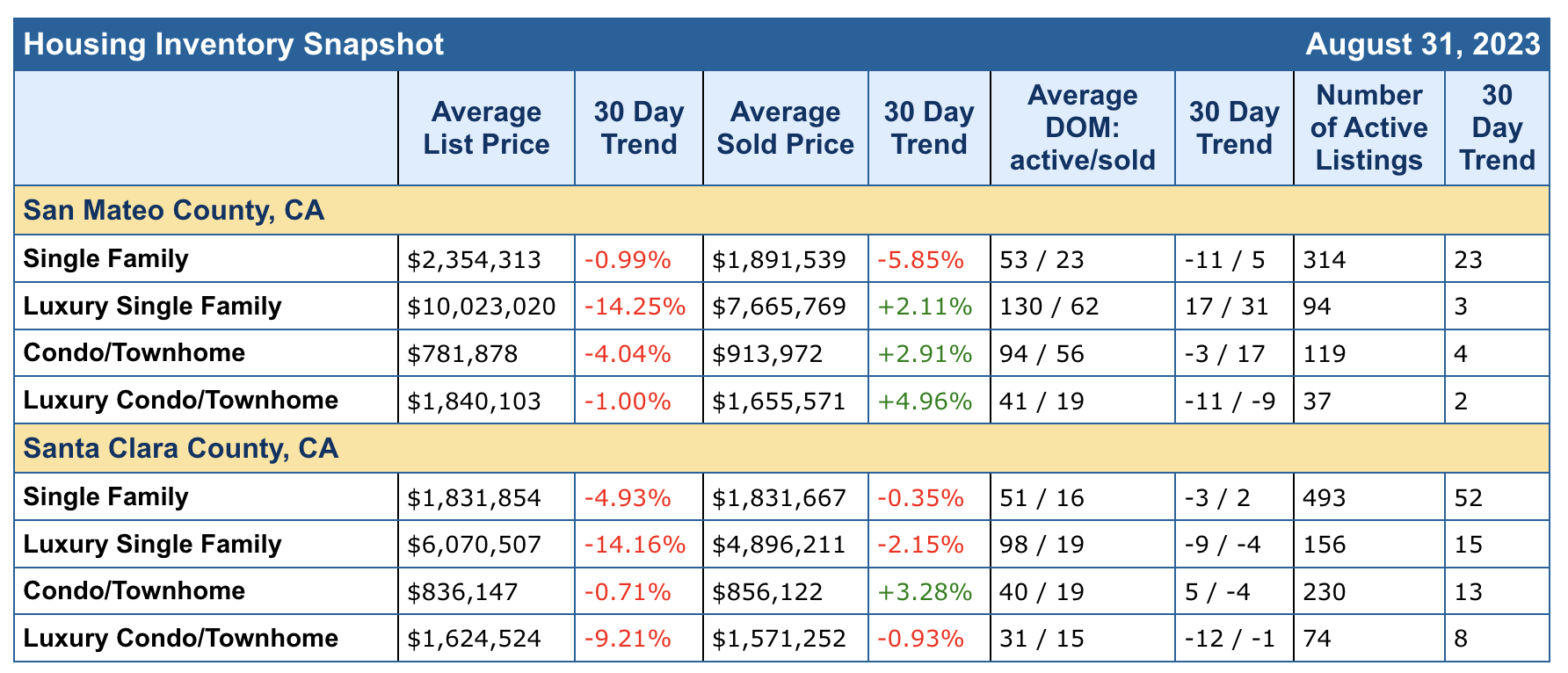
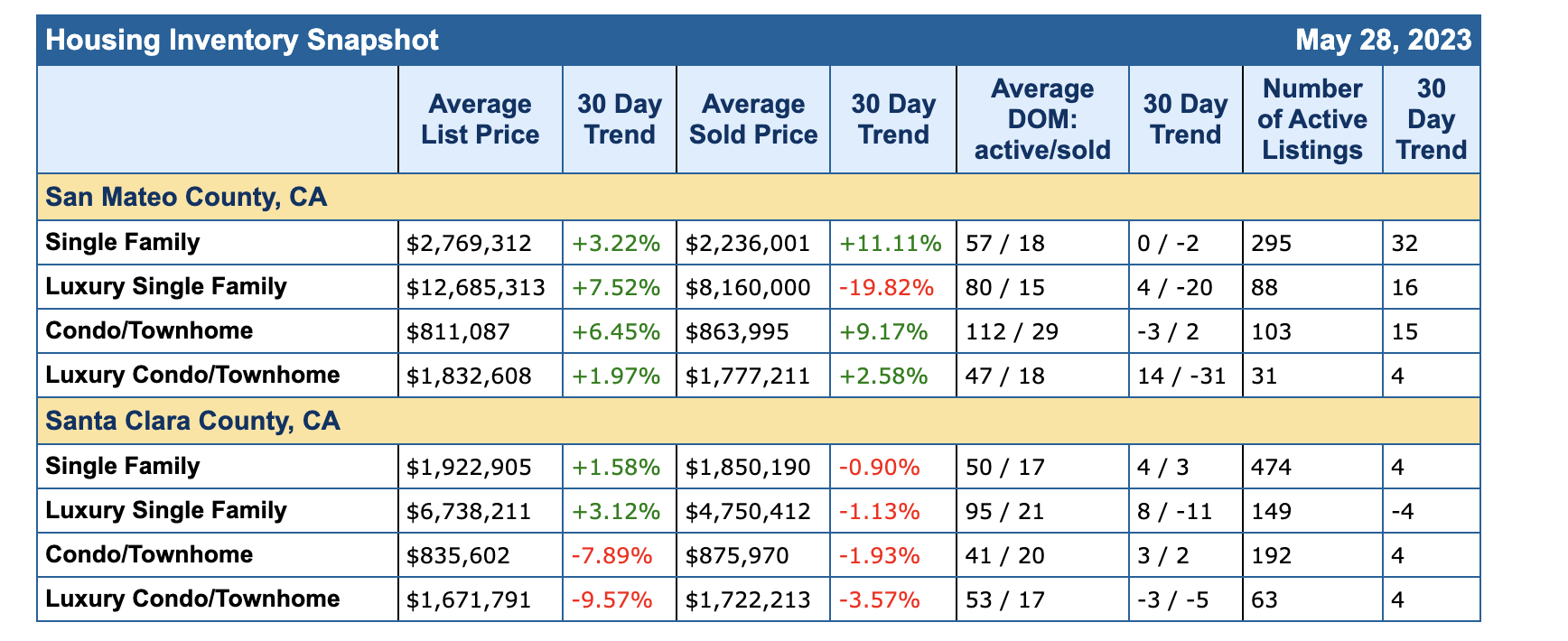
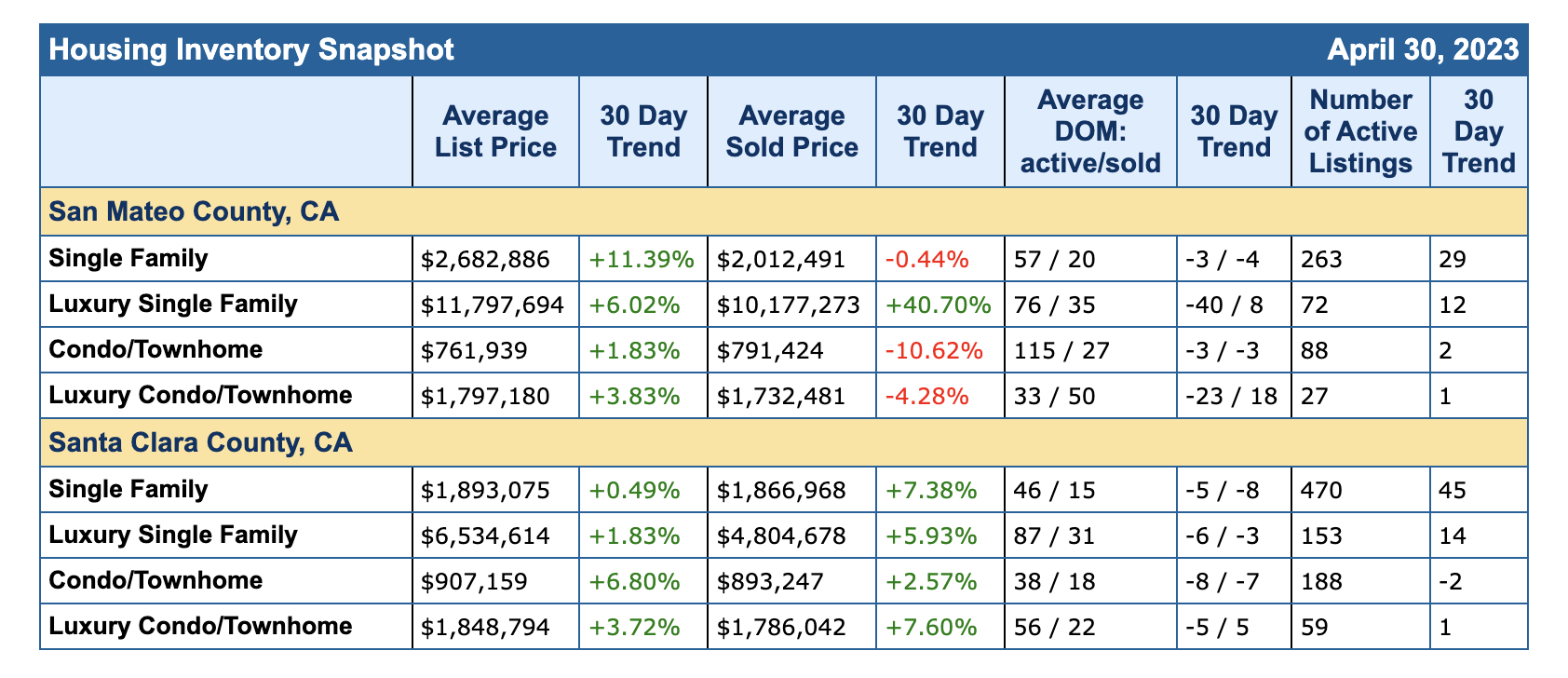
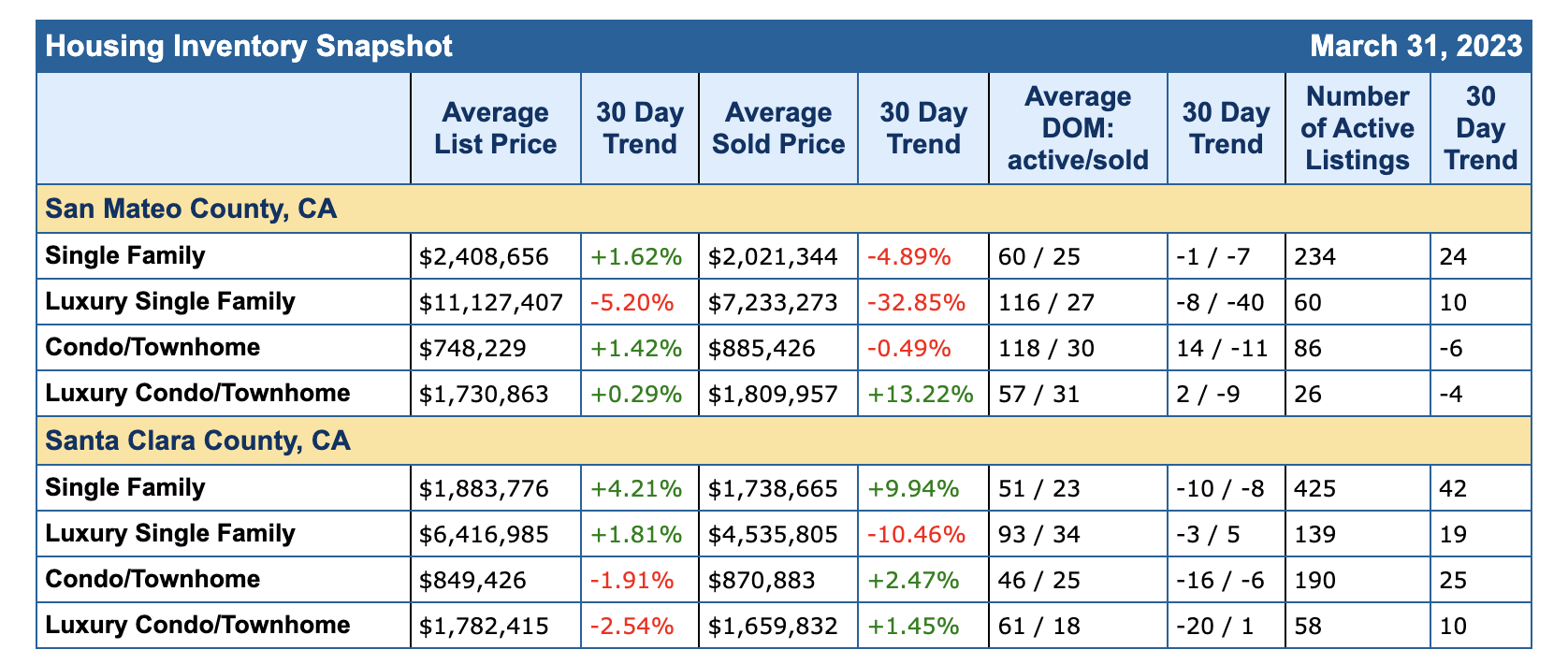
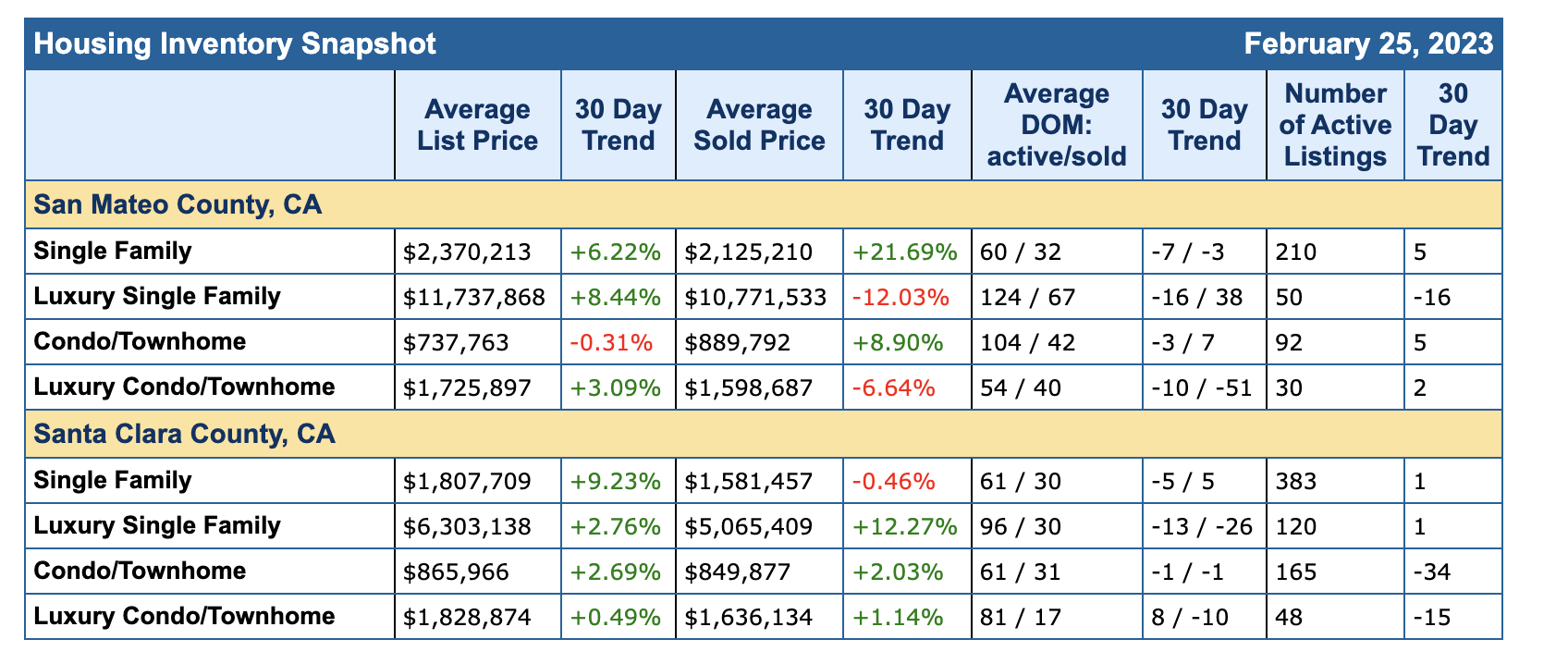
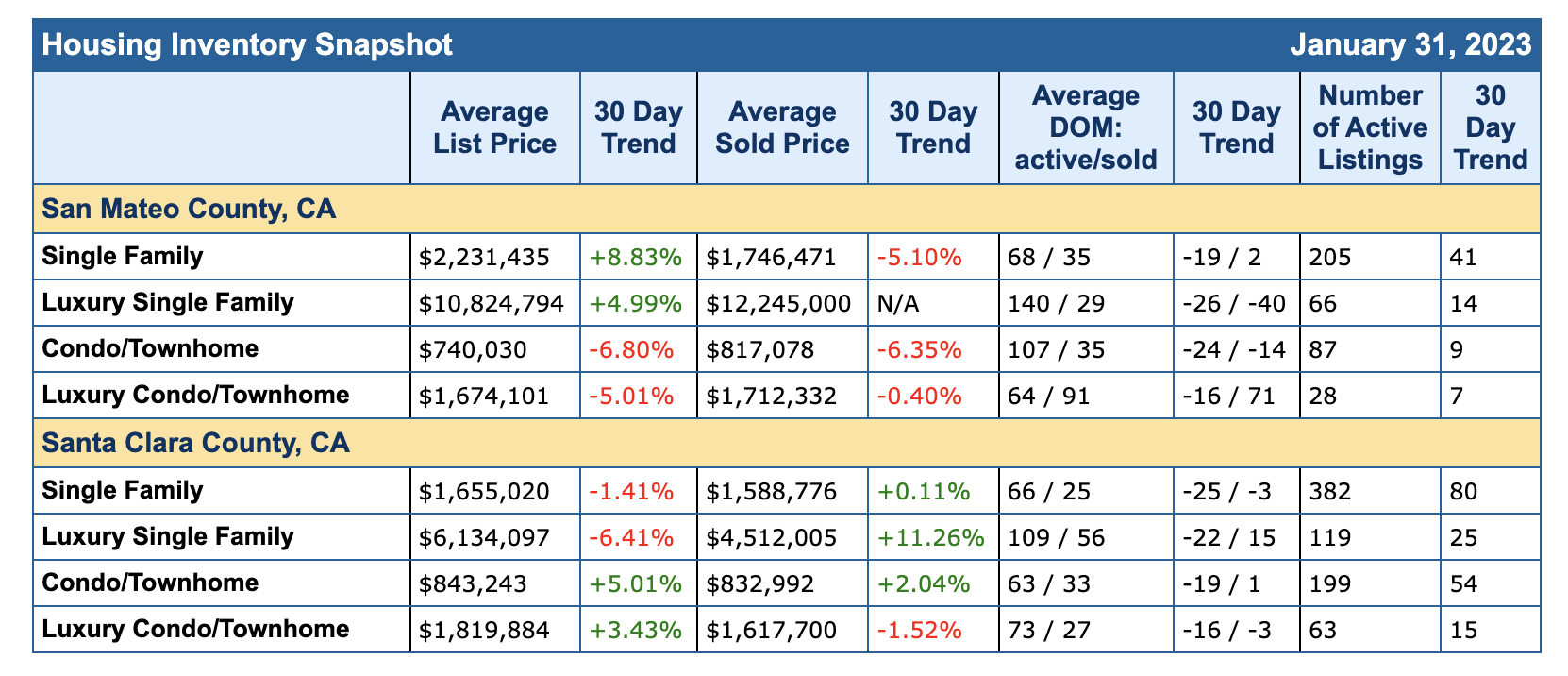
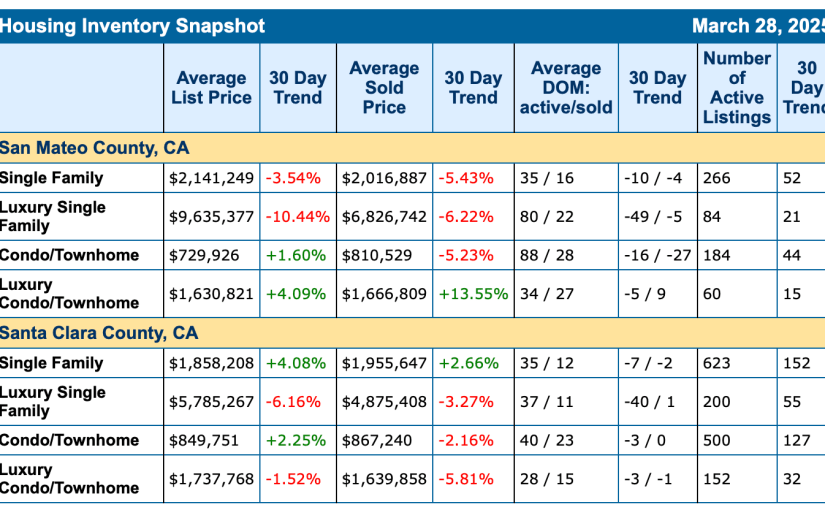
The stats are in for March 2025. This Spring Market feels different. We see home prices dip and condo prices rise – though in real time (end of April) I see the opposite. There are some price reductions across the board but offer dates are set and we are seeing multiple offers and slight overbidding on well priced homes. Remember, the list price is a marketing tool and adjusting it does get new eyes on the property. So if you see a price reduction on a home you like – act – better yet – let me know what homes you like and these days, without an offer date – you may be able to offer without overbidding. Each home and client is a unique experience – so let the Caton Team be of service.



If you’re considering a real estate move, contact The Caton Team for a free consultation. With over 40 years of combined real estate experience, we have the knowledge and know how to guide you to your goal. Call us at 650.799.4333 or email us at info@TheCatonTeam.com.
Whether you are selling or buying – today or tomorrow – contact The Caton Team – we’re happy to help you achieve your Real Estate goals.
Effective. Efficient. Responsive. The Caton Team 🏡
Each market is unique and with over 40 years of combined Real Estate experience, The Caton Team is more than happy to be of service if and when you are considering a move. Contact us anytime during your journey, together we’ll help you achieve your Real Estate goals.
Got Questions? The Caton Team is here to help.
Call| Text | Sabrina 650.799.4333 |EMAIL | WEB| BLOG
We love what we do and would love to help you navigate your sale or purchase of Residential Real Estate. Please reach out for a personal consultation. Please enjoy our free resources below and get to know our team TESTIMONIALS.
Got Real Estate Questions? The Caton Team is here to help.
We strive to be more than just Realtors – we are also your home resource. If you have any real estate questions, concerns, need a referral, or need some guidance – we are here for you. Contact us at your convenience – we are but a call, text or click away!
The Caton Team believes, in order to be successful in the San Fransisco | Peninsula | Bay Area | Silicon Valley Real Estate Market we have to think and act differently. We do this by positioning our clients in the strongest light, representing them with the utmost integrity, while strategically maneuvering through negotiations and contracts. Together we make dreams come true.
A mother and daughter-in-law team with over 35 years of combined, local Real Estate experience and knowledge – wouldn’t you like The Caton Team to represent you? Let us know how we can be of service. Contact us any time.
Call| Text | Sabrina 650.799.4333 | Susan 650.796.0654 |EMAIL | WEB| BLOG
The Caton Team – Susan & Sabrina A Family of Realtors Effective. Efficient. Responsive. What can we do for you?
Mortgage rates play a crucial role in determining how much you’ll pay for your home over time. As a first-time homebuyer, understanding these rates can help you make informed financial decisions and secure the best possible loan terms. Here’s what you need to know.
1. What Are Mortgage Rates?
Mortgage rates are the interest rates lenders charge on home loans. These rates fluctuate based on economic conditions, lender policies, and your financial profile. Even a small change in interest rates can significantly impact your monthly payments and the total cost of your loan.
2. Factors That Influence Mortgage Rates
Several factors affect mortgage rates, including:
Credit Score: Higher scores typically secure lower rates.
Loan Term: Shorter loan terms often have lower rates.
Down Payment: A larger down payment may qualify you for better rates.
Market Conditions: Economic trends, inflation, and Federal Reserve policies impact interest rates.
3. Fixed vs. Adjustable Rates
Fixed-Rate Mortgages: The interest rate remains the same throughout the loan term, offering stability.
Adjustable-Rate Mortgages (ARMs): The interest rate may change periodically based on market conditions, potentially lowering initial costs but increasing future payments.
4. How to Secure the Best Mortgage Rate
To get the lowest possible mortgage rate:
Improve your credit score before applying.
Shop around and compare offers from multiple lenders.
Consider a larger down payment.
Lock in your rate when conditions are favorable.
Understanding mortgage rates empowers you to make smart financial choices and secure an affordable home loan.
Cell| Sabrina 650.799.4333 |Susan 650.796.0654 | EMAIL | WEB| BLOG
We love what we do and would love to help you navigate your sale or purchase of Residential Real Estate. Please reach out for a personal consultation. Please enjoy our free resources below and get to know our team from our TESTIMONIALS.
Effective. Efficient. Responsive. The Caton Team 🏡
Got Real Estate Questions? The Caton Team is here to help.
We strive to be more than just Realtors – we are also your home resource. If you have any real estate questions, concerns, need a referral, or some guidance – we are here for you. Contact us at your convenience – we are but a call, text or click away!
The Caton Team believes, in order to be successful in the San Fransisco | Peninsula | Bay Area | Silicon Valley Real Estate Market we have to think and act differently. We do this by positioning our clients in the strongest light, representing them with the utmost integrity, while strategically maneuvering through negotiations and contracts. Together we make dreams come true.
A mother and daughter-in-law team with over 35 years of combined, local Real Estate experience and knowledge – wouldn’t you like The Caton Team to represent you? Let us know how we can be of service. Contact us any time.
Cell | Sabrina 650.799.4333 | Susan 650.796.0654 | EMAIL | WEB| BLOG
The Caton Team – Susan & Sabrina A Family of Realtors Effective. Efficient. Responsive. What can we do for you?
Your smart home devices are under threat of cyber attacks more than ever. According to a new report by cyber security firm SonicWall, attacks on smart home products have increased by 124% in 2024. The research firm packed its comprehensive 2025 Annual Cyber Threat Report with stats on the latest vulnerabilities threatening IoT (Internet of Things) devices.
Cyber attacks on smart home products have increased massively
According to the report, cyber attacks on smart home devices have increased massively in the last year. SonicWall’s latest findings make for pretty terrifying reading for people who have a smart home product in their homes. Furthermore, SonicWall claims that it prevented more than 17 million attacks on IP cameras in 2024. Keep in mind that these are just the ones that the firm stopped. Also, that number is just for one type of product.
The report highlights the growing number of threats to smart home security products. Notably, the IP or internet protocol cameras are the prime target for threat attackers. While these devices enhance home security, cybercriminals can turn them into potential surveillance tools. SonicWall identified the HikVision IP Camera Command Injection vulnerability as one of the most exploited flaws. It reportedly allows attackers to take control of vulnerable smart home cameras remotely.
Smart home device manufacturers don’t have enough resources to prioritize security
The firm highlights the Reaper Botnet as one of the main dangers of IoT networks. This recruits unsecured smart home products for bigger cyberattacks. The fact that many IoT manufacturers lack enough resources or expertise to prioritize security enhances the attacks. The shared vulnerabilities among smart home devices running open-source software platforms also make it easier for attackers to exploit many devices once they find a single flaw.
“Threat actors are moving at an unprecedented pace, exploiting new vulnerabilities within days, while we’re observing that it takes some organizations 120 to 150 days to apply a critical patch,” said SonicWall President and CEO Bob VanKirk. “Now more than ever, businesses need the expertise of an MSP/MSSP backed by real-time threat monitoring and SOC capabilities”, he added further.
It’s worth mentioning that a November report from Zscaler also found that IoT malware attacks had jumped nearly 400% in recent years. Furthermore, the NetGear/Bitdefence 2024 IoT security report also suggested that smart home products now experience up to 10 attacks every day. So, it’s important to safeguard your smart home devices more than ever before.
Cell| Sabrina 650.799.4333 |Susan 650.796.0654 | EMAIL | WEB| BLOG
We love what we do and would love to help you navigate your sale or purchase of Residential Real Estate. Please reach out for a personal consultation. Please enjoy our free resources below and get to know our team from our TESTIMONIALS.
Effective. Efficient. Responsive. The Caton Team 🏡
Got Real Estate Questions? The Caton Team is here to help.
We strive to be more than just Realtors – we are also your home resource. If you have any real estate questions, concerns, need a referral, or some guidance – we are here for you. Contact us at your convenience – we are but a call, text or click away!
The Caton Team believes, in order to be successful in the San Fransisco | Peninsula | Bay Area | Silicon Valley Real Estate Market we have to think and act differently. We do this by positioning our clients in the strongest light, representing them with the utmost integrity, while strategically maneuvering through negotiations and contracts. Together we make dreams come true.
A mother and daughter-in-law team with over 35 years of combined, local Real Estate experience and knowledge – wouldn’t you like The Caton Team to represent you? Let us know how we can be of service. Contact us any time.
Cell | Sabrina 650.799.4333 | Susan 650.796.0654 | EMAIL | WEB| BLOG
The Caton Team – Susan & Sabrina A Family of Realtors Effective. Efficient. Responsive. What can we do for you?
For most tax deductions, you need to keep receipts and documents for at least 3 years.
Unless you live in a Hollywood Hills mansion, you probably don’t have space to store years of tax and insurance paperwork, warranties, and repair receipts related to your home. And if you’re keeping digital records, you likely don’t want to keep adding new records every year without a plan for managing the old records.
The paperwork or digital records will help you if you need to prove you qualify for the tax deductions you took, to file an insurance claim, or to figure out if your busted oven is still under warranty.
To help you wrangle those records, here’s a handy checklist of how long to keep tax records.
Tax Recordkeeping Insights from the IRS
For recordkeeping, align with IRS guidance and all tax record rules.
IRS Tax Return Requirements
Consider this background information on IRS rules on how long to keep tax records, which informed some of our charts:
At least three years. In most cases, the IRS says you should keep tax returns and the paperwork supporting them for at least three years after you file the return — the length of time the IRS has to audit you. So that’s how long we advise. Under some circumstances, however, you should keep them longer.
Varies by state. Check with your state about state income tax returns. Most states make you keep them as long as the federal government does — three years in most cases. But Montana wants you to keep them for five years. And Ohio recommends you hang on to them 10 years. Yes, an entire decade.
Up to six years. The IRS can also ask for records up to six years after a filing if they suspect someone failed to report 25% or more of their gross income on their income tax returns. And the agency never closes the door on an audit if it suspects fraud. Just sayin’.
How Long to Keep Each Category of Tax Documents
Here are some guidelines for how long to keep tax records based on record type.
Keep Home Sales Records for as Long as You Own the Property + 3 Years
HOME SALE RECORDS
Document
How Long to Keep It
Home sale closing documents, including closing statement
As long as you own the property + 3 years
Deed to the house
As long as you own the property
Builder’s warranty or service contract for new home
Until the warranty period ends
Community/condo association covenants, codes, restrictions (CC&Rs)
As long as you own the property
Receipts for capital improvements
As long as you own the property + 3 years
Mortgage payoff statements (certificate of satisfaction or lien release)
Forever, just in case a lender says, “Hey, you still owe us money.”
Why you need these docs: You use home sale closing documents and receipts for capital improvements records to calculate and document your profit (gain) when you sell your home.
Your deed and mortgage payoff statements prove you own your home and have paid off your mortgage, respectively.
Your builder’s warranty or contract is important if you file a claim. And sooner or later you’ll need to check the CC&R rules in your condo or community association.
Keep Annual Tax Deductions for 2-3 Years
ANNUAL TAX DEDUCTIONS*
Document
How Long to Keep It
Property tax payment (tax bill + canceled check or bank statement showing check was cashed)
3 years after the due date of the return showing the deduction
Year-end mortgage statements
3 years after the due date of the return showing the deduction
Tax returns
3 years from the date you file your return or 2 years from the date you paid the tax, whichever is later
Why you need these docs: To document you’re eligible for a deduction or tax credit in case you’re audited by the IRS.
*These deductions are relevant if you itemize. The standard deduction has been increased, which means fewer people will itemize than have in the past.
Keep Insurance and Warranties Until They Expire
INSURANCE AND WARRANTIES
Document
How Long to Keep It
Home repair receipts
Until warranty expires
Inventory of household possessions
Forever (remember to make updates)
Homeowners insurance policies
Until you receive the next year’s policy
Service contracts and warranties
As long as you have the item being warrantied
Why you need these docs: To file a claim or see what your policy or warranty covers.
Keep Investment Real Estate Deductions as Long as You Own the Property + 3 Years
INVESTMENT (LANDLORD) REAL ESTATE DEDUCTIONS
Document
How Long to Keep It
Appraisal or valuation used to calculate depreciation
As long as you own the property + 3 years
Receipts for capital expenses, such as an addition or improvements
As long as you own the property + 3 years
Receipts for repairs and other expenses
3 years after the due date of the return showing the deduction
Landlord’s insurance payment receipt (canceled check or bank statement showing check was cashed)
3 years after the due date showing the deduction
Landlord’s insurance policy
Until you receive the next year’s policy
Partnership or LLC agreements for real estate investments
As long as the partnership or LLC exists
Section 1031 (like-kind exchange) sale records for both your old and new properties, including HUD-1 settlement sheet
As long as you own the new property + 3 years
Why you need these docs: For the most part, to prove your eligibility to deduct the expense. You’ll also need receipts for capital expenditures to calculate your profit (gain) or loss when you sell the property. Landlord’s insurance and partnership agreements are important references.
Keep Miscellaneous Records 3-4 Years
MISCELLANEOUS RECORDS
Document
How Long to Keep It
Wills and property trusts
Until updated
Date-of-death home value record for inherited home, and any rules for heirs’ use of home
As long as you or your spouse owns the home + 3 years
Original owners’ purchase documents (sales contract, deed) for home given to you as a gift
As long as you or your spouse owns the home + 3 years
Divorce decree with home sale clause
As long as you or your spouse owns the home + 3 years
Employment records for live-in help (W-2s, W-4s, pay and benefits statements)
4 years after you make (or owe) payroll tax payments
Why you need these docs: Most are needed to calculate capital gains when you sell. Employment records help prove deductions.
3 Ways to Organize Your Tax Records and Receipts
Keeping your tax documents well organized is key. Then you’ll easily be able to access any records if you need them.
If you haven’t already switched to digital recordkeeping, consider scanning and digitally storing paper documents, such as receipts, which fade with time and take up space. Even better, save your documents to at least two digital locations.
Digital copies are OK with the IRS as long as they’re identical to the originals and contain all the accurate information that was in the original receipts. You must be able to produce a hard copy if the IRS asks for one.
Here are three practical ways to store IRS paperwork digitally and get rid of the paper.
#1 Computer Hardware
Flash drives or external hard drives are designed to store documents and other data. Flash drives are portable and tend to be smaller than external hard drives, so they’re easy to store. External hard drives usually have a larger memory capacity and are more durable than flash drives. Both can be used to store tax returns and other IRS documents safely.
#2 Cloud-Based Software
Unlike storing your tax data to a physical device, like a flash drive, a cloud-based remote server offers similar storage capabilities to a virtual server. This means you don’t have to keep track of the device itself. Instead, you can access your tax records remotely through a cloud computing platform.
#3 Apps
Another digital data storage option is to use apps, such as Smart Receipts, which is available via Google Play and Mac App Store. Smart Receipts lets you track your finances, including receipts, for yourself or your employer. You can choose from default data types including dates, price, tax, receipt categories, comments, and payment methods.
What’s the Best Way to Get Rid of Outdated Tax Documents?
When you do finally toss out your home-related paperwork, use a shredder. Throwing away intact or manually torn documents that include personal financial information could put you at risk for identity theft.
Tax season and year’s end are good times to purge files and toss what you no longer need. That’s often when the spirit of organization moves us.
This article provides general information about tax laws and consequences, but isn’t intended to be relied upon as tax or legal advice applicable to particular transactions or circumstances. Consult a tax professional for such advice.
Cell| Sabrina 650.799.4333 |Susan 650.796.0654 | EMAIL | WEB| BLOG
We love what we do and would love to help you navigate your sale or purchase of Residential Real Estate. Please reach out for a personal consultation. Please enjoy our free resources below and get to know our team from our TESTIMONIALS.
Effective. Efficient. Responsive. The Caton Team 🏡
Got Real Estate Questions? The Caton Team is here to help.
We strive to be more than just Realtors – we are also your home resource. If you have any real estate questions, concerns, need a referral, or some guidance – we are here for you. Contact us at your convenience – we are but a call, text or click away!
The Caton Team believes, in order to be successful in the San Fransisco | Peninsula | Bay Area | Silicon Valley Real Estate Market we have to think and act differently. We do this by positioning our clients in the strongest light, representing them with the utmost integrity, while strategically maneuvering through negotiations and contracts. Together we make dreams come true.
A mother and daughter-in-law team with over 35 years of combined, local Real Estate experience and knowledge – wouldn’t you like The Caton Team to represent you? Let us know how we can be of service. Contact us any time.
Cell | Sabrina 650.799.4333 | Susan 650.796.0654 | EMAIL | WEB| BLOG
The Caton Team – Susan & Sabrina A Family of Realtors Effective. Efficient. Responsive. What can we do for you?
Thinking about buying a home but worried about saving for a big down payment or qualifying with less-than-perfect credit? An FHA loan could be your solution. These government-backed loans make homeownership more accessible, especially for first-time buyers.
In fact, FHA loans accounted for 29% of mortgage applications for new homes in December 2024, according to an MBA survey of homebuilders. Here’s how they work, who’s eligible, and the latest updates that could make them even more affordable.
How Do FHA Loans Work?
Unlike conventional loans, FHA loans are insured by the government, which means lenders can typically offer more favorable terms. Borrowers can qualify with a down payment as low as 3.5% of the purchase price, and credit score requirements are generally more lenient than conventional loans. Plus, borrowers can use a gift fund for a down payment, closing costs or reserves needed for approval.
What Are FHA Loan Requirements?
To qualify, you typically need:
✔️ A credit score of at least 580 for a 3.5% down payment ✔️ A manageable debt-to-income ratio. ✔️ Steady income and employment history. ✔️ The home must be your primary residence (not a rental or investment property). ✔️ Occupation of the property within 60 days of closing. ✔️ A property inspection which meets HUD’s minimum property standards.
Good News: FHA Mortgage Insurance Costs May Drop in 2025
Right now, FHA borrowers are required to pay mortgage insurance premiums (MIP), which help protect lenders but also add to monthly payments. However, there’s a growing push to reduce these premiums, making FHA loans more affordable.
Industry groups like the Mortgage Bankers Association (MBA) and the National Association of Realtors (NAR) are urging the government to cut MIP rates, arguing that even a small reduction could make a big difference for home buyers struggling with high costs.
For example, if MIP rates dropped by just 0.25% (25 basis points), it would directly lower monthly mortgage payments. While this might not seem like much, every dollar counts—especially for first-time and lower-income buyers working within tight budgets.
FHA Loan Limits
For 2025, the maximum FHA loan amount in high-cost areas (like major metropolitan cities) is $1,209,750, according to HUD. In lower-cost areas, the limit is generally $524,225 for a single-unit home.
If you’re curious about loan limits in a specific area, you can look them up on the FHA mortgage limits page. This tool also provides median home price estimates used to determine these limits.
Is an FHA Loan Right for You?
FHA loans are great for those who:
✔️ Need a low down payment option. ✔️ Have less-than-perfect credit. ✔️ Want an easier path to homeownership.
However, these loans do come with mortgage insurance, which adds to your monthly payment. Talking to a Home Loan Specialist can help you decide if an FHA loan is the best fit for you.
Cell| Sabrina 650.799.4333 |Susan 650.796.0654 | EMAIL | WEB| BLOG
We love what we do and would love to help you navigate your sale or purchase of Residential Real Estate. Please reach out for a personal consultation. Please enjoy our free resources below and get to know our team from our TESTIMONIALS.
Effective. Efficient. Responsive. The Caton Team 🏡
Got Real Estate Questions? The Caton Team is here to help.
We strive to be more than just Realtors – we are also your home resource. If you have any real estate questions, concerns, need a referral, or some guidance – we are here for you. Contact us at your convenience – we are but a call, text or click away!
The Caton Team believes, in order to be successful in the San Fransisco | Peninsula | Bay Area | Silicon Valley Real Estate Market we have to think and act differently. We do this by positioning our clients in the strongest light, representing them with the utmost integrity, while strategically maneuvering through negotiations and contracts. Together we make dreams come true.
A mother and daughter-in-law team with over 35 years of combined, local Real Estate experience and knowledge – wouldn’t you like The Caton Team to represent you? Let us know how we can be of service. Contact us any time.
Cell | Sabrina 650.799.4333 | Susan 650.796.0654 | EMAIL | WEB| BLOG
The Caton Team – Susan & Sabrina A Family of Realtors Effective. Efficient. Responsive. What can we do for you?
Once you decide to sell your home, you might have questions about how to prepare it for listing and viewing by potential buyers. Here are some common considerations as you prepare your home to sell:
How do I find the right agent to sell my home?
You should feel empowered to find and work with the agent who is the best fit for your needs. To guide this process, NAR has a dedicated resource with questions to consider when selecting a seller’s agent. When you work with an agent who is a REALTOR®, you are working with a professional guided by ethical duties under the REALTOR® Code of Ethics, including the pledge to protect and promote the interests of their clients. The Caton Team are proud to be Realtors!
Do I need to have my home inspected before putting it up for sale?
No, a pre-sale inspection is not required, but here in the Bay Area is to preferred.* However, an inspection can be used to identify potential issues in your home that you can consider repairing before showing your home to potential buyers and use as a differentiator for your property. If you choose to conduct a pre-sale inspection, an inspector will assess your home’s condition, including its structure, exterior, roof, plumbing, electrical systems, heating and air conditioning, interiors, ventilation / insulation, and fireplaces. It may also include tests for problems that can affect human health like mold, radon gas, lead paint, and asbestos. Sometimes buyers may also conduct their own inspection as a contingency in their purchase agreement. If you uncover possible issues that may appear during a buyer’s inspection, you will have time to make any necessary changes that could impact your home’s asking price. You should also talk to your agent about disclosure requirements in your state if a pre-sale inspection uncovers an issue.
What should I do if something in my home needs to be fixed or replaced soon?
If something in your home requires a significant repair—such as a roof, a system such as HVAC, or an appliance like a dishwasher or washer / dryer—you should determine how much the repair will cost, even if you do not plan to fix it before selling the home. These estimates will help sellers determine the costs that buyers might take into consideration when negotiating a purchase agreement.
Am I required to make any cosmetic updates to my home before putting it up for sale?
No, but you may want to clean the windows, carpets, lighting fixtures, and walls, and store away clutter before showing your home to potential buyers. Sellers may also look for ways to improve “curb appeal”—how the home looks to a potential buyer when viewed from the street—by updating aspects such as landscaping, the front entrance, and paint jobs. These steps may help improve the home’s appearance in photos, which can play an important role in attracting potential buyers.
Do I need to provide information about appliances that will stay in the home after it’s sold?
You should locate warranties, guarantees, and user manuals for the furnace, washer / dryer, dishwasher, and any other appliances or systems that will stay in the house with a new buyer. It is recommended that you find these items now to avoid any lost paperwork causing an issue with a potential buyer when you reach the time of finalizing, or “closing,” the transaction.
What does it mean to stage my home?
Staging is the process of cleaning a home and temporarily filling it with furniture and decorations that may help buyers better see themselves living in the home. While it is not required, some sellers may work with a stager to focus on certain key areas of their home that are important to buyers. Some agents may also include staging in the services they provide you.
Cell| Sabrina 650.799.4333 |Susan 650.796.0654 | EMAIL | WEB| BLOG
We love what we do and would love to help you navigate your sale or purchase of Residential Real Estate. Please reach out for a personal consultation. Please enjoy our free resources below and get to know our team from our TESTIMONIALS.
Effective. Efficient. Responsive. The Caton Team 🏡
Got Real Estate Questions? The Caton Team is here to help.
We strive to be more than just Realtors – we are also your home resource. If you have any real estate questions, concerns, need a referral, or some guidance – we are here for you. Contact us at your convenience – we are but a call, text or click away!
The Caton Team believes, in order to be successful in the San Fransisco | Peninsula | Bay Area | Silicon Valley Real Estate Market we have to think and act differently. We do this by positioning our clients in the strongest light, representing them with the utmost integrity, while strategically maneuvering through negotiations and contracts. Together we make dreams come true.
A mother and daughter-in-law team with over 35 years of combined, local Real Estate experience and knowledge – wouldn’t you like The Caton Team to represent you? Let us know how we can be of service. Contact us any time.
Cell | Sabrina 650.799.4333 | Susan 650.796.0654 | EMAIL | WEB| BLOG
The Caton Team – Susan & Sabrina A Family of Realtors Effective. Efficient. Responsive. What can we do for you?
Charge up your tax savings by getting money back — and savings on utility bills.
If inflation has an upside, it may be energy improvement tax incentives. The Inflation Reduction Act of 2022 offers tax credits to homeowners who make specified home energy efficiency improvements.
It can be costly these days for homeowners to pay high utility bills while maintaining and improving their homes. You can help offset those costs by qualifying for new home energy efficient tax credits that go far beyond similar tax credits of the past. While you reduce energy usage, these tax credits could charge up your savings.
“There have been a number of tax incentives for energy conservation in the past decades, and they’ve been very helpful,” says Evan Liddiard, CPA, director of federal tax policy the National Association of REALTORS® in Washington, D.C. “But these new ones leave them in the dust because there are more incentives and more money on the table. Earlier laws had lifetime limits. Once a taxpayer had credits up to that limit, they couldn’t claim more. But these new rules have no lifetime limits in some of the categories. However, there are some year-to-year limits.”
Two Types of Tax Credits: How They’re Different
The tax credits are divided into two types: the Energy Efficient Home Improvement Credit and the Residential Clean Energy Credit, says Courtney Klosterman, home insights expert at Hippo Home Insurance Group.
Energy Efficient Home Improvement Credit
This tax credit is available to homeowners making qualified energy efficient improvements to their homes. These can include exterior doors, windows, skylights, insulation, and air sealing materials or systems. Homeowners can request home energy audits from professional home energy auditors and qualify for tax credits of up to $150 per year. Auditors show homeowners where they’re losing energy and identify possible home health and safety issues. The home energy audit could help homeowners save up to 30% on their energy bills by making recommended improvements, according to the U.S. Department of Energy, Klosterman says.
Under the same program, the installation of ENERGY STAR’S most efficient exterior windows and skylights can earn owners credits up to $600 per year, Klosterman says. Installing heat pumps and biomass stoves and boilers with thermal efficiency ratings of at least 75% qualify for up to a $2,000 credit per year. Qualified improvements for that $2,000 credit include new electric or natural gas heat pumps, electric or natural gas heat pump water heaters, and biomass stoves and boilers, according to irs.gov.
Homeowners can claim tax credits of up to 30% of what they spend in a year for every year up to 2032, Liddiard says. If an owner spent $4,000 on insulation one year and claimed a $1,200 credit, they could buy improved windows and skylights for $4,000 the next year, claiming another $1,200.
Residential Clean Energy Credit
This tax credit is available to homeowners who invest in renewable energy for their homes, including solar, wind, geothermal, fuel cells, or battery storage technology, Klosterman reports.
This credit intentionally covers improvements that aren’t common yet, Liddiard says. “The tax credit was put together with an eye toward what might become more widely available over the next 10 years, such as fuel cells. Congress took the time to really look forward to what could be widely available in the next decade.”
“It might be advisable to get started by having a home energy audit and learning what an expert recommends,” Liddiard continues. “And then you plan it out per year for the maximum tax credit. That way you can gain the maximum tax credit for what you intend to do over a period of years.”
After 2032, the Residential Clean Energy Credit annual reimbursement drops to 26% in 2033 and to 22% in 2034, according to Liddiard. “Another nuance: If you do all the upgrades in one year, you can carry forward to future years what credits you don’t use.”
There are key distinctions between the two types of tax credits: “This carry-forward is not available with the Energy Efficient Home Improvement [Credit],” Liddiard says. In addition, a rule on the Energy Efficient Home Improvement Credit says the home can’t be new and must be an existing home and the taxpayer’s primary residence.
The Residential Clean Energy Credit can be used by an owner of either a new or existing home and even if you are a tenant in a rental home. In addition, some of these credits can be claimed on a second home if you’re not renting it out, Liddiard says.
Prioritizing Energy Efficiency Projects
Planning is essential in prioritizing energy efficiency projects, says DR Richardson, cofounder of Broomfield, Colo.-based Elephant Energy, which helps homeowners upgrade their homes and make them more climate friendly. “An average home will have one water heater and one furnace, and you want to plan it out,” he says “You want to install the heat pump one year and the heat pump water heater the next year to maximize those credits.”
For energy improvements made during the year, claiming the Energy Efficient Home Improvement Credit requires homeowners to file Form 5695, Residential Energy Credits Part II, with their tax returns. The credit must be claimed for the tax year in which the installation was made, not the year it was merely purchased, the IRS states.
Avoid the mistake of installing equipment that isn’t efficient enough to qualify for the tax credits, Richardson says. “And, of course, the federal government doesn’t make it perfectly clear to the average consumer which products are sufficiently efficient,” he adds. “So, you want to work with a contractor. Most buyers are not buying from the store, and the average salesperson would not necessarily know.”
Newer Homes Can Benefit from Energy Efficiency Too
Liddiard speaks about home energy efficiency improvements from personal experience. He recently had to replace the furnace in his 11-year-old home. “It’s remarkable how much furnaces have improved over just 10 years,” he observes.
“Your home does not have to be 40 years old for you to reap significant benefits and tax credits from energy efficient home improvements you undertake.”
Cell| Sabrina 650.799.4333 |Susan 650.796.0654 | EMAIL | WEB| BLOG
We love what we do and would love to help you navigate your sale or purchase of Residential Real Estate. Please reach out for a personal consultation. Please enjoy our free resources below and get to know our team from our TESTIMONIALS.
Effective. Efficient. Responsive. The Caton Team 🏡
Got Real Estate Questions? The Caton Team is here to help.
We strive to be more than just Realtors – we are also your home resource. If you have any real estate questions, concerns, need a referral, or some guidance – we are here for you. Contact us at your convenience – we are but a call, text or click away!
The Caton Team believes, in order to be successful in the San Fransisco | Peninsula | Bay Area | Silicon Valley Real Estate Market we have to think and act differently. We do this by positioning our clients in the strongest light, representing them with the utmost integrity, while strategically maneuvering through negotiations and contracts. Together we make dreams come true.
A mother and daughter-in-law team with over 35 years of combined, local Real Estate experience and knowledge – wouldn’t you like The Caton Team to represent you? Let us know how we can be of service. Contact us any time.
Cell | Sabrina 650.799.4333 | Susan 650.796.0654 | EMAIL | WEB| BLOG
The Caton Team – Susan & Sabrina A Family of Realtors Effective. Efficient. Responsive. What can we do for you?
Since the debut of the controversial Zestimate, online home value estimates have become an immutable part of the listing conversation.
But the best real estate agents have embraced the ubiquity of automated valuation models (AVMs)—and use their estimates to show clients the value they bring to appropriately pricing and selling a home.
“These estimates don’t intimidate me—they can even be mildly helpful,” says Scott Lewis, CRS, broker with the Scott Lewis Group at John L. Scott Real Estate in Ashland, Oregon. “But truly evaluating a home and determining its real market value requires a human touch because it’s a human who’s purchasing the home.”
AVMs estimate a home’s value with a trove of data, typically comparable home sales, home features (age, square footage, bedrooms, bathrooms), public records (tax assessments, prior sales) and market trends.
“When AVMs first became public, they were viewed as gospel by everyone,” says Carl Medford, CRS, sales agent at Keller Williams Advisors in Fremont, California. “Now that time has passed, and the real estate community as a whole has been debunking this literally for years, we are seeing fewer clients thinking these are accurate.”
So, instead of shying away from AVM estimates, many agents lean into them and explain how they work, show where they are typically accurate and where they aren’t, point out their limitations and use them to provide sellers with insight into how they create a listing strategy that actually sells houses. Here’s how agents can use AVMs to their advantage.
1. Provide estimates upfront.
Most agents assume their clients are already familiar with these numbers, so they come prepared to discuss what’s on sites like Zillow, Trulia, Realtor.com, Homes.com and Redfin. The presentation of these figures is itself a clue to their limited accuracy—they often represent a wide range of price points, particularly for homes that haven’t seen the market for some time. A home near Medford that has been off-market for years had estimates ranging from $1.155 million to $1.532 million—a variance of nearly $400,000.
2. Point out the limitations.
“All that any of the websites can typically see of any property is the roof,” Medford says. “They have no way of accessing the current interior to see any upgrades or property condition.”
This blind spot may or may not work in the sellers’ favor, depending on what they’ve done to their property during their tenure as homeowners, but pointing out this missing information is a good way to get sellers on board with your valuation—which includes actually looking inside the house.
Jessica Olevsky, CRS, broker-owner at JPAR Stellar Living in Gaithersburg, Maryland, points out what’s not included as well as what is. For example, Zillow uses public property records that include refinances and home loans, where appraisals are typically more generous, she says. They also consider older comps, whose price points may already be nearly irrelevant in a changing market, Olevsky adds.
AVMs also struggle for accuracy in areas with less uniform housing stock, where true comps are hard to find.
“If you have unique properties, which is most of the world, then those numbers are just guidelines,” says Tamara O’Connor, CRS, broker-owner at Premier Living Properties in St. Charles, Illinois.
3. Detail the advantages of your analysis.
An agent’s comparative market analysis (CMA), however, looks beyond market trends and home configurations, Medford says.
“A CMA takes into account property conditions, amenities, upgrades, condition of the overall neighborhood and other specifics that an AVM cannot effectively address,” he says.
Many CRSs also look at more comps than an AVM does, including active listings, under-contract and just-sold homes, as well as homes that were listed but were withdrawn or expired.
“There’s a lot we can learn from those that did not sell,” Lewis says. “Why didn’t they sell? What was the price per square foot, location, condition, views, etc., and how do those elements compare to our property?”
Olevsky will also walk sellers through her pricing process: “We do the math right in front of the client,” she says. This offers transparency that you just can’t get with the “black box” algorithms behind AVMs.
4. Highlight the advantages of local knowledge.
Algorithms may be based on local data, but there’s no experience behind that, Lewis says.
“We all have access to the same data, but it’s our local experience that gives us a distinct advantage,” he adds.
O’Connor knew this when selling her father’s home in faraway South Carolina, so she trusted a local agent’s suggested price point over her own.
“If it were that easy to price property without having that local knowledge, I would have priced it $50,000 less,” she says. “All that experience successfully pricing properties in my market doesn’t make me an expert in another.”
5. Provide examples of estimates vs. your sold prices.
Medford has carefully tracked some of his listings through the sales process—off-market, listing, under contract, sold—to see how the estimates shifted. Rarely was the AVM accurate (even after it sold), but it got closer when the home was listed, proving that even the algorithms heavily weigh local real estate agents’ listing prowess.
6. Remind them that there is a range.
There’s always a range of value, depending on how skilled and experienced an agent is as well as what kind of pre-listing investments homeowners are willing to make, Lewis says.
Even Zillow acknowledges that there’s a range of values, which they quietly present right below the single-number Zestimate.
“I will say to the sellers, ‘Do you think your home is going to sell for a set price like that, or do you think there’s a range based on the skill of the agent?'” Lewis says, prompting him to provide more information on how he can get homes to the higher end of his range.
“Once pricing is off the table, you can then focus on the things that differentiate you from other agents,” Medford says. “But chances are, helping them understand pricing may be all the differentiation you need to win the day.”
Zillow CEO Can’t Meet His Own Zestimate
Are your clients stuck on an AVM price point you know they can’t achieve? Offer them this anecdote:
Zillow’s then-CEO Spencer Rascoff sold his Seattle home in 2016 for $1.05 million—a price that fell 40% below its Zestimate of $1.75 million, shown on the property’s listing page just a day later.
Have no fear – that’s why The Caton Team is here – we can help you determine the value of your home for sale – reach out so we can be of service – Info@TheCatonTeam.com
Cell| Sabrina 650.799.4333 |Susan 650.796.0654 | EMAIL | WEB| BLOG
We love what we do and would love to help you navigate your sale or purchase of Residential Real Estate. Please reach out for a personal consultation. Please enjoy our free resources below and get to know our team from our TESTIMONIALS.
Effective. Efficient. Responsive. The Caton Team 🏡
Got Real Estate Questions? The Caton Team is here to help.
We strive to be more than just Realtors – we are also your home resource. If you have any real estate questions, concerns, need a referral, or some guidance – we are here for you. Contact us at your convenience – we are but a call, text or click away!
The Caton Team believes, in order to be successful in the San Fransisco | Peninsula | Bay Area | Silicon Valley Real Estate Market we have to think and act differently. We do this by positioning our clients in the strongest light, representing them with the utmost integrity, while strategically maneuvering through negotiations and contracts. Together we make dreams come true.
A mother and daughter-in-law team with over 35 years of combined, local Real Estate experience and knowledge – wouldn’t you like The Caton Team to represent you? Let us know how we can be of service. Contact us any time.
Cell | Sabrina 650.799.4333 | Susan 650.796.0654 | EMAIL | WEB| BLOG
The Caton Team – Susan & Sabrina A Family of Realtors Effective. Efficient. Responsive. What can we do for you?
As we head into Spring – so does the Real Estate Market. Time to get those homes ready for sale!
A new survey of home staging professionals reveals the most off-putting colors to home buyers.
Bold, bright colors may be trendy, but they also can be distracting to potential home buyers. The home remodeling site Fixr.com surveyed home staging and design professionals to uncover the most off-putting paint colors to home buyers in 2025.
And their findings are clear: Don’t go too wild when you’re trying to sell a home.
Photo by Sabrina Caton 2024
The Most Off-Putting Interior Colors for Home Buyers in 2025
Lime green: 73%
Bold pink: 42%
Red: 35%
Purple: 33%
Bold orange: 30%
Mustard yellow: 20%
Pinks, reds and purples have emerged as trendy colors lately for the home, and many of these hues comprise paint firms’ selections for the 2025 Colors of the Year. But home buyers may have a tough time looking past color schemes that are too bright. Instead of using these palettes in heavy doses, home stagers advise reserving them for home accessories or artwork—small doses that can attract but not overwhelm a space.
Written by Melissa Dittmann Tracey – contributing editor for REALTOR® Magazine and editor of the Styled, Staged & Sold blog.
My two cents – warm whites walls and crisp door/window frames are my preferred go-to color when prepping a home for sale. The photos come out warm opposed to cold and grey. Coupled with great staging – you’re sure to garnish online action that turns into feet in the door.
Got Questions? The Caton Team is here to help.
Cell| Sabrina 650.799.4333 |Susan 650.796.0654 | EMAIL | WEB| BLOG
We love what we do and would love to help you navigate your sale or purchase of Residential Real Estate. Please reach out for a personal consultation. Please enjoy our free resources below and get to know our team from our TESTIMONIALS.
Effective. Efficient. Responsive. The Caton Team 🏡
Got Real Estate Questions? The Caton Team is here to help.
We strive to be more than just Realtors – we are also your home resource. If you have any real estate questions, concerns, need a referral, or some guidance – we are here for you. Contact us at your convenience – we are but a call, text or click away!
The Caton Team believes, in order to be successful in the San Fransisco | Peninsula | Bay Area | Silicon Valley Real Estate Market we have to think and act differently. We do this by positioning our clients in the strongest light, representing them with the utmost integrity, while strategically maneuvering through negotiations and contracts. Together we make dreams come true.
A mother and daughter-in-law team with over 40+ years of combined, local Real Estate experience and knowledge – wouldn’t you like The Caton Team to represent you? Let us know how we can be of service. Contact us any time.
Cell | Sabrina 650.799.4333 | Susan 650.796.0654 | EMAIL | WEB| BLOG
The Caton Team – Susan & Sabrina A Family of Realtors Effective. Efficient. Responsive. What can we do for you?
Artificial intelligence is fast becoming a go-to technology for real estate agents coast-to-coast, helping to boost productivity. But AI has a darker side. Cybercriminals and scammers are using AI to create more sophisticated, harder-to-detect scams.
Trust and accuracy are required in real estate, making AI-generated fraud particularly dangerous. Today, criminals can use AI to produce fake real estate documents that look entirely legitimate, mimic buyers with disturbingly real personas, and craft emails with links that lead straight to chaos.
For every real estate agent, staying ahead of these threats is crucial to protect yourselves, your clients, and your transactions.
Here are three new AI-created security threats:
1. From seals to signatures: AI forgery grows
A real estate title is legal proof of property ownership, conveying a buyer’s legal rights to their new home or investment. Scammers, however, are now using AI to forge title documents to steal properties right under the noses of buyers and homeowners.
Advanced AI tools have become frighteningly accurate: they can clone the look of authentic titles, complete with official seals, signatures, and watermarks. This isn’t just about editing a few details in Photoshop; AI can analyze thousands of actual titles, learn patterns, and produce documents virtually indistinguishable from the real thing.
An increase in AI-powered real estate fraud represents a serious concern if you are trying to buy or sell a home. Imagine completing a transaction with a forged title, only to discover later that the property belongs to someone else. Such fraud can lead to disruptive consequences for everyone involved, from financial losses to tarnished reputations.
The use of AI means these forgeries can slip by even the most eagle-eyed. That’s why real estate agents must practice secure real estate processes, be diligent in looking for micro-errors, and, when available, turn to advanced verification software whenever possible.
Pro Tip: Always cross-reference any document you receive by contacting the vetted title company to confirm the document’s legitimacy.
2. Fake buyers
Another unsettling trend is the rise of AI-created fake buyers. Scammers can now generate realistic personas to impersonate potential buyers or sellers, complete with personalized backgrounds, social media profiles, and even websites. A common tactic is for cybercriminals to pose as international buyers, tech-savvy investors, or high-net-worth individuals who seem eager to engage but have ulterior motives.
AI that creates fake buyers makes them alarmingly convincing. By pulling information from public sources and constructing a “profile” tailored to appeal to a real estate agent, scammers can develop profiles that seem credible, complete with social media accounts.
Initially, a fake buyer may ask simple questions about the local market or pretend to be interested in a property, but eventually, they will try to convince an agent that they have an urgent need to buy. Accelerated sales are often a smokescreen to try to advance a transaction so that not all the normal due diligence boxes are checked.
The fallout can be catastrophic, as an agent, since you may invest your time and resources while unknowingly engaging with a fictional entity who wants to defraud you. To guard against fraud, you must verify buyer identities early on in your conversations with prospective clients and rely on transparent communication channels and background-checking software like Forewarn to identify suspicious behavior before it’s too late.
Pro Tip: Be sure to dig deep into social media profiles, as most buyer profiles typically have a longer, more detailed digital history than fake ones.
3. AI phishing schemes
AI-powered phishing emails are becoming practically a daily occurrence. AI is turning phishing emails from obvious scams to near-flawless imitations of legitimate ones. AI has access to an unprecedented amount of data, giving it the ability to craft phishing emails that seem highly personalized, often including real phone numbers or addresses and details that align with a legitimate business.
Emails might look like an official notification to approve a login attempt, verify a recent charge, or confirm a password change. It could appear as a notice from a bank about a trust deposit or a message from a well-known title company about confirming a wire transfer.
These emails are particularly dangerous for real estate agents, who often field countless emails each day. You can no longer identify fraudulent emails by looking for poor grammar or fuzzy logos. These AI-generated emails can contain highly convincing content, making it easy to dupe the recipient.
Phone calls from real numbers in the email can be part of these scams and add another layer of deception. The links in the email are the real threat. These digital fraudsters aim to have you click links that infect your computers, compromise client information, or gain access to your computer or internal systems.
Even initial multi-factor authentication may not be enough, as cybercriminals are finding ways to use AI to bypass MFA solutions.
Remaining aware is critical. Real estate agents must look carefully at every email, especially those that prompt you to click on a link or download an attachment. Verification is vital: whenever you have the slightest doubt, don’t click. It’s better to be cautious and reach out to the source directly, preferably by phone, and avoid clicking any embedded links.
Pro tip: Hover your cursor – or right mouse click – over any link in an email to see where it leads. If the URL looks suspicious or doesn’t match the official domain of the supposed sender, do not click.
Staying vigilant
AI-driven scams are becoming more common, increasing the need for real estate agents to remain vigilant. Fake titles, AI-generated buyers, and convincing phishing emails aren’t just hypothetical threats; they’re here now and becoming more sophisticated and believable. Staying informed, implementing rigorous verification processes, and trusting in secure systems are the best defenses real estate agents can use to battle against complex scams.
More waves of cyber threats in real estate are coming. Well-prepared real estate agents will ask the hard questions, trust their instincts, and continue educating themselves about emerging risks.
AI will continue to be used by bad actors, but an informed and vigilant real estate community can slow down or stop many threats. The good news is that real estate agents have an ally to help. If you need advice on spotting AI threats, learning how to make your systems more secure, or better understanding the pluses and minuses of AI, Tech Helpline is here to help, and an analyst is available with a click, call, or text – and ready to assist you.
Cell| Sabrina 650.799.4333 |Susan 650.796.0654 | EMAIL | WEB| BLOG
We love what we do and would love to help you navigate your sale or purchase of Residential Real Estate. Please reach out for a personal consultation. Please enjoy our free resources below and get to know our team from our TESTIMONIALS.
Effective. Efficient. Responsive. The Caton Team 🏡
Got Real Estate Questions? The Caton Team is here to help.
We strive to be more than just Realtors – we are also your home resource. If you have any real estate questions, concerns, need a referral, or some guidance – we are here for you. Contact us at your convenience – we are but a call, text or click away!
The Caton Team believes, in order to be successful in the San Fransisco | Peninsula | Bay Area | Silicon Valley Real Estate Market we have to think and act differently. We do this by positioning our clients in the strongest light, representing them with the utmost integrity, while strategically maneuvering through negotiations and contracts. Together we make dreams come true.
A mother and daughter-in-law team with over 35 years of combined, local Real Estate experience and knowledge – wouldn’t you like The Caton Team to represent you? Let us know how we can be of service. Contact us any time.
Cell | Sabrina 650.799.4333 | Susan 650.796.0654 | EMAIL | WEB| BLOG
The Caton Team – Susan & Sabrina A Family of Realtors Effective. Efficient. Responsive. What can we do for you?
You must be logged in to post a comment.