
Is It Safe To House Hunt During the Coronavirus Crisis? This Is What You Must Know

It’s a hot topic!  So I’m sharing more info on….

Is It Safe To House Hunt During the Coronavirus Crisis? This Is What You Must Know

But before I share this – safety is OUR top priority!  SIP is no joke and should be respected not just for you – but for your neighbor.  Our community is awesome because of the people in it – let’s look out for another – thank you – Sabrina 

By Margaret Heidenry | Apr 7, 2020

In the best of times, shopping for a house is a complicated and involved process—a big-ticket proposition involving lots of shopping around and meeting a ton of people so you’re 100% sure you’ve picked the right place, at the right price. But, of course, these are not the best of times.

Now that the coronavirus pandemic has people across the country hunkering down at home to lower their exposure levels, even the most determined home buyer might be wondering: Is it safe to shop for a house right now?

We’re here to help you navigate this time of uncertainty and instability with this second installment of our new series, “Home Buying in the Age of Coronavirus.”

While risk is a personal decision, the real estate industry is adapting to provide ways to go about home buying safely during the coronavirus pandemic. You can now do many things at a safe social distance, or even remotely, when it comes to buying a home that you may not have considered doing in the past.

Here are all the ways in-person checkpoints to buying a home have changed to keep you safe during the coronavirus pandemic.

Finding the right real estate agent

When it comes to buying a home, pairing up with the right agent is always key to finding your perfect property. But today, you need one who is tech-savvy and comfortable conducting meetings and business online.  (The Caton Team is tech savey) 

“Zoom, Google Hangouts, and other tools allow buyers to have consultations they would normally have in person with me from the comfort of their home,” says agent Maggie Wells of Keller Williams in Greater Lexington, KY.

To find an agent to further help you remotely, ask candidates if they offer virtual consultations and home tours. They should also be able to help you with e-signature apps so you can send and receive documents to sign digitally through email. (The Caton Team went paperless ages ago and use DocUsign to sign our contracts online – safely) 

“If an agent doesn’t offer these services yet, I highly recommend finding an agent who is [comfortable] working with technology,” adds Wells. (Look no further – The Caton Team has you covered.)

Virtual home tours

Crowded open houses with a plate of cookies for everyone to grab are a thing of the past—at least for now. Instead, you’ve got virtual open houses and video tours.

There are several ways to virtually tour a home. Along with photos, many listings were already starting to incorporate videos or virtual reality tours. (For example, the listing for this house in Ponte Vedra Beach, FL, features a VR icon you can click on, which will take you to a video.) You’ll be able to tour the home, room by room, without physically stepping onto the property.  

“The power of video cannot be underestimated at a time like this,” says Cara Ameer, an agent with Coldwell Banker who is licensed in California and Florida.

However, these videos are filmed and edited, so you may not be able to see every nook and cranny. If you want to do a deeper dive, many agents will accommodate you.

“I’ve been giving live FaceTime tours of homes,” says Wells. “This provides buyers a personalized experience of the property without having to leave their home.”

Granted, we’re not necessarily saying you should buy a house without seeing it in person, unless there’s no choice in the matter. Nonetheless, it’s smart to do what you can remotely to whittle down your options so you can choose what’s worth an in-person visit, now or later.

Also keep in mind that in late March, the U.S. Department of Homeland Security declared residential real estate sales an “essential service,” although certain state officials, including New York Gov. Andrew Cuomo, have explicitly forbidden home showings. And even if they are allowed, agents, home sellers, and buyers must all be willing to make them happen.

When in doubt, check with your agent and local government for more information, and know that things could change as this pandemic progresses.

Remote mortgage pre-approval

“One smart way to stay safe right now is to work with a loan officer who is set up to work remotely,” says Andrina Valdes, executive sales leader and chief operating officer of Cornerstone Home Lending in San Antonio.  (Our lending teams are ready to go – and online.)

Some lenders had already made the entire mortgage process digital long before social distancing was needed. And now, many more have jumped on board out of necessity.

The first step is to interview a few loan officers over the phone or by video chat. Since mortgage interest rates are all over the map these days, it’s extremely important to shop around and compare what they’re offering—and make sure they’re comfortable conducting all steps of the transaction online.

Ideally you want a lender that allows you to track your loan progress, view educational resources, and stay in touch, all without leaving the house.

In order to get pre-approved for a loan, the lender will need to review your income, debt, credit history, and other factors—and you’ll need to submit paperwork verifying all of the above.

Luckily, most of this paperwork should be available online, such as pay stubs, tax returns, and bank statements. If you’re unsure how to access them, a tech-savvy lender should be able to help. (Here’s more on the paperwork needed for mortgage pre-approval, and why getting pre-approved matters.)

Check out realtor.com/mortgage to find local lenders and to figure out how much home you can afford.

Remote home inspections

“We are offering clients the option of doing a remote inspection, where we inspect the house alone and review the findings with them via a videoconference,” says certified home Inspector Welmoed Sisson of Inspections by Bob in Maryland and author of “101 Things You Don’t Want in Your Home.”

At a remote home inspection, inspectors take a lot more pictures than they might have in the past so clients can get a good idea of where the issues are.

“We also take videos if the issue is something moving that shouldn’t, such as a loose handrail or wobbly toilet,” adds Sisson. “While we’re in the house, we use gloves, wash our hands, and wipe down things we touch with antiseptic cloths.”

Once the report is completed, Sisson sets up a video call and emails clients PDFs of background information about why inspectors test what they do.

“Through screen sharing, I go through a slideshow of the pictures, answering questions as we go,” says Sisson.  (Some inspection companies will inspect a vacant home with precautions.)

Virtual home appraisals

Home appraisals required by a lender generally include a site visit, which is not possible in some parts of the country where this is not considered an essential service. Luckily, appraisals pertain only to those getting loans, so cash buyers can skip this process entirely. But if you are getting a mortgage, fear not.

“In the last few weeks, we’ve seen an influx of virtual appraisals done via video as well as ‘desktop appraising,’ where the appraiser reviews available public and private data,” says Nikita Idiri, a licensed real estate salesperson at New York’s Elegran.

The appraiser then uses comparable properties for the reports. While these methods may not be to the penny in terms of value, they are relatively accurate and allow lenders to continue operating.

Remote home closings

In-person home closings—where all parties come together to sign contracts, swap keys, and shake hands—are, for the most part, not happening right now (especially the shaking hands part). However, most closings require some face-to-face interaction, since people have to sign documents and notaries need to stamp them in person.

So while home buyers will probably have to show up on closing day, it will look far different from the past.

Lynn “Ginger” Ruckman, real estate associate broker at Julia B. Fee Sotheby’s International Realty in Bronxville, NY, recently closed on a home at the buyer’s attorney’s office. But instead of everyone crowding into a room for hours, parties sat in separate rooms to finalize the deal.

“The sellers and I were in the reception area, and the buyers were in the conference room,” says Ruckman. “The title company shuffled papers back and forth, and the entire process took 23 minutes.”

Another agent in Ruckman’s office had a closing where all parties showed up on the street where one of the attorneys lived.

“Papers were delivered to the appropriate cars for signatures,” explains Ruckman. “Everyone had their own pen, and the intermediary wore gloves. It got done without a hitch.”

And soon closings may be entirely remote, with states such as Georgia announcing that, as of March 31, video closings are temporarily permissible.

“The approval just happened, so nobody has done it yet,” says Georgia attorney Ken Luther. “But this is my understanding of how it would work: The closing attorney would send links to all necessary parties for a secure videoconference. All parties would sign electronically, and the transaction would be witnessed and notarized by conference participants.”

Real Estate and we Realtors are all about adapting – Real Estate has always changed and this is no difference.  Home is where the heart is and now more than ever home is so important.  The Caton Team is here to help – remotely and safely – How Can The Caton Team Help You?

I read this article HERE 

Got Real Estate Questions?   The Caton Team is here to help.

We strive to be more than just Realtors – we are also your home resource. If you have any real estate questions, concerns, need a referral or some guidance – we are here for you. Contact us at your convenience – we are but a call, text or click away!

The Caton Team believes, in order to be successful in the San Fransisco | Peninsula | Bay Area | Silicon Valley Real Estate Market we have to think and act differently. We do this by positioning our clients in the strongest light, representing them with the utmost integrity, while strategically maneuvering through negotiations and contracts. Together we make dreams come true.  How can The Caton Team help you?

A mother and daughter-in-law team with over 35 years of combined, local Real Estate experience and knowledge – would’t you like The Caton Team to represent you? Let us know how we can be of service. Contact us any time.

Call | Text | Sabrina 650.799.4333 | Susan 650.796.0654

Email |   Info@TheCatonTeam.com

The Caton Team – Susan & Sabrina
A Family of Realtors
Effective. Efficient. Responsive.
What can we do for you?

The Caton Team Testimonials | The Caton Team Blog – The Real Estate Beat | TheCatonTeam.com | Facebook | Instagram | HomeSnap | Pintrest | LinkedIN Sabrina | LinkedIN Susan

Want Real Estate Info on the Go?  Download our FREE Real Estate App:  Mobile Real Estate by The Caton Team

Berkshire Hathaway HomeServices – Drysdale Properties

DRE # |Sabrina 01413526 | Susan 01238225 | Team 70000218 |Office 01499008

The Caton Team does not receive compensation for any posts.  Information is deemed reliable but not guaranteed. Third party information not verified.



UPDATE: San Francisco and San Mateo Counties have extended property tax deadlines without penalty to May 4,

Hello Caton Team Friends – I wanted to share this quickly.
As we know, the deadline for payment of the second installment of property taxes is fast approaching. The tax collector offices of our immediate, surrounding Bay Area counties have addressed the matter independent of one another. Both San Francisco and San Mateo Counties have extended property tax deadlines without penalty to May 4, the first business day that county offices are expected to open after the current Shelter-In-Place order is scheduled to end (tentatively).
The deadline for property tax payments in Alameda, Contra Costa, Marin, and Santa Clara Counties remain unchanged, and due this Friday, April 10.
Each jurisdiction also has enacted protocols for applications for extensions and/or waiver of late fee penalties in the event the current health situation has impacted one’s ability to make payment or to make payment on time. Please see the information for each jurisdiction that is applicable to the county in which your property or properties are located. We recommend that you consult with your tax professional or advisor to confirm all information and to decide upon which course of action is best for you.
San Francisco County – Due May 4, 2020 – Extended
San Mateo County – Due May 4, 2020 – Extended
Alameda County – Due April 10, 2020 – No Change
Contra Costa County – Due April 10, 2020 – No Change
Marin County – Due April 10, 2020 – No Change
Santa Clara County – Due April 10, 2020 – No Change
We encourage homeowners who are able to pay their property taxes by the original date of April 10, 2020, to do so, as the revenue supports essential City services which are still running. That said, we are pleased that homeowners who have been negatively impacted by the COVID-19 pandemic now have an extended deadline.
Take care and stay safe. As always, please feel free to contact me if you should have any questions about this or other real estate/business matter.


Thank you fellow Realtor John Asdourian for sharing this information with us.  Together – we’ll get through this.

Got Real Estate Questions?   The Caton Team is here to help.

We strive to be more than just Realtors – we are also your home resource. If you have any real estate questions, concerns, need a referral or some guidance – we are here for you. Contact us at your convenience – we are but a call, text or click away!

The Caton Team believes, in order to be successful in the San Fransisco | Peninsula | Bay Area | Silicon Valley Real Estate Market we have to think and act differently. We do this by positioning our clients in the strongest light, representing them with the utmost integrity, while strategically maneuvering through negotiations and contracts. Together we make dreams come true.  How can The Caton Team help you?

A mother and daughter-in-law team with over 35 years of combined, local Real Estate experience and knowledge – would’t you like The Caton Team to represent you? Let us know how we can be of service. Contact us any time.

Call | Text | Sabrina 650.799.4333 | Susan 650.796.0654

Email |   Info@TheCatonTeam.com

The Caton Team – Susan & Sabrina
A Family of Realtors
Effective. Efficient. Responsive.
What can we do for you?

The Caton Team Testimonials | The Caton Team Blog – The Real Estate Beat | TheCatonTeam.com | Facebook | Instagram | HomeSnap | Pintrest | LinkedIN Sabrina | LinkedIN Susan

Want Real Estate Info on the Go?  Download our FREE Real Estate App:  Mobile Real Estate by The Caton Team

Berkshire Hathaway HomeServices – Drysdale Properties

DRE # |Sabrina 01413526 | Susan 01238225 | Team 70000218 |Office 01499008

The Caton Team does not receive compensation for any posts.  Information is deemed reliable but not guaranteed. Third party information not verified.



Should I Buy a House During the Coronavirus Crisis? An Essential Guide

Happy Monday Friends – I spent the day chatting with my clients and it was divine to hear their voices!!!!  As I was logging out I saw this article and had to rapid share as this was THE topic on our minds.  We do hope you’re home and safe – together we’ll get through this and flatten the curve.

Stay Connected with Facebook | Instagram


Should I Buy a House During the Coronavirus Crisis? An Essential Guide

By Margaret Heidenry | Apr 6, 2020

Spring is upon us, which typically involves a big peak of home buyers checking out properties, negotiating, and closing on new places. But the coronavirus outbreak—with its quarantine measures and economic uncertainties—has many a real estate shopper wondering: Should I buy a home now, or wait?

We’re here to help you navigate this confusing new normal with this series, “Home Buying in the Age of Coronavirus.”

This first installment aims to help you figure out whether you can—and should—shop for a home right now, or hold off until this crisis blows over. Read on for some honest answers that will help you decide what to do.

The impact of the coronavirus on the housing market

So what state is the housing market in right now, anyway? While that depends on how bad an outbreak an area is suffering, most markets are feeling some sort of hit.

“The coronavirus is leading to fewer home buyers searching in the marketplace, as well as some listings being delayed,” says Lawrence Yun, chief economist for the National Association of Realtors®.

The latest NAR Flash Survey: Economic Pulse, conducted on March 16 and 17, found that 48% of real estate agents have noticed a decrease in buyer interest attributable to the coronavirus outbreak.

However, nearly an equal number of members (45%) said that they believe lower-than-average mortgage rates are tempting buyers to shop around anyway, without any significant overall change in buyer behavior.

For those who are determined to buy a home, there is opportunity out there.

“This is the best buyer’s market I have ever seen in my career,” says Ryan Serhant of Nest Seekers and Bravo’s “Million Dollar Listing New York.”

“Sellers are nervous, there’s excess supply, and interest rates have been hovering at historic lows. You can own a home for less per month than you can rent an equivalent property in most areas,” he adds.

With fewer home buyers out there looking, you have less competition in your way.

“Unmotivated and uncommitted buyers have dropped off,” adds Maggie Wells, a real estate professional in Lexington, KY. “Less competition is a huge leg up in this market.”

The window of opportunity for buyers won’t stay open wide forever. NAR data shows that there was a housing shortage prior to the outbreak.

“The temporary softening of the real estate market will likely be followed by a strong rebound, once the quarantine is lifted,” says Yun.

This pent-up demand could eventually push home prices higher. That could mean that the time to strike for bargains is now.

Bottom line: If social distancing has made you realize you don’t love the place where you’re currently spending most of your time, it’s a good time to consider buying.

How the housing industry has adapted to keep buyers safe

Although it’s a scary time to be out and about checking out real estate, it is still possible to do so and stay relatively safe. The industry has rapidly adapted, introducing approaches that minimize exposure to the virus.

For instance, many agents are now working remotely and conducting most of their business virtually.

“Buyer and seller consultations have transitioned to virtual meetings with success,” says Kate Ziegler, a real estate agent with Arborview Realty in Boston.

While open houses or showings may not be easy to arrange because of quarantine or other safety issues, real estate listings have stepped up to the plate by offering virtual tours.

“We can send clients videos of whatever properties they want to see, or we are happy to have our agents FaceTime from a property,” says Leslie Turner of Maison Real Estate in Charleston, SC.

While those who are immunocompromised may want to stay home, if you’re otherwise healthy, it is also still possible to see some homes in person in some parts of the country. You’ll want to take some precautions before you go.

“Hand sanitizer at the door has become the norm, as well as shoe covers, even on sunny days,” says Ziegler.

During the tour, it’s also now customary for the listing agent to open all doors, so that home buyers can explore closets and other enclosed spaces without touching anything as they look.

If you do make an offer that’s accepted and you head to the closing table, real estate agents and attorneys are also adapting to remote closings, to keep you out of a crowded conference room. (We’ll provide more information about virtual tours and remote closings in later installments.)

How to weigh economic concerns

Coronavirus aside, anyone thinking about buying a home is also likely to be weighing whether it’s a smart idea when the economy is in a downward spiral. But in the same way you can’t easily time a stock purchase to make a profit, you can’t easily time a home purchase, either.

“Recession or not, it’s impossible to time the market, whether for buying stock or buying real estate,” says Roger Ma, a New York–based financial planner and owner of lifelaidout.

Just keep in mind that while current market conditions offer an incredible opportunity for home buyers to lock in historically low interest rates for a mortgage, rates are actually going up quickly, because so many people are refinancing.

If you wait too long to buy, you may miss the money-saving boat. So make sure to read up on the latest mortgage rates first.

Besides mortgage rates, home buyers are probably wondering about the stability of their income, as fear of layoffs loom.

“We are entering uncharted territory,” says Michael Zschunke, a real estate agent in Scottsdale, AZ.

On the flip side, putting a property under contract now and locking in a low interest rate gives a buyer some control at a time of relative uncertainty, adds Turner.

The takeaway from all this? It matters more than ever to get pre-approved for a mortgage, to calculate your home-buying budget accurately.

If you’re worried about layoffs, you should buy a home well under budget so you have enough money left over for closing costs, home maintenance, and a rainy day fund. Now is the time to crunch your numbers more carefully than ever before. Below is what you need to consider.

  • Research ways to reduce your closing costs. For instance, many loans allow sellers to contribute up to 6% of the sale price to the buyer as a closing-cost credit.
  • Figure out how much you need to set aside for yearly home maintenance and repairs. A smart budget is to have between 1% and 4% of the purchase price of your home.
  • Be sure to put aside an emergency nest egg for unexpected repairs. On average, it’s a good idea to sock away 1% to 3% of a home’s value in cash reserves.

In our next installment, we’ll explore all the ways to conduct a house hunt safely. Stay tuned! In the meantime, here’s more on buying a home during a recession.

I read this article HERE 

Got Real Estate Questions?   The Caton Team is here to help.

We strive to be more than just Realtors – we are also your home resource. If you have any real estate questions, concerns, need a referral or some guidance – we are here for you. Contact us at your convenience – we are but a call, text or click away!

The Caton Team believes, in order to be successful in the San Fransisco | Peninsula | Bay Area | Silicon Valley Real Estate Market we have to think and act differently. We do this by positioning our clients in the strongest light, representing them with the utmost integrity, while strategically maneuvering through negotiations and contracts. Together we make dreams come true.  How can The Caton Team help you?

A mother and daughter-in-law team with over 35 years of combined, local Real Estate experience and knowledge – would’t you like The Caton Team to represent you? Let us know how we can be of service. Contact us any time.

Call | Text | Sabrina 650.799.4333 | Susan 650.796.0654

Email |   Info@TheCatonTeam.com

The Caton Team – Susan & Sabrina
A Family of Realtors
Effective. Efficient. Responsive.
What can we do for you?

The Caton Team Testimonials | The Caton Team Blog – The Real Estate Beat | TheCatonTeam.com | Facebook | Instagram | HomeSnap | Pintrest | LinkedIN Sabrina | LinkedIN Susan

Want Real Estate Info on the Go?  Download our FREE Real Estate App:  Mobile Real Estate by The Caton Team

Berkshire Hathaway HomeServices – Drysdale Properties

DRE # |Sabrina 01413526 | Susan 01238225 | Team 70000218 |Office 01499008

The Caton Team does not receive compensation for any posts.  Information is deemed reliable but not guaranteed. Third party information not verified.


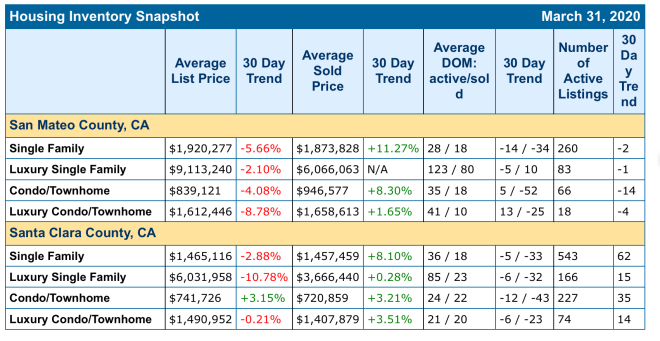
The Numbers are in. Sales from 4.1-4.6.2020

The numbers are in for 4.1.2020-4.6.2020:

Got Real Estate Questions?   The Caton Team is here to help.

We strive to be more than just Realtors – we are also your home resource. If you have any real estate questions, concerns, need a referral or some guidance – we are here for you. Contact us at your convenience – we are but a call, text or click away!

The Caton Team believes, in order to be successful in the San Fransisco | Peninsula | Bay Area | Silicon Valley Real Estate Market we have to think and act differently. We do this by positioning our clients in the strongest light, representing them with the utmost integrity, while strategically maneuvering through negotiations and contracts. Together we make dreams come true.  How can The Caton Team help you?

A mother and daughter-in-law team with over 35 years of combined, local Real Estate experience and knowledge – would’t you like The Caton Team to represent you? Let us know how we can be of service. Contact us any time.

Call | Text | Sabrina 650.799.4333 | Susan 650.796.0654

Email |   Info@TheCatonTeam.com

The Caton Team – Susan & Sabrina
A Family of Realtors
Effective. Efficient. Responsive.
What can we do for you?

The Caton Team Testimonials | The Caton Team Blog – The Real Estate Beat | TheCatonTeam.com | Facebook | Instagram | HomeSnap | Pintrest | LinkedIN Sabrina | LinkedIN Susan 

Want Real Estate Info on the Go?  Download our FREE Real Estate App:  Mobile Real Estate by The Caton Team

Berkshire Hathaway HomeServices – Drysdale Properties

DRE # |Sabrina 01413526 | Susan 01238225 | Team 70000218 |Office 01499008

The Caton Team does not receive compensation for any posts.  Information is deemed reliable but not guaranteed. Third party information not verified.

Take Advantage of Free Disinfectants: How To Fill Your Home With Sunlight and Fresh Air

Take Advantage of Free Disinfectants: How To Fill Your Home With Sunlight and Fresh Air

Take a deep breath. Is the air inside your home stuffy? Don’t delay: Open a window and let fresh air and sunlight into your quarantined space. It won’t just help make your place smell better and feel fresher, it can also make your home healthier. And it may just help elevate your mood in these stressful times.

With a pandemic raging, the Centers for Disease Control recommends all households “increase ventilation by opening windows or adjusting air conditioning.” This call for fresh air is in addition to regular disinfecting and best hygiene practices to blunt the spike of COVID-19 cases.

Sunlight plus a cool breeze to assist in the fight against infection isn’t a new idea. There’s a history of fresh air and sunlight being used to control the spread of disease.

During the 1918 flu pandemic, “open air” treatments were used to treat sick soldiers and sailors, according to public health expert Richard Hobday. It remained a popular therapeutic method to treat infection through the 1950s.

In a recent article, Hobday explains the lessons learned from the 1918 flu outbreak: Over a century ago, medical officers discovered a “combination of fresh air and sunlight sees to have prevented deaths among patients; and infections among medical staff.” Hobday cites a report that indicates open-air treatment during the 1918 pandemic reduced deaths in hospitals from about 40% to about 13%.

In 2018, researchers led by Dr. Ashkan Fahimipour published findings in the Microbiome Journal that show sunlight does help kill bacteria in household dust. However, the doctor cautions there isn’t direct evidence sunlight is an effective deterrent for the spread of COVID-19.

“We do have scientific evidence that sunlight inactivates some microorganisms, including viruses,” says Fahimipour. “However, to my knowledge, data on the effects of sunlight on COVID-19 do not exist. That said, sunlight is a ‘free’ potential infection control measure that is easy to implement and unlikely to contribute deleterious effects—with emphasis on potential.”

So if the sun’s rays and fresh air are an easy way to boost the overall health of your living space, we wanted to focus on that crucial potential for beneficial effects  We spoke with a few pros for tips on how to maximize airflow and sunlight in your home.

Open your windows, even if you have to adjust the thermostat

Whether you’re in a part of the country in the full throes of spring or still dealing with a deep freeze, think about opening your windows for fresh air and adjusting the thermostat to compensate. And yes, we know it’s expensive to run the heater with windows open, but letting the air circulate for a few hours a day can help improve the atmosphere inside your home.

Jeff Scroggins runs Creative Design Group, a design firm focused on high-end homes in Colorado’s ski resort towns. Even in the often-frigid Rockies, where air conditioning isn’t a standard feature, Scroggins says he has plenty of clients who crack open their windows year-round just for airflow. Even when temperatures dip below freezing, fresh air can offer benefits.

If you have outdoor space, use it

If you’re lucky enough to be quarantined at home and have a backyard, use that space for dining alfresco, grilling, or even an impromptu picnic.

And your backyard doesn’t need to be designed to the nines to enjoy it. Make the most of what you have right now.

“Pretend you are in a luxurious resort, and start your day by experiencing that first cup of coffee outside, listening to the birds,” suggests Susan Solliday, president of the Arizona North Chapter of American Society of Interior Designers. “Pull out chairs and tables suitable for outside, and place them in great morning spots.”

No yard? No problem. Designer and real estate agent James Judge says even the smallest outdoor spaces can be transformed into an inviting hangout spot.

“It can be as simple as a yoga mat on the patio or a cute bistro set that you order online,” Judge says. “An indoor and outdoor throw pillow can brighten up a space, too.”

Ditch heavy drapery for sheer curtains

Judge also recommends sheer curtains to lighten up your space. Now is not the time to live out your vampire fantasies—so consider replacing heavy drapes or thick fabric curtains to allow sunlight to stream in.

“With sheers you can still achieve privacy, but they are a great way to get natural light in, too,” says Judge.

There are several options for blinds and shades, like solar shades, which are designed to maximize natural light while cutting down on glare and blocking harmful UV, which could damage furniture or other valuables.

Blinds with larger slats let in the most light, but offer less privacy than those with smaller slats, which is important to consider for windows facing the street.

How you approach letting sunlight and fresh air in to your shelter-in-place lifestyle will be personal. It depends on your home, your climate, and your health. Whatever your situation, try to make every effort to keep your surroundings as healthy as possible. Opening a window is free, easy, and proven to boost your health. And that’s something we can all use right now.

By Becky Bracken | Mar 27, 2020

I read this article HERE 

Got Real Estate Questions?   The Caton Team is here to help.

We strive to be more than just Realtors – we are also your home resource. If you have any real estate questions, concerns, need a referral or some guidance – we are here for you. Contact us at your convenience – we are but a call, text or click away!

The Caton Team believes, in order to be successful in the San Fransisco | Peninsula | Bay Area | Silicon Valley Real Estate Market we have to think and act differently. We do this by positioning our clients in the strongest light, representing them with the utmost integrity, while strategically maneuvering through negotiations and contracts. Together we make dreams come true.  How can The Caton Team help you?

A mother and daughter-in-law team with over 35 years of combined, local Real Estate experience and knowledge – would’t you like The Caton Team to represent you? Let us know how we can be of service. Contact us any time.

Call | Text | Sabrina 650.799.4333 | Susan 650.796.0654

Email |   Info@TheCatonTeam.com

The Caton Team – Susan & Sabrina
A Family of Realtors
Effective. Efficient. Responsive.
What can we do for you?

The Caton Team Testimonials | The Caton Team Blog – The Real Estate Beat | TheCatonTeam.com | Facebook | Instagram | HomeSnap | Pintrest | LinkedIN Sabrina | LinkedIN Susan

Want Real Estate Info on the Go?  Download our FREE Real Estate App:  Mobile Real Estate by The Caton Team

Berkshire Hathaway HomeServices – Drysdale Properties

DRE # |Sabrina 01413526 | Susan 01238225 | Team 70000218 |Office 01499008

The Caton Team does not receive compensation for any posts.  Information is deemed reliable but not guaranteed. Third party information not verified.


Mortgage Applications Drop as Coronavirus Infects the Housing Market

Mortgage Applications Drop as Coronavirus Infects the Housing Market

My 2 cents – these Bear Markets can be frightening.  But I’m not scared.  Real Estate is one of the most crucial investments of your life and time and time again Real Estate recovers and maintains its vaule.  Will it dip?  Of course it will.  The Real Estate Market like the Stock Market is a direct reflection of the people’s collective reaction.  So this slow down is not a surprise, people are sheltering in place and scared to act. 

Let me leave you with this, Uncle Warren Buffett who owns BHHS – he always buys in a Bear Market.  So don’t be scared.  If buying a home was your goal this year, if you still have your downpayment safe in your saving account – interest rates are low, if you’re still employed you’ll get a loan! If you want to buy, go for it.  We Realtors can make things happen virtually and online while maintaining safety and obeying the shelter in place. 

Even if you already own your home, values doesn’t matter if they go up and down until you actually sell.  So stay in place, maybe even work on the house and hang tight. 

Now for the article…

The U.S. housing market is showing signs of being infected by the coronavirus. With more Americans testing positive for COVID-19, the economy crashing, and increasing numbers of shuttered businesses and layoffs, fewer folks are seeking mortgages to purchase homes during this crisis.

The number of home buyers seeking mortgages dropped significantly in the week ending March 20, according to a weekly survey from the Mortgage Bankers Association. Weekly purchase applications fell 14.2% compared with the previous week—and was down 11.2% from the prior year, according to the nonseasonally adjusted numbers.

The survey spans more than 75% of U.S. residential mortgage applications.

This was the first year-over-year decline in home purchase applications in more than three months. The average loan size for home purchases was $336,000.

“Home purchase applications were notably impacted by rising rates and the widespread economic disruption and uncertainty over household employment and incomes,” Joel Kan, associate vice president of economic and industry forecasting for the association, said in a statement.

The number of buyers seeking mortgages plummeted the most in the states hardest-hit by COVID-19. In New York, the epicenter of the pandemic in the U.S., purchase applications fell 35% in the seven days ending March 20 compared with the prior week. And they were down 24% in the week ending March 13 from the previous week.

Weekly purchase applications fell 23% in California and 17% in Washington state in the week ending March 20 compared with the prior seven days.

“Potential home buyers might continue to hold off on buying until there is a slowdown in the spread of the coronavirus and more clarity on the economic outlook,” Kan said.

Overall, the number of mortgage applications fell 29% compared with the prior week. Weekly refinance applications were down 33.8% but were still up 195% from the same week a year earlier.

Refinances spiked at the beginning of the month, when mortgage interest rates fell to historic lows, reaching a low of 3.13% on March 2 for 30-year fixed-rate loans, according to Mortgage News Daily. Homeowners rushed in to refinance their existing home loans in an effort to pare down their mortgage payments by as much as a few hundred dollars a month and tens of thousands of dollars over the life of their loan. The exact amount varied considerably depending on the rate they received and size of their loans.

Mortgage rates have since fluctuated wildly, reaching 4.15% on March 19 before going back down to 3.5% as of Tuesday, according to Mortgage News Daily. And that’s led to a drop in refinance applications as refinancing isn’t as profitable as it was for homeowners when rates reached new lows.

Clare Trapasso is the senior news editor of realtor.com and an adjunct journalism professor at St. John’s University. She previously wrote for a Financial Times publication, the New York Daily News, and the Associated Press. She is also a licensed real estate agent with R New York. Contact her at clare.trapasso@realtor.com.

By Clare Trapasso | Mar 25, 2020

I read this article HERE 

Got Real Estate Questions?   The Caton Team is here to help.

We strive to be more than just Realtors – we are also your home resource. If you have any real estate questions, concerns, need a referral or some guidance – we are here for you. Contact us at your convenience – we are but a call, text or click away!

The Caton Team believes, in order to be successful in the San Fransisco | Peninsula | Bay Area | Silicon Valley Real Estate Market we have to think and act differently. We do this by positioning our clients in the strongest light, representing them with the utmost integrity, while strategically maneuvering through negotiations and contracts. Together we make dreams come true.  How can The Caton Team help you?

A mother and daughter-in-law team with over 35 years of combined, local Real Estate experience and knowledge – would’t you like The Caton Team to represent you? Let us know how we can be of service. Contact us any time.

Call | Text | Sabrina 650.799.4333 | Susan 650.796.0654

Email |   Info@TheCatonTeam.com

The Caton Team – Susan & Sabrina
A Family of Realtors
Effective. Efficient. Responsive.
What can we do for you?

The Caton Team Testimonials | The Caton Team Blog – The Real Estate Beat | TheCatonTeam.com | Facebook | Instagram | HomeSnap | Pintrest | LinkedIN Sabrina | LinkedIN Susan

Want Real Estate Info on the Go?  Download our FREE Real Estate App:  Mobile Real Estate by The Caton Team

Berkshire Hathaway HomeServices – Drysdale Properties

DRE # |Sabrina 01413526 | Susan 01238225 | Team 70000218 |Office 01499008

The Caton Team does not receive compensation for any posts.  Information is deemed reliable but not guaranteed. Third party information not verified.


Recession Alert: What Home Buyers and Sellers Need To Know About the Housing Market

Recession Alert: What Home Buyers and Sellers Need To Know About the Housing Market

Last year, there were fears that a trade war with China or the fallout from Brexit could torpedo the strong U.S. economy. Instead, it was the unforeseen force of COVID-19, caused by a new strain of coronavirus, that has led the president of the United States to declare a national emergency and made a global recession seem all too possible.

As flights are canceled, school suspended, and professional sports put on ice around the world amid the deadly pandemic, an economic slowdown appears inevitable. That’s terrifying to those whose memories of the Great Recession are still fresh, but many housing and financial experts believe this looming downturn—which may not even devolve into a full-blown recession—may not be as painful as the last.

“I don’t expect the slowdown to be like the last recession where prices fell,” says realtor.com® Chief Economist Danielle Hale. “There are more than enough buyers out there to keep home sales from slowing in any major way.”

While it doesn’t look like it will be business as usual anytime soon, home prices aren’t expected to fall off a cliff and low mortgage rates may help buoy home sales. At least that’s what experts are saying this week. But this is a fast-moving, unprecedented crisis, and no one knows yet how it will all play out.

“The next eight weeks are critical. We will learn, and we will turn a corner on this virus,” President Donald Trump said in a press conference on March 13, as he announced the national emergency. During his appearance, the stock market went up more than 9%. “We will get through this altogether.”

While there will likely be layoffs, many economists don’t expect them to be widespread, but rather concentrated in industries such as tourism and hospitality. If employment stays high, most folks will be able to make their monthly mortgage payments and hold on to their homes. Subprime loans, which helped to tank the economy in the past decade, have largely ceased to exist today, as credit requirements for loans got much stricter after the housing bust. Plus, home prices have risen so much in the past few years that most owners have substantial equity in their properties. So they’re much less likely to find themselves underwater on their mortgages.

“It will be different than the Great Recession. Things unraveled pretty quickly, and then the recovery was pretty slow,” says Hale. “I would expect this to be milder. There’s no dysfunction in the banking system, we don’t have [many] households who are overleveraged [with their mortgage payments] and are potentially in trouble.”

Will home sales and prices go down?

If folks are worried about their jobs, and being able to pay their bills, they’re less likely to want to buy a home. Ditto if they’re nearing retirement and the stock market volatility wiped out a big chunk of their 401(k) accounts.

But that caution is likely to be at least partly offset by some of the lowest mortgage interest rates in nearly 50 years. They were just 3.36% for a 30-year fixed-rate mortgage as of Thursday, according to Freddie Mac.

“I don’t know which force will be greater: the negative impact of job cuts, if that was to occur, or the positive influence of low mortgage rates,” says National Association of Realtors® Chief Economist Lawrence Yun.

Most housing economists don’t expect housing prices to fall, since we’re still seeing a housing shortage. There aren’t enough existing homes or new construction to satisfy the high demand from buyers, many of whom have been looking for a home for a while and perhaps have lost bidding wars. After all, the life changes that lead people to buy a home are still ongoing: expanding a family or having kids leave the nest, or relocating for a new job.

Also, sellers will likely be reluctant to accept less than they would have just a few weeks or months ago. Those not in a hurry to sell may simply pull their abodes off the market and wait for prices to rebound.

As for current homeowners who might find themselves in financial straits if they lose their job, lenders may offer forbearance and payment deferral programs to help them stave off a short sale or foreclosure, says Mark Zandi, chief economist at Moody’s Analytics.

“They’ll be very understanding,” Zandi says of lenders, particularly of government-sponsored loans through Fannie Mae and Freddie Mac, and Federal Housing Administration loans. “Especially in an election year, I don’t think there’s [much of a] chance they’ll take a hard line.”

What real estate markets could be hurt the most by a downturn?

The markets that are most likely to be affected by a downturn, at least initially, are those that rely heavily on travel, tourism, and hospitality. Manufacturing sectors that rely on a global supply chain that’s been disrupted by the virus could also take a hit.

With conferences and conventions being canceled at a rapid clip, places such as Las Vegas could feel the economic toll. Similarly, tourist hot spots like Orlando, FL, home to Disney World, Universal Orlando, and SeaWorld theme parks, which have all announced closures, could also feel the pain.

Their saving grace could be the retirees moving in to those communities, says NAR’s Yun. That demand could keep prices stable—and therefore sellers happy.

“Those [type of] markets are worth watching,” says Yun.

Booming markets that grew very quickly with big price gains could also experience a bit of a slowdown. Metro areas like Denver, Salt Lake City, and Boise, ID, could potentially be affected, says Moody’s Zandi. These markets, which have growing tech scenes, have become popular with retirees and priced-out folks from California in recent years.

“You might see some price declines in the Western markets that got very juiced up, very speculative,” he says.

Zandi thinks those real estate markets could rebound fast—maybe within a quarter or two, or as soon as the economy improves.

The luxury market could have a harder time. A multimillion-dollar home isn’t exactly a necessity, and they typically take longer to sell in normal times. And those who have enough money to buy high-end real estate often have quite a bit of money in the stock market, which has been on a wild ride lately, making them less likely to want to commit to another pricey property. Even luxury rentals, which is where builders have been focusing in recent years, may end up sitting empty.

“Prices are going to come down,” says Zandi. “In a recession, people will look for the best bargain. They’re not going to look for the luxury, high-end home. … They’re going to look for the ‘give me what I need at a good price.’”

By Clare Trapasso | Mar 13, 2020

Clare Trapasso is the senior news editor of realtor.com and an adjunct journalism professor at St. John’s University. She previously wrote for a Financial Times publication, the New York Daily News, and the Associated Press. She is also a licensed real estate agent with R New York. Contact her at clare.trapasso@realtor.com

I read this article HERE.

Got Real Estate Questions?   The Caton Team is here to help.

We strive to be more than just Realtors – we are also your home resource. If you have any real estate questions, concerns, need a referral or some guidance – we are here for you. Contact us at your convenience – we are but a call, text or click away!

The Caton Team believes, in order to be successful in the San Fransisco | Peninsula | Bay Area | Silicon Valley Real Estate Market we have to think and act differently. We do this by positioning our clients in the strongest light, representing them with the utmost integrity, while strategically maneuvering through negotiations and contracts. Together we make dreams come true.  How can The Caton Team help you?

A mother and daughter-in-law team with over 35 years of combined, local Real Estate experience and knowledge – would’t you like The Caton Team to represent you? Let us know how we can be of service. Contact us any time.

Call | Text | Sabrina 650.799.4333 | Susan 650.796.0654

Email |   Info@TheCatonTeam.com

The Caton Team – Susan & Sabrina
A Family of Realtors
Effective. Efficient. Responsive.
What can we do for you?

The Caton Team Testimonials | The Caton Team Blog – The Real Estate Beat | TheCatonTeam.com | Facebook | Instagram | HomeSnap | Pintrest | LinkedIN Sabrina | LinkedIN Susan

Want Real Estate Info on the Go?  Download our FREE Real Estate App:  Mobile Real Estate by The Caton Team

Berkshire Hathaway HomeServices – Drysdale Properties

DRE # |Sabrina 01413526 | Susan 01238225 | Team 70000218 |Office 01499008

The Caton Team does not receive compensation for any posts.  Information is deemed reliable but not guaranteed. Third party information not verified.
Why You Should Check Your Credit Score Before Buying A Home

Here’s how your credit score affects the home buying process.

While there’s no strict credit score minimum to get a mortgage and buy a home, there are guidelines most lenders follow. While your credit score is a major factor in buying a home, it’s not the only one. Lenders also consider your employment history, income, and current debts.

And, since credit scores fluctuate, following good credit practices can increase your score and help you get a mortgage or lower rate in the future.

Most first time home buyers are looking to understand how the credit process works. A good credit score can mean the difference between qualifying for a mortgage loan and having your application rejected.

It is important to understand what your credit score means, and how it is calculated. These factors directly influence your eligibility for a mortgage, in addition to your interest rate. Even if you qualify for a mortgage, a lower credit score means you’ll likely be stuck with a higher interest rate. And that high-interest rate will cost you more over the lifetime of the loan.

How does your credit score factor into buying a home?

To understand how your credit score factors into home buying, you first need to understand the credit score basics. You’ve probably heard the phrase “FICO score” in credit card commercials, but here’s what it really is. FICO (which stands for Fair Isaac Corporation) is one of the most common credit scores. It’s used by banks and other financial institutions to determine your creditworthiness.

So, what makes you worthy? The bank needs to believe you’ll pay back your mortgage loan, and that FICO score helps them decide whether or not you’re a risk.

For them, the higher the credit score, = the lower the risk, which means that you’ll enjoy lower interest rates. And, for those with lower credit scores, the opposite is true. Your credit score plays a huge role in determining whether a bank believes you a risk to pay back the mortgage loan or not. If you are deemed a lower risk (because you have a higher credit score), then you will have a lower interest rate and pay less for the loan. But if you have a lower credit score, the opposite will be true.

Factors that affect a Credit Report

FICO scores use several different factors from your credit report. This information comes from the three major credit bureaus (Equifax, Experian, and TransUnion), and it is used to assemble a score ranging from 300-850. Here are the factors that go into your credit score:

· New credit 10%
· Types of credit 10%
· Length of credit history 15%
· Amount owed (30%)
· Payment history (35%)

What credit score is needed to buy a house?

Your credit score plays a big role in your mortgage application, but it is important to remember that it isn’t the only factor. Financial institutions will also consider factors such as your employment history, your current debts, your income, the size of the loan you are asking for, and the total amount you are willing to offer in a down payment.

There are no hard lines when it comes to a minimum credit score. Instead of an exact answer on what is the right credit score to buy a house, most financial advisors use guidelines for home buyers. The guidelines help home buyers to determine if they are on the lower limits of an acceptable credit score or not. Here are a few credit score guidelines for the most common types of home loans:

Loan Types

When does your credit get checked in the home buying process?

When does your credit get checked in the home buying process? Well, once you send in your credit application to a lender, they are going to check your credit score. It is one of the first things they will do to determine whether you are eligible for a mortgage. If your credit score is too low for a particular lender, then they’ll use it to weed out your application before they go further and check things like your income and employment history.

Check your credit score for free by asking any of the three major credit bureaus (Experian, TransUnion, Equifax) for your credit report. Your credit report won’t just include your credit score — it will also include all of the factors that led to the final number. So you’ll be able to look and see if an account you forgot to pay, or a high credit utilization is dragging down your score. If your credit score isn’t as high as you’d like, don’t fret. You might not qualify for a mortgage right away, or you might not get the interest rate that you want right off the bat. But you can improve your credit score over time.

Types of home loans

Not all mortgages are made alike. There are several different types of home loans, and they have key differences. Here are the most common types of mortgages available on the market:

· Conventional loans
This is the most typical option — two-thirds of mortgages are conventional loans. Unlike FHA and VA loans, these loans aren’t backed by the government. Lenders will generally ask for a 20% down payment. If you can’t make that amount, you can pay as little as 5%. But going with a down payment under 20% means that you will have to pay for private mortgage insurance, which can be expensive. These loans typically have a 620 minimum credit score.

· FHA loans
FHA loans are a are a valuable option for those with lower credit scores, as the minimum score for an FHA loan can be as low as 580. FHA loans also allow homebuyers to put down as little as 3.5%. Still, you’ll need to pay PMI if you decide to put down less than 20%, similar to a conventional loan.

· VA loans
VA loans are limited to veterans and current members of the US armed forces. They are especially attractive because home buyers seeking this type of loan can put as little as 0%. In addition, there is no PMI penalty for putting down less than 20%. VA loans are backed by the federal government, and lenders are not required to use a minimum credit score.

Is there a risk in having your credit checked multiple times during the application process?

When you apply for a mortgage, the credit check is listed on your credit report as an inquiry. That means that you are looking at taking on new debt. A credit inquiry will have a small negative impact on your overall score, but there isn’t much you can do about it.

You should also know that shopping around for a mortgage isn’t going to harm your score. If you have multiple credit checks from mortgage lenders within a 45-day period, it will be reported as a single inquiry. You can shop around by completing mortgage applications, getting a preapproval, or getting an official loan estimate.

Other types of credit applications can also have a negative impact on your credit score. Applications for credit cards, car loans, student loans, personal loans, and business loans can also result in an inquiry on your credit report that lowers your score. If you are considering shopping around for a mortgage, then you want to make sure that you avoid applying for a car loan, credit card, or another type of debt so that a new inquiry doesn’t push down your credit score.

The difference between a hard and a soft check

There is a difference between the types of inquiries that get listed on your credit report. Inquiries are separated into two categories: hard and soft.
Hard inquiries occur when a lender uses your credit report to make a decision on whether or not they will provide you with credit. Credit card applications, car loan applications, and mortgage applications are all forms of hard inquiries.

Soft inquiries occur when a credit card company checks your credit to pre approve you for a new credit card or when you check your own credit online. Soft inquiries aren’t listed on your credit report and they don’t impact your overall credit score.

How to improve your credit score

If your credit score isn’t where you want it to be, don’t get frustrated. You can improve your credit score over time. The first thing you should look at doing is lowering your credit card balances. Your card utilization rate plays a factor in your overall score. You’ll also want to make sure that you pay any unpaid debts as well as paying your bills on time. By paying off old accounts and keeping your new ones in good standing, your credit score will rise over time. You should also avoid taking out new lines of credit if you don’t have to. If you are making multiple applications for lines of credit, lenders will think that you are strapped for cash.

It will likely take months, at the earliest, to have a dramatic positive impact on your credit score. But following good credit practices, you can improve your score and put yourself in position to qualify for a mortgage or get a better rate.


I read this article at: Open Listings

Got Real Estate Questions?   The Caton Team is here to help.

We strive to be more than just Realtors – we are also your home resource. If you have any real estate questions, concerns, need a referral or some guidance – we are here for you. Contact us at your convenience – we are but a call, text or click away!

The Caton Team believes, in order to be successful in the San Fransisco | Peninsula | Bay Area | Silicon Valley Real Estate Market we have to think and act differently. We do this by positioning our clients in the strongest light, representing them with the utmost integrity, while strategically maneuvering through negotiations and contracts. Together we make dreams come true.

A mother and daughter-in-law team with over 35 years of combined, local Real Estate experience and knowledge – would’t you like The Caton Team to represent you? Let us know how we can be of service. Contact us any time.

Email Sabrina & Susan at: Info@TheCatonTeam.com

Call us at: 650-568-5522 Office: 650-365-9200

The Caton Team – Susan & Sabrina
A Family of Realtors
Effective. Efficient. Responsive.
What can we do for you?

The Caton Team Testimonials

The Caton Team Blog – The Real Estate Beat

The Caton Team Website

The Caton Team Advantage

How to Buy While Selling Real Estate

Want Real Estate Info on the Go?  Download our FREE Real Estate App:  Mobile Real Estate by The Caton Team

Visit us at:  Our Blog * TheCatonTeam.com * Facebook * Instagram * HomeSnap* Pintrest * LinkedIN Sabrina * LinkedIN Susan

Thanks for reading – Sabrina

Berkshire Hathaway HomeServices – Drysdale Properties

Sabrina DRE# 01413526 / Susan DRE #01238225 / Team DRE# 70000218/ Office DRE #01499008

The Caton Team does not receive compensation for any posts.  Information is deemed reliable but not guaranteed. Third party information not verified.
The Importance of a Health Care Directive

Hello Caton Team Friends, 

A few friends have recently me asked about Health Care Directives.  Though as Realtors we cannot advise on matters beyond Real Estate – I am reposting this article from the Mayo Clinic.

Real Estate means homes and home is where the heart is.  I thought I would share this article and one on the importance of Trusts from Bankrate HERE.  

Creating Your Advance Directive

Imagine if you were too sick or injured to express your health care wishes. Who would you want to make those decisions and guide your care? An advance directive is a legal document that allows you to express your end of life, health care wishes ahead of time.

Everyone over the age of 18 should have an advance directive on file. People often think they are too healthy to have an advance directive. The reality is that none of us know the future and at any moment, something could happen to us where we become incapable of making decisions for ourselves.

An advance directive has two parts. Since this is your document, you can complete the form in its entirety or you can complete only certain questions. The most important section to be completed is the first part in which you name an agent. This section of the document allows you to designate a person or persons whom you trust and who would be willing to represent your wishes in the event you need someone to make decisions on your behalf. This person(s) is called your health care power of attorney (POA).

The second part of the document is called the living will. It allows individuals to express their thoughts relating to care intended to prolong life. People can choose to accept or refuse medical care commonly related to dialysis, resuscitation, breathing machines and tube feedings. It is also possible to express your wishes related to organ and tissue donation. This part of the form is the most difficult because it causes people to really reflect on their values and beliefs on end-of-life treatment. Some people find it difficult to think about how they would like to die. Therefore, this part of the form often poses the biggest barrier in completing the advance directive.

Once you have completed your advance directive, it must be made legal. This can be done by having it notarized or having it signed by two witnesses, who are not your power of attorney. After it is legal, you should give a copy to your doctor, power of attorney and family. 

This document is an important part of your medical record. Some of the choices you may put in your directive are:

  • The person you want to be your health agent and make decisions about your health care for you.
  • Your goals, values and preferences about health care.
  • The types of medical treatment you want or don’t want.
  • Where you would like to receive care.
  • Instructions about treatments such as artificial nutrition and hydration, CPR, and dialysis.
  • Donation of organs, tissues and eyes.
  • Funeral arrangements.

Next steps:

  1. Review and complete the Advance Health Care Planning: Making Your Wishes Known Booklet
  2. Complete An Advance Health Care Directive Form. Have it notarized or signed by two witnesses who are not your power of attorney. 
  3. Give a copy to your doctor, power of attorney and family.
  4. If necessary, complete a Provider Orders for Life Sustaining Treatment (POLST) Form. For more information about this form, visit the POLST page.
  5. Visit our Community Resources page for contact information if you have any questions along the way. 


I read this article from The Mayo Clinic  HERE 

Got Real Estate Questions?   The Caton Team is here to help.

We strive to be more than just Realtors – we are also your home resource. If you have any real estate questions, concerns, need a referral or some guidance – we are here for you. Contact us at your convenience – we are but a call, text or click away!

The Caton Team believes, in order to be successful in the San Fransisco | Peninsula | Bay Area | Silicon Valley Real Estate Market we have to think and act differently. We do this by positioning our clients in the strongest light, representing them with the utmost integrity, while strategically maneuvering through negotiations and contracts. Together we make dreams come true.  How can The Caton Team help you?

A mother and daughter-in-law team with over 35 years of combined, local Real Estate experience and knowledge – would’t you like The Caton Team to represent you? Let us know how we can be of service. Contact us any time.

Call | Text | Sabrina 650.799.4333 | Susan 650.796.0654

Email |   Info@TheCatonTeam.com

The Caton Team – Susan & Sabrina
A Family of Realtors
Effective. Efficient. Responsive.
What can we do for you?

The Caton Team Testimonials | The Caton Team Blog – The Real Estate Beat | TheCatonTeam.com | Facebook | Instagram | HomeSnap | Pintrest | LinkedIN Sabrina | LinkedIN Susan

Want Real Estate Info on the Go?  Download our FREE Real Estate App:  Mobile Real Estate by The Caton Team

Berkshire Hathaway HomeServices – Drysdale Properties

DRE # |Sabrina 01413526 | Susan 01238225 | Team 70000218 |Office 01499008

The Caton Team does not receive compensation for any posts.  Information is deemed reliable but not guaranteed. Third party information not verified.


5 Annoying Work-From-Home Habits You Need To Stop Doing Right Now

5 Annoying Work-From-Home Habits You Need To Stop Doing Right Now

We Realtors know how to work from home, our office, our car, the coffee shop – sharing this article in hopes it helps you…

Many freelancers (like me) and telecommuters have long reveled in the pleasures of working from home (in all-day sweats no less). But now that the novel coronavirus has many more of us clocking our 9-to-5s from a home office or our dining table/work desk, it’s pretty clear that we could all do with a crash course on a few WFH rules.

By “rules,” we’re talking about etiquette—silent, subtle laws that are rarely stated, but are nonetheless crucial to doing a good job (and keeping that job, we might add).

What’s more, a lot of this WFH etiquette is fairly new, due to the latest technical advances for remote work. For instance, while video calls are one of the key ways to stay connected, how you behave on them can have a huge impact on how you come across  to co-workers—and your boss, too.

So whether you’re a WFH veteran or an office worker adjusting to the new normal, here’s a rundown on six WFH habits that could be rubbing your co-workers the wrong way—plus some fixes that’ll keep you in good standing no matter where you work.

1. Turning off your camera during videoconferences

During videoconferences, we understand how it can feel a bit invasive to have your office mates take a gander at you, in nonwork attire, in your home. Still, if you’re wondering whether you can keep your PJs on and shut off the camera, the answer is no.

“We only take in 7% of what is communicated to us via words alone,” says Peter Arvai, founder and CEO of presentation software firm Prezi. “The rest is tone, voice, and body language.”

Showing your face will help convey that you’re paying attention, avoid miscommunications, and keep goodwill flowing.

At the very least, check in with your employer to see his or her preference for video meetings.

“All our meetings take place on Google Hangouts, but cameras aren’t necessary,” says Bart Turczynski, editor at ResumeLab. But every supervisor is different, so when in doubt, ask.

Of course, not everyone is comfortable on camera.

“It takes some people time to get used to looking at their face up close on a computer screen,” says Jennifer Osterholt, a strategic marketing consultant who helps small businesses. If you’re really uncomfortable, ease into video meetings by chatting with friends first.

2. Commenting on people’s home offices

On a videoconference you may see a new side to your co-workers—think a Smurf action figure collection on a bookcase. But refrain from commenting on anyone’s surroundings.

“A home office should still be treated as an office, which means you should communicate professionally,” advises Courtney Keene, a director of operations at MyRoofingPal, an online marketplace that connects people with home improvement contractors. “Plus, people should be understanding that not everyone has the perfect workspace at home.”

This is especially true of people who don’t work from home regularly.

“So long as employees are remaining professional and on task, managers should definitely avoid personal comments about their workspace,” says Keene.

3. Chronic lateness due to ‘technical problems’

We know, technical difficulties can trip up even the best of us. But to always be late because you’re fumbling to get the sound on or toggle to presentation mode doesn’t shine well on you, either.

So if you need extra time, “log on before the official start time of a virtual meeting,” says Osterholt. “I think proper etiquette and respect for other’s schedules means you plan to be at meetings a few minutes early.”

If you’re a videoconference newbie, log on even earlier.

“I encourage people with technical questions to log on 15 minutes early,” says Osterholt.

4. Eating and other disruptions during calls

Maybe you could snack on a few cashews in a meeting around a large conference table, but on video chats, it’s a lot more intimate—listeners can hear your every crunch.

“No one should be eating,” says Arvai. “It’s a disruption.”

One way to keep such disruptions to a minimum is to use your mute button liberally whenever you aren’t required to talk, which helps eliminate background noise so that whoever’s speaking can be heard clearly.

Another problem with video calls is when numerous people are talking at the same time.

“During a video or phone call with multiple parties, ensure that you avoid talking over one another,” advises Christian Giordano, president of Mancini Duffy, an architecture firm based in New York.

To keep this from happening, be cognizant of how much time you’re eating up. Speakers should start by saying, “I’m going to make the next two points” to cue others as to when they can chime in.

For professionals with children at home, the occasional kid disruption is bound to happen during a virtual meeting.

“There are occasional disturbances for people with kids, but that’s natural, and the whole team understands,” says Saurabh Jindalstartup of travel app Talk Travel.

5. Not keeping regular office hours

You may find when you’re working from home that you’re most productive from 11 p.m. to 5 a.m. That’s fine—just make sure you’re also available as needed during regular work hours, and that you respond to your boss or colleague’s emails or DMs promptly.

“The whole of my team is now supposed to check in on Slack no later than at 9:30 a.m.,” says Turczynski. “This is when employees can state what they’ve accomplished the day before and their plans for the day.”

Remember—when working from home, employees can run the risk of seeming like they’re slacking off. So, it’s best to err on the side of being highly available during work hours to earn everyone’s trust.

By Margaret Heidenry | Mar 25, 2020

I read this article HERE 

Got Real Estate Questions?   The Caton Team is here to help.

We strive to be more than just Realtors – we are also your home resource. If you have any real estate questions, concerns, need a referral or some guidance – we are here for you. Contact us at your convenience – we are but a call, text or click away!

The Caton Team believes, in order to be successful in the San Fransisco | Peninsula | Bay Area | Silicon Valley Real Estate Market we have to think and act differently. We do this by positioning our clients in the strongest light, representing them with the utmost integrity, while strategically maneuvering through negotiations and contracts. Together we make dreams come true.  How can The Caton Team help you?

A mother and daughter-in-law team with over 35 years of combined, local Real Estate experience and knowledge – would’t you like The Caton Team to represent you? Let us know how we can be of service. Contact us any time.

Call | Text | Sabrina 650.799.4333 | Susan 650.796.0654

Email |   Info@TheCatonTeam.com

The Caton Team – Susan & Sabrina
A Family of Realtors
Effective. Efficient. Responsive.
What can we do for you?

The Caton Team Testimonials | The Caton Team Blog – The Real Estate Beat | TheCatonTeam.com | Facebook | Instagram | HomeSnap | Pintrest | LinkedIN Sabrina | LinkedIN Susan

Want Real Estate Info on the Go?  Download our FREE Real Estate App:  Mobile Real Estate by The Caton Team

Berkshire Hathaway HomeServices – Drysdale Properties

DRE # |Sabrina 01413526 | Susan 01238225 | Team 70000218 |Office 01499008

The Caton Team does not receive compensation for any posts.  Information is deemed reliable but not guaranteed. Third party information not verified.