How to apply for a mortgage: Your 4-step guide.

Applying for a home loan is the first step to take when getting serious about buying a home. It will help you understand how much house you truly can afford. Get ready for the application process by gathering your financial info, finding a lender to work with, and getting pre-approved. You can always shop around and pick another lender once you get an accepted offer.

Mortgage loan pre-approval means approaching a lender with financial, credit, debt, and other information that will help them determine if you qualify for a loan at a certain amount.

There are four essential steps involved with mortgage pre-approval:

  1. Gather financial information
  2. Select a lender
  3. Get a mortgage pre-approval
  4. Close on your home

This article will give you an idea of how to get pre-approved for a mortgage and why pre-approval is important for buying a home.


How to get pre-approved for a home loan

Step 1: Gather financial information

Before heading to your lender’s office, gather and prepare the following financial information:

Credit Information: Your credit score and reports will determine the size of loan you may qualify for and the type of financing plan you will be offered. For example, a borrower with a credit score below 740 will usually have a higher interest rate associated with their loan. A borrower with a score below 580 will usually have to put down a higher down payment.

Pro Tip: Check your credit score for free with credit.com.

Debt Information: Gather and prepare any of your debt obligations. This includes student loans automobile loans, and credit card payments.

Pro Tip: If you have a significant amount of debt, the amount that you’re pre-approved will likely be smaller or rejected. Before applying for your pre-approved mortgage, try paying off your debts and minimize the number of new debts you take on.

Income Information: Gather and prepare income information from the previous two years. This includes tax returns, W-9s, pay stubs, and additional income information (from second jobs, overtime pay, social security payments, alimony or child support payments, etc.).

Asset Information: Asset information refers to assets you own other than your income. This involves gathering bank statements, property statements, investment information, and money received by family members.

Personal Information: Bring a personal ID such as a driver’s license or passport and your social security number to your lender’s office.

Employment Information: This includes your proof of employment and the length of time you’ve been with your employer.

Budget Information: Before going to see a lender, determine your budget for buying a new home.

Pro Tip: Your total housing payment budget should not exceed 35% of your pre-tax income. The ideal percentage is 25% of your pre-tax income.

Step 2: Select a lender to work with

There are two types of lenders you can work with (1) big lenders (aka the bank) or (2) small lenders (aka small, community banks or small mortgage lenders).

There are pros and cons associated with each type of lender:

Pros of big lenders:

  • Security: You can trust that big banks will protect your sensitive information as it’s a crucial part of their reputation.
  • Customer support: Banks usually offer 24/7 customer support.
  • Availability: Making an appointment for a loan will be easier with big banks as they have a larger number of loan officers available.

Cons of big lenders:

  • Rates: The rates of the big banks are usually higher than the rates at small loan offices.
  • Approval: Banks have a specific ‘credit model’ that they like to use as a guideline for approving people looking for loans. You may have a hard time being approved for a loan by a big bank if you don’t fit this ‘credit model.’

Pros of small lenders:

  • Rates: Small lenders tend to have better rates than the big banks. Furthermore, smaller lenders generally let their customers exit early. In other words, small lenders allow their customers to pay off their mortgage early and either sell their house or find a better mortgage.
  • Approval: Small lenders will generally approve loans to freelance workers, property investors, or someone who doesn’t fit the bank’s credit model.
  • Customer Service: Small lenders provide more personalized customer service and usually have faster response times.
  • Specialized Financing: Smaller lenders offer more specialized financing options than big banks. For example, if you’re looking for a small mortgage, most big banks won’t accept your application because it’s not worth their time. The smaller lender, however, will be happy to work with you.

Cons of small lenders:

  • Vulnerability: Due to their size, small lenders are more sensitive to market fluctuations.
  • Availability: Smaller lenders may not have as many available lenders as the big banks.

Should I get pre-approved by multiple financial institutions to compare rates?

  • Yes, because you can still shop rates before locking into a rate and accepting an offer. Research different lender’s reputation, search for their past clients, read their online reviews, and give them a call to get a ‘feel’ of whether or not you want to work with them.

Step 3: Get pre-approved

Most first-time home buyers are confused about the pre-approval process. So, to clear things up, we answer “how to get pre-approved for a mortgage” and the 6 other common questions first-time home buyers ask about mortgage pre-approval:

1. How do I get pre-approved for a mortgage?

  • Gather Documents: Gather the necessary documents (as listed in step 1).
  • Organize Documents: Create a Google Drive or Dropbox where you can organize all information in one, easily-accessible place.
  • Contact a Lender: Call, go online or visit a loan office/bank. The loan officer will review your documents and give you a preliminary estimate of how much house you can afford, your monthly mortgage payments, and mortgage interest rate.
  • Find out if you’ve been pre-approved: You will receive a pre-approval letter that secures your interest rates for the next 90-120 days (more on this below). On the other hand, your lender will notify you that you have not been pre-approved.

2. Why get pre-approved for a mortgage?

Benefits of Pre-Approvals:

  • Accurate: The best pre-approvals will give you an accurate idea of how much house you can afford. Furthermore, you’ll get an idea of your monthly mortgage payments and your short-term mortgage interest rates.
  • Protection: When you apply for a mortgage pre-approval, there is usually a 90-120 day protection against rising rates. In other words, pre-approvals lock-in interest rates and allow you to search for a home without worrying about interest rates increasing significantly.
  • Trustworthy: A pre-approved mortgage signals to sellers and real estate agents that you’re serious about buying a home.
  • Advantage: A pre-approved mortgage may be the deciding factor between you getting a home over another home buyer.
  • Free: Getting pre-approved for a mortgage is free, and there is no obligation to use the lender that pre-approved your mortgage.

3. What is the difference between pre-qualification and pre-approval?

  • Pre-qualification: During the pre-qualification stage of securing a mortgage, a lender will interview you to determine your income, expenses, and assets. The purpose of getting pre-qualified is to give you a rough estimate of how much house you can afford.
  • Pre-approval: During the pre-approval stage of securing a mortgage a lender will look through your income, expenses, and asset more thoroughly. A pre-approval is a more concrete estimate of how much house you can afford.

4. What if I don’t get pre-approved for a loan? Now what?

If you don’t get pre-approved for a loan, your lender can tell you why you were rejected. Lenders can also offer advice of how to get approved in the future.

For example, you may have to:

  • Build Credit: If bad credit was the reason you aren’t pre-approved, then pay off your credit cards and try not to miss your debt payments for the next 6-12 months.
  • Build Savings: Lenders usually want to see a significant amount of cash reserve in your savings account. Again, pay off your debts and try to save some money before applying for a pre-approval again.
  • Build Income: If your lender says that you don’t make enough income for a certain loan amount, either try applying for a smaller loan or, if you’re married, ask for a joint-loan with your spouse.
  • Build Employment History: Usually, lenders don’t like to see inconsistencies in employment history. Wait until you’ve been at the same job for two years before applying for a loan.

5. Does pre-approval guarantee a loan?
Pre-approval does not guarantee a loan. It is only a review of your qualifications for how much you might be able to borrow.

A buyer receives their pre-approval letters, searches for their dream home within their pre-approved amount, has their offer and financial structure accepted by the sellers, and then submits their proposal to the lender.

The lender then reviews the proposal, the buyer’s finance details, and the details of the property. If everything goes smoothly (i.e., the home doesn’t look like a money pit), the buyer will be approved for a mortgage.

However, the pre-approval letter alone does not guarantee a mortgage.

6. How long does it take to get pre-approved for a mortgage?

Depending on who you’re working with, you can get pre-approved for a mortgage in minutes. Sometimes all it takes is a phone call.

7. What impact (if any) will this have on my credit?

The short answer here is that it depends.

As mentioned above, lenders will look at your credit score and history to determine if you’ll be pre-approved. These are called credit report inquiries.

First-time home buyers usually don’t have to worry about inquires damaging their credit score. However, the more inquires your credit history shows, the more it can damage your credit score.

Inquires hurt your score because it shows lenders that you could be doing something with your credit that puts you at risk.

Step 4: Close on your home

Once you’re pre-approved for a mortgage, you can start the process of searching for a home, within your pre-approved amount.

The process of closing your home looks like this:
1. Application: The mortgage application involves submitting the documents outlined in step 1.

Time it takes: 1 day

2. Loan estimate: The lender analyzes your financial information and produces a loan estimate. A loan estimate describes the details of your loan including the terms and the predicted costs associated with your loan.

The loan estimate does not tell you if you have been approved for a loan. It simply estimates what your loan would look like if you’re approved and will help you determine if you would like to move forward with the mortgage application process.

Time it takes: The law states that you must receive your loan estimate 3 days after submitting your mortgage application.

3. Open a file: Your file is submitted to a loan processor who analyzes your financial documentation and property information. The loan processor places all this information into a loan package that is to be submitted to the underwriter.

Time it takes: 1 day

4. Loan underwriting: An underwriter analyzes your loan to determine the risk of approving your mortgage. Essentially, the underwriter is the key-decision maker and determines if you’re a good candidate for a loan based on the likelihood of you paying your mortgage each month.

The duties of an underwriter:

A. Assess: The underwriter assesses your risk by verifying that your credit, debt, income, and savings information is true. For example, they may call your employer to confirm that you do in fact work x amount of hours and are paid x amount of dollars.

B. Appraise: This is where the underwriter determines if your desired property’s price is comparable to the prices of similar properties. The purpose of the appraisal is to determine if the money you would like to borrow matches the value of the home you would like to purchase. If the appraisal is less than the loan amount, the underwriter will usually disapprove the mortgage or suggest another loan amount.

C. Approve or reject: The underwriter considers all this information and then approves or rejects your loan application.

Time it takes: 1-7 days

Pro Tip: The underwriting process generally takes longer and requires more documentation if you’re self-employed.

5. Mortgage Commitment: If the underwriter approves your loan, you are officially locked-into an interest rate.

Time it takes: 2-4 days

6. Closing: This is the step in the home-buying process where you sign all the necessary documents to own the home officially.


I read this article at: Open Listings

Got Real Estate Questions?   The Caton Team is here to help.

We strive to be more than just Realtors – we are also your home resource. If you have any real estate questions, concerns, need a referral or some guidance – we are here for you. Contact us at your convenience – we are but a call, text or click away!

The Caton Team believes, in order to be successful in the San Fransisco | Peninsula | Bay Area | Silicon Valley Real Estate Market we have to think and act differently. We do this by positioning our clients in the strongest light, representing them with the utmost integrity, while strategically maneuvering through negotiations and contracts. Together we make dreams come true.

A mother and daughter-in-law team with over 35 years of combined, local Real Estate experience and knowledge – would’t you like The Caton Team to represent you? Let us know how we can be of service. Contact us any time.

Email Sabrina & Susan at: Info@TheCatonTeam.com

Call us at: 650-568-5522 Office: 650-365-9200

The Caton Team – Susan & Sabrina
A Family of Realtors
Effective. Efficient. Responsive.
What can we do for you?

The Caton Team Testimonials

The Caton Team Blog – The Real Estate Beat

The Caton Team Website

The Caton Team Advantage

How to Buy While Selling Real Estate

Want Real Estate Info on the Go?  Download our FREE Real Estate App:  Mobile Real Estate by The Caton Team

Visit us at:  Our Blog * TheCatonTeam.com * Facebook * Instagram * HomeSnap* Pintrest * LinkedIN Sabrina * LinkedIN Susan

Thanks for reading – Sabrina

Berkshire Hathaway HomeServices – Drysdale Properties

Sabrina DRE# 01413526 / Susan DRE #01238225 / Team DRE# 70000218/ Office DRE #01499008

The Caton Team does not receive compensation for any posts.  Information is deemed reliable but not guaranteed. Third party information not verified.

How Long Does It Take to Improve Your Credit Score Enough to Buy a Home?

A new year means new goals.  If home ownership is one of them – it’s time to make sure your credit is in check.

How long does it take to improve your credit score? If you’re hoping to buy a home, having a good credit score is key, since it helps you qualify for a mortgage. So if your credit score is low, knowing how long it takes to raise it to home-buying range can help you plan.

While raising a credit score can’t happen overnight, it is possible to raise your credit score within one to two months. However, it could take longer, depending on what’s dragging down your score—and how you handle it. Here’s what you need to know.

How long does it take to raise a credit score?

First off, what’s considered a good score versus a poor one? Here are some general parameters:

  • Perfect credit score: 850
  • Excellent score: 760-849
  • Good credit score: 700 to 759
  • Fair score: 650 to 699
  • Low score: 650 and below

While it varies by area and type of loan, generally lenders will look for a score of 660 or higher to grant a mortgage (here’s more on the minimum credit score you need for a home loan).

If you’re looking to boost your credit score fast, here are some actions you can take.

Correct errors on your credit report

Correcting errors on your credit report is a relatively quick way to improve your credit score. If it’s a simple identity error—like a credit card that’s not yours showing up—you can get that corrected within one to two months.

If it’s an error on one of your accounts, though, it could take longer, because you need to involve your creditor as well as the credit bureau. The entire process typically takes 30 to 90 days. If there’s a lot of back-and-forth between you, the credit bureau, and your creditor, it could take longer.

The first step to correcting errors is to get a copy of your credit reports from TransUnion, Equifax, and Experian (the three major credit bureaus), which you can do at no cost once a year at annualcreditreport.com. Next, review them for errors. If it’s an error on one of your accounts, you must refute that error with the bureau by providing documentation arguing otherwise. For example, if you paid a credit card on time and the card issuer is reporting a late payment, find a bank statement showing that you paid on time.

Credit bureaus typically have 30 days to investigate the error. If they agree that it’s an error, they will remove the item. The credit bureau may also ask for additional information or ask you to discuss the information with the creditor involved. If that’s the case, stay on top of communications with your creditor so you can get things resolved as quickly as possible.

Deal with delinquent accounts

Bringing delinquent accounts current and settling accounts that are in collections can also boost your score fairly quickly. Once the creditor or collection agency reports your account update, you should see a positive bump in your score. Keep in mind, though, that your late payment history will remain on your credit report for seven years.

If you have bad accounts that have been on your report for six years or more, you may not want to worry about settling them or bringing them up to date. This can re-age the account, and if you fall behind again, it will stay on your credit report for another seven years.

“Make sure you don’t re-age these accounts, because they’re going to drop off soon,” says Nathan Danus, CDMP and Director of Housing and Community Development at DebtHelper in West Palm Beach, FL. Negative information typically “falls off” your credit report after seven years, so if you’re close, it’s best to just wait it out.

Lower your credit utilization

Credit utilization refers to how much you owe compared with the amount of credit you have available. For example, if you have a $10,000 credit limit across all your credit cards and you have balances totaling $9,000, you’ve utilized 90% of your credit. This drags down your credit score.

“What these consumers often need to do is pay down the balances on their existing credit accounts, which can be a challenge if they’ve allowed the balances to creep up over time,” says Martin H. Lynch, compliance manager and director of education at Cambridge Credit Counseling of Agawam, MA. “The ratio of what’s owed to the amount of credit available represents 30% of the consumer’s score, so rapid improvement is possible if there’s a large amount of money available to pay down balances.”

Linda L. Jacob, a financial counselor at Consumer Credit of Des Moines, IA, recommends paying down balances to below one-third of your credit line. Any payments you make will be reflected on your credit report as soon as your creditors report your payment to the credit bureaus. Credit scores are updated on an ongoing basis, and creditors typically report once per month, so if you make a payment that lowers your credit utilization, that should be reflected on your credit score within two months.

If you’re regularly using your credit card but you want to keep your utilization low so you can apply for a mortgage, you may want to pay down your credit-card balance on a weekly or biweekly basis. This ensures that your balance is as low as possible whenever your creditor reports your payment history to the credit bureaus.

You can also decrease your card utilization by getting more credit, but this approach can backfire. Consumers sometimes assume that by getting more credit, their credit score will improve. If you have a $3,000 balance on a card with a $4,000 credit limit and you’re approved for a new credit card with a $1,000 limit, you now have $5,000 in total credit lines. Instead of using 75% of your available credit, you’re now using 60%. That’s better, right?

Not necessarily. “Just applying for credit lowers your credit score, and that effect lasts for months,” warns Mike Sullivan, personal finance consultant at Take Charge America in Phoenix, AZ. “For the first few months after you apply for credit, your credit score may actually go down.”

You can try getting around this by asking a credit limit increase on a card you already have. Be sure to ask whether they do a “soft” credit pull rather than a “hard” credit pull, though, since hard credit inquiries are the ones that impact your credit. A creditor may be willing to give you a credit line increase with a “soft” pull, which will not hurt your credit score.

Soft inquiries are for background purposes only. For example, a credit card company may do a soft pull to see if you’re eligible for certain credit card offers, or an employer may do a soft pull before offering you a job. Soft pulls can be done without your permission and do not impact your credit score. Hard pulls require your permission, and are done when lenders or credit card companies are assessing whether to grant you a loan or line of credit.

How to raise your credit score for the long haul

Once you’ve corrected errors, settled your delinquent accounts, and brought your credit utilization under control, the only other things that will improve your score are time and developing good payment habits. For example, if you tend to forget to make payments, you can set up automatic payments so you don’t forget.

And here’s some good news for people with bad credit: Generally, people with the lowest scores will see the biggest gains the fastest.

“It’s a lot like dieting,” says Sullivan.

For instance, if your score is 550, “you could probably get it up 30 points in a matter of a couple months, if you’re really dedicated and really careful,” he explains.

On the other hand: “If your credit score is already a 750 and you’re trying to get it to 780, that can take double or more the time.”

Still, it’s worth doing whatever you can to get the best interest rate possible.

For more smart financial news and advice, head over to MarketWatch.

Melinda Sineriz is a writer living in Bakersfield, CA. She writes about personal finance and real estate for several websites and businesses.

I read this article at:  Realtor.com

Got Real Estate Questions?   The Caton Team is here to help.

We strive to be more than just Realtors – we are also your home resource. If you have any real estate questions, concerns, need a referral or some guidance – we are here for you. Contact us at your convenience – we are but a call, text or click away!

The Caton Team believes, in order to be successful in the San Fransisco | Peninsula | Bay Area | Silicon Valley Real Estate Market we have to think and act differently. We do this by positioning our clients in the strongest light, representing them with the upmost integrity, while strategically maneuvering through negotiations and contracts. Together we make dreams come true.

A mother and daughter-in-law team with over 35 years of combined, local Real Estate experience and knowledge – would’t you like The Caton Team to represent you? Let us know how we can be of service. Contact us any time.

Email Sabrina & Susan at: Info@TheCatonTeam.com

Call us at: 650-568-5522 Office: 650-365-9200

The Caton Team – Susan & Sabrina
A Family of Realtors
Effective. Efficient. Responsive.
What can we do for you?

The Caton Team Testimonials

The Caton Team Blog – The Real Estate Beat

The Caton Team Website

The Caton Team Advantage

How to Buy While Selling Real Estate

Want Real Estate Info on the Go?  Download our FREE Real Estate App:  Mobile Real Estate by The Caton Team

Visit us at:  Our Blog * TheCatonTeam.com * Facebook * Instagram * HomeSnap* Pintrest * LinkedIN Sabrina * LinkedIN Susan

Thanks for reading – Sabrina

Berkshire Hathaway HomeServices – Drysdale Properties

Sabrina DRE# 01413526 / Susan DRE #01238225 / Team DRE# 70000218/ Office DRE #01499008

The Caton Team does not receive compensation for any posts.  Information is deemed reliable but not guaranteed. Third party information not verified.


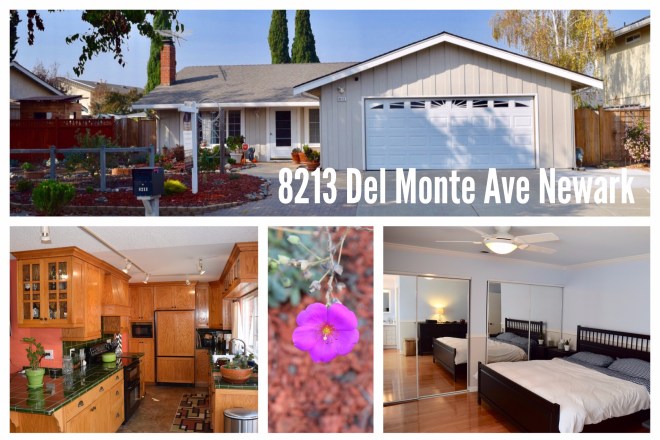
Family Room | Craftsmans Kitchen | For Sale in Newark

Whats the most important factor is Real Estate? Location Location Location. Del Monte is in a fantastic, well established & maintained neighborhood. This home has AC, forced air heat, LED lighting, dual pane windows & sliders, hardwood, vinyl, tile, carpet & laminate flooring. Spacious living/dining combo with fireplace & vaulted ceiling. Custom Craftsman Kitchen with electric glass cooktop/dual oven range, dishwasher, microwave & custom refrigerator – all overlooking the spacious back yard. Family Room with informal dinning. Play Fort, Greenhouse & Drought Tolerant plants makes landscaping a breeze. ALL APPLIANCES INCLUDE. 2 Car Garage w Laundry, Freezer, drink fridge. All this and 4 Bed with 2 Baths including Master Suite and private office. Close to schools, parks, shopping, 880, the Bridge, Facebook & Tesla. FULL Disclosure package available – CLEAN REPORTS! Excellent condition. Worth a look – 8213 Del Monte Ave in Newark is a well maintained home, with classic features in excellent condtion.  We have a full disclosure package with home, pest and roof inspections available upon request.  Contact The Caton Team with any questions.  

See more photos at: Facebook Photo Album of Del Monte Ave 

Call | Text 650.799.4333 | Email Info@TheCatonTeam.com

Upon entry you are greeted with tall vaulted ceilings and a burst of cheerful color in the large living anddining area; appointed with dual pane windows, fireplace, hardwood floors and tile.  The double doors on your left lead you to the 4th bedroom configured as a home office.  Pass through to the family room and find an informal eating area off the Craftmans style kichen with custom oak cabinetry and beautiful green tile.  The dual oven, glass top electric range, built in regrgerator, dishwasher and microwave are all at your finger tips while overlooking your back yard.  Large sliding glass doors connect the home with the garden in the family room with space for entertainment area.  Three bedrooms and hall bath featuring a shower over tub.  The master suite is tucked at the back of the home with a on private entry into the garden.  Ample closet space in each room, not to mention the oversized two car garage with washer, dryer, freezer and mini fridge included.  The garden is landscaped with drought tolerant plants such as succulents and shrubs.  Two long time lemon trees ready for your kitchen adventures.  The greenhouse, custom fort and tool sheds come with the home.  Del Monte Avenue is in lovely Newark and ready to make your own. Contact The Caton Team for a private viewing and more information.  Call | Text 650.799.4333 | Email Info@TheCatonTeam.com

Visit our website for further details:

Info on Del Monte Ave, Newark | The Caton Team Links

MLS ML81730678

Available by Appointment

Contact the Caton Team with any questions! Call | Text | Sabrina 650.799.4333 | Susan 650.796.0654 | Email |   Info@TheCatonTeam.com

Visit our website for further details:

Info on Del Monte Ave, Newark

Realtor.com on 8213 Del Monte Ave

Facebook Photo Album of Del Monte Ave

Instagram Photos for Del Monte Ave

Redfin info on 8213 Del Monte Ave

Zillow Info on 8213 Del Monte Ave

Trulia info for 8213 Del Monte Ave


fullsizeoutput_9989


Got Questions – The Caton Team is here to help. The Caton Team Links

We strive to be more than just Realtors – we are also your home resource. If you have any real estate questions, concerns, need a referral or some guidance – we are here for you. Contact us at your convenience – we are but a call, text or click away!

The Caton Team believes, in order to be successful in the San Fransisco | Peninsula | Bay Area | Silicon Valley Real Estate Market we have to think and act differently. We do this by positioning our clients in the strongest light, representing them with the utmost integrity, while strategically maneuvering through negotiations and contracts. Together we make dreams come true.

A mother and daughter-in-law team with over 35 years of combined, local Real Estate experience and knowledge – would’t you like The Caton Team to represent you? Let us know how we can be of service. Contact us any time.

Call | Text 650.799.4333 | Email Info@TheCatonTeam.com

The Caton Team – Susan & Sabrina
A Family of Realtors
Effective. Efficient. Responsive.
What can we do for you?

The Caton Team Testimonials | The Caton Team Blog – The Real Estate Beat | The Caton Team Website | The Caton Team Advantage | How to Buy While Selling Real Estate

Want Real Estate Info on the Go?  Download our FREE Real Estate App:  Mobile Real Estate by The Caton Team

Visit us at:  Our Blog | TheCatonTeam.com | Facebook | InstagramHomeSnap | Pintrest | LinkedIN Sabrina | LinkedIN Susan

Berkshire Hathaway HomeServices – Drysdale Properties Sabrina DRE# 01413526 / Susan DRE #01238225 / Team DRE# 70000218/ Office DRE #01499008

The Caton Team does not receive compensation for any posts.  Information is deemed reliable but not guaranteed. Third party information not verified.

Resources for Buyers Struggling With Down Payments

First-time buyer surveys consistently show the top hurdle to homeownership is saving up for the down payment. But potential home shoppers may be misunderstanding the amount of money they really need to buy a home.

“Paying 20 percent down is, quite frankly, a myth,” Karen Hoskins, vice president at NeighborWorks, told HouseLogic. “Most buyers pay only 5 percent to 10 percent down—some even pay zero.”

Several assistance programs exist to help buyers with down payment concerns break into homeownership. For example, 69 percent of about 2,500 homebuying programs tracked by Down Payment Resource offer down payment assistance. The average amount of assistance from these programs tops $11,000.

HouseLogic offers several places where buyers can search for down payment assistance, including through national government programs. The Federal Housing Administration offers loans to first-time buyers with down payments as low as 3.5 percent. Programs like the USDA Rural Development Loans and VA Home Loans offer eligible buyers zero down payment loans.

Mortgage financing giants Fannie Mae and Freddie Mac offer eligible buyers loans where they can put down as little as 3 percent of the purchase price. When buyers put down less than 20 percent, they pay private mortgage insurance each month to protect the lender’s interest.

Many state and local homebuying programs offer assistance programs too. There are many different forms of assistance, such as forgivable loans and grants (gifts for some or all of the down payment and closing costs) to soft mortgages (down payment assistance loans that are deferred for some period of time based on the program’s requirements).

To find a program, HouseLogic recommends NeighborWorks, which provides housing counselors to discuss mortgage options for free, and the Down Payment Resource, where buyers can check their eligibility for assistance programs. Mortgage brokers should also be able to supply buyers with information about programs in their area and help determine eligibility.

Read the full scope of your buyers’ options and share the available resources for down payments—or no down payments—on HouseLogic. 

Source: 

Known Ways You Can Buy a House With No Down Payment,” HouseLogic.com (December 2018) 

I read this article at: Realtor.com

Got Questions – The Caton Team is here to help.

We strive to be more than just Realtors – we are also your home resource. If you have any real estate questions, concerns, need a referral or some guidance – we are here for you. Contact us at your convenience – we are but a call, text or click away!

The Caton Team believes, in order to be successful in the San Fransisco | Peninsula | Bay Area | Silicon Valley Real Estate Market we have to think and act differently. We do this by positioning our clients in the strongest light, representing them with the upmost integrity, while strategically maneuvering through negotiations and contracts. Together we make dreams come true.

A mother and daughter-in-law team with over 35 years of combined, local Real Estate experience and knowledge – would’t you like The Caton Team to represent you? Let us know how we can be of service. Contact us any time.

Email Sabrina & Susan at: Info@TheCatonTeam.com

Call us at: 650-568-5522 Office: 650-365-9200

The Caton Team – Susan & Sabrina
A Family of Realtors
Effective. Efficient. Responsive.
What can we do for you?

The Caton Team Testimonials

The Caton Team Blog – The Real Estate Beat

The Caton Team Website

The Caton Team Advantage

How to Buy While Selling Real Estate

Want Real Estate Info on the Go?  Download our FREE Real Estate App:  Mobile Real Estate by The Caton Team

Visit us at:  Our Blog * TheCatonTeam.com * Facebook * Instagram * HomeSnap* Pintrest * LinkedIN Sabrina * LinkedIN Susan

Thanks for reading – Sabrina

Berkshire Hathaway HomeServices – Drysdale Properties

Sabrina DRE# 01413526 / Susan DRE #01238225 / Team DRE# 70000218/ Office DRE #01499008

The Caton Team does not receive compensation for any posts.  Information is deemed reliable but not guaranteed. Third party information not verified.

House hunting for first-time homebuyers: is there a right way?

A lot of buyers, especially first-timers, worry about whether or not they’re going about their home search the right way.

On the one hand, buyers fret that if they find their “dream home” too early, they might be missing out on something better. But, on the other, if the process takes a while, they worry that they’ll never find a home that works for them. The FOMO is real.

Keep reading to find out if you’re on track with your home search and what you should do if you find that you need to go back to the drawing board.

How many homes should you see?

Honestly, that depends. While we understand the impulse to try and rely on hard-and-fast statistics, homebuying is a truly personal experience rather than a science.

Trust your intuition. You know your needs, likes, and dislikes better than anyone else. You’ll know when you’ve landed on the property that makes the most sense for you to call home.

That said, though, there are a few things you can do to help speed your search along:

If you’ve been looking for a while and haven’t really found anything that meets your needs, it might be time to redefine search criteria. Sit down and take some time to think about which features you really need to have in your new home versus which are more nice-to-have, wishlist items.

Narrowing your search

Sometimes, narrowing search criteria can get tricky. If you’re unsure of where to start, try using the following as a starting point.

Neighborhoods

Focusing in on a particular area is one of the easiest ways to refine your search. You can start by doing research into different neighborhoods by you. Think about what you commute to work will look like, if the area has amenities that you enjoy, the quality of the school district, and home values.

With that in mind, though, you getting too hung up on a particular zip code can also limit your criteria. The key is keep an ideal location in mind while still staying open to possibility.

Bedrooms & bathrooms

When searching for a house, you should have a firm idea of how many bedrooms and bathrooms you’re after. Whether you’re just looking to accommodate yourself and the occasional guest, are thinking about starting a family in the near future, or want the option to convert a spare bedroom into an office, this information will surely help narrow your search.

We advise against compromising on this feature because, while it is possible to put an addition on later, doing so takes a substantial amount of time and effort. More often than not, homeowners find that they would rather put their home on the market than go through the hassle of trying to renovate it to fit their changing needs.

Sale price

This is the big one. Once you have the above two details settled, it’s time to narrow your search results further to only those homes that you can truly afford. If you’ve already applied for a pre-approval, that number can be a good place to start. However, remember that a pre-approval shows the maximum amount that you can ask for in a loan. You may not want to borrow up to that amount once you factor in the rest of your monthly expenses.

To find a more comfortable sale price, we recommend using a mortgage calculator to get a sense of what your monthly payment could look like at various loan amounts and interest rates. Then, once you’ve landed on a number that works for you, try plugging that into your monthly budget to get a sense of how the payment will feel in addition to your other costs.

Now what?

The good news is that once you’ve narrowed your search down, your pool of available properties will likely be much smaller than it was before – and much more targeted to meet your needs. From here, your search will be about zeroing in on your perfect match on the basis of which property was the best fit for your personal tates.

You’ll know when a property feels like it could become home versus when you’d be trying to make the best of an imperfect situation. Keep hunting until you find the former.


This article originally appeared on OpenListings.


Got Questions – The Caton Team is here to help.

We strive to be more than just Realtors – we are also your home resource. If you have any real estate questions, concerns, need a referral or some guidance – we are here for you. Contact us at your convenience – we are but a call, text or click away!

The Caton Team believes, in order to be successful in the San Fransisco | Peninsula | Bay Area | Silicon Valley Real Estate Market we have to think and act differently. We do this by positioning our clients in the strongest light, representing them with the upmost integrity, while strategically maneuvering through negotiations and contracts. Together we make dreams come true.

A mother and daughter-in-law team with over 35 years of combined, local Real Estate experience and knowledge – would’t you like The Caton Team to represent you? Let us know how we can be of service. Contact us any time.

Email Sabrina & Susan at: Info@TheCatonTeam.com

Call us at: 650-568-5522 Office: 650-365-9200

The Caton Team – Susan & Sabrina
A Family of Realtors
Effective. Efficient. Responsive.
What can we do for you?

The Caton Team Testimonials

The Caton Team Blog – The Real Estate Beat

The Caton Team Website

The Caton Team Advantage

How to Buy While Selling Real Estate

Want Real Estate Info on the Go?  Download our FREE Real Estate App:  Mobile Real Estate by The Caton Team

Visit us at:  Our Blog * TheCatonTeam.com * Facebook * Instagram * HomeSnap* Pintrest * LinkedIN Sabrina * LinkedIN Susan

Thanks for reading – Sabrina

Berkshire Hathaway HomeServices – Drysdale Properties

Sabrina DRE# 01413526 / Susan DRE #01238225 / Team DRE# 70000218/ Office DRE #01499008

The Caton Team does not receive compensation for any posts.  Information is deemed reliable but not guaranteed. Third party information not verified.

The Wish List of Your Future Buyers: Gen Z

The Wish List of Your Future Buyers: Gen Z

Many within today’s generation of teens, 21 million strong, say they’ll be willing to give up modern luxuries for a more mainstream view of the American dream of homeownership, according to a new study from Better Homes and Gardens Real Estate, which reveals the home ownership wish lists of the children ages 13 to 17, part of Generation Z.

Eighty-nine percent of Gen Z teens surveyed say owning a home is part of what they believe the American dream is, followed by graduating from college (78%); getting married (71%); and having children (68%).

They’re optimistic that they’ll become home owners one day, too. Ninety-seven percent say they’ll own a home one day, and they say they’d even be willing to make some unusual sacrifices in order to put them on the path to home ownership. For example, 53 percent say they’d be willing to give up social media for a year or would be willing to do twice as much homework every night in order to become a home owner one day. Forty-two percent would go to school seven days a week, and 39 percent would even be willing to take their mom or dad to their prom if it meant they could be a home owner one day, the survey showed.

“We have a clear view of tomorrow through our millennial consumer research; now it’s time to look at the day after tomorrow,” says Sherry Chris, president and CEO of Better Homes and Gardens Real Estate. “Today’s teens are fiscally literate and realistic when it comes to their future. It’s quite profound that a generation that has never known a world without social media is willing to give up such a staple in their modern lives to achieve their dream home.”

Among other findings from the study:

  • The majority of the Gen Z teens surveyed say they are aiming to own their first home by age 28, which is three years earlier than the median age of first-time home owners. But before they purchase their first home, they expect to have an advanced college degree (60%), gotten married (59%), own a pet (58%), and have children (21%).
  • Of the 97% who say they will own a home one day, they estimate paying an average $274,323 for their first home.
  • 95% of Gen Z teens surveyed say they believe they would start their future homebuying process online. They would view home listings and take virtual tours, but 29 percent also say they’d expect to be able to video chat with real estate agents.
  • 59% say they believe they will undertake the search process for their future home with a real estate professional’s help.
  • 47% of respondents say they’ll likely pick their future home in a suburban neighborhood, followed by 23 percent who say they’ll choose a city and 20 percent who say they’ll live in a country or rural area.

Source: Better Homes and Gardens Real Estate


I like the sound of that!

I read this article at: http://realtormag.realtor.org/daily-news/2014/09/10/wish-list-your-future-buyers-gen-z?om_rid=AACmlZ&om_mid=_BUEI4dB88V4GC6&om_ntype=RMODaily

Remember to follow our Blog at: https://therealestatebeat.wordpress.com/

Got Questions? – The Caton Team is here to help.  

Email Sabrina & Susan at: Info@TheCatonTeam.com

Call us at: 650-568-5522 Office: 650-365-9200

Want Real Estate Info on the Go? Download our FREE Real Estate App:  http://thecatonteam.com/mobileapp

Visit our Website at:   http://thecatonteam.com/

VISIT OUR NEW INSTAGRAM PAGE: http://instagram.com/thecatonteam

Visit us on Facebook:   http://www.facebook.com/pages/Sabrina-Susan-The-Caton-Team-Realtors/294970377834

Yelp us at: http://www.yelp.com/biz/the-caton-team-realtors-sabrina-caton-and-susan-caton-redwood-city

Or Yelp me: http://www.yelp.com/user_details_thanx?userid=gpbsls-_RLpPiE9bv3Zygw

Connect with us professionally at LinkedIn: http://www.linkedin.com/profile/view?id=6588013&trk=tab_pro

Please enjoy my personal journey through homeownership at:

http://ajourneythroughhomeownership.wordpress.com

Thanks for reading – Sabrina

The Caton Team – Susan & Sabrina – A Family of Realtors

Sabrina BRE# 01413526 / Susan BRE #01238225 / Team BRE#70000218/ Office BRE# 0149900


Shut Out of the Housing Market? First-Timers Dwindle…

The 1st time buyer is the cornerstone to the housing market.  Enjoy this article – I would love to hear your thoughts!  I added my 2 cents at the bottom.

Shut Out of the Housing Market? First-Timers Dwindle

First-time home buyers are particularly being hit hard by rising prices and tougher credit standards — and their decreasing market share proves it.

The National Association of REALTORS® reports that first-time home buyers accounted for 26 percent of purchases in January, down from 30 percent a year earlier. It’s also the lowest market share for first-time buyers that NAR has recorded since it began measuring it in 2008.

The falling number of first-time home buyers has the potential to slow the pace of the recovery, Bloomberg reports. The decline of first-time home buyers is hampering home sales, which dropped 5.1 percent in January compared to a year earlier, NAR reports.

“It’s a huge problem,” says Leslie Appleton-Young, chief economist for the California Association of REALTORS®. “We have a ladder of home ownership and need first-time home buyers beginning the process of owning, building equity, and trading up to have a healthy housing sector.”

Some housing advocates are blaming investors for pushing out home buyers, particularly where first-time home buyers are being outbid by investors offering all-cash offers. Nearly 80 organizations are calling on federal regulators to address investors pushing potential home buyers out of the market, reports the California Reinvestment Coalition. They argue that federal housing agencies conducting bulk sales of foreclosed homes and distressed mortgages have heightened the problem.

“We’re ringing the alarm bell now and asking regulators to act,” says Kevin Stein, associate director of the California Reinvestment Coalition. “Wall Street and other cash investors are making it harder for families to buy their first house, for renters to stay in their communities, and for neighborhoods to recover.”

The housing advocates are asking for greater oversight from federal regulatory bodies, such as with more oversight of new investor landlords and ensure that banks aren’t favoring investors over home buyers with FHA loans in REO purchases. The group is also asking for greater research on the disparate impact of REO properties on various communities, particularly the impact to minority communities. Read more about the housing advocates’ stance at the California Reinvestment Coalition website.

Source: “Americans Shut Out of Home Market Threaten Recovery: Mortgages,” Bloomberg Businessweek (March 5, 2014) and “80 Organizations Ask Federal Government to Address Investor Cash Flooding Into Neighborhoods,” California Reinvestment Coalition (March 4, 2014)

Read More

Study: Student Debt Holds Buyers Back, But Doesn’t Need ToNew Low for First-Time Home Buyers

My 2 cents.  When prices were as low as they were going to go – I remember contacting all the buyers I met 10 years ago to let them know there were homes in their price ranges.  Sadly, offer after offer, the 1st time buyers, with loans, were being outbid by investors – or underbid, but out timed by cash investors.  I watched homes sell so darn low to investors, foreign and domestic, my heart hurt.  Here was the opportunity for 1st time buyers, who planned on staying put for 10 years and working on their home – and they couldn’t buy because of the competition.  Now there are plenty of rental properties, but here in the Bay Area the rents are just as high as the mortgages.  I’m sad to see 1st time buyers forced to move away just to buy a home.  And that is no good for growth or our area or our housing market.  Without a first time buyer – there is no second time buyer and so forth.  It will be interesting to see how this effects us.

I read this article at:  http://realtormag.realtor.org/daily-news/2014/03/06/shut-out-housing-market-first-timers-dwindle?om_rid=AACmlZ&om_mid=_BTGMphB84q$cpc&om_ntype=RMODaily

Remember to follow our Blog at: https://therealestatebeat.wordpress.com/

Got Questions? – The Caton Team is here to help.  

Email Sabrina & Susan at:  Info@TheCatonTeam.com

Call us at: 650-568-5522  Office:  650-365-9200

Want Real Estate Info on the Go?  Download our FREE Real Estate App:  http://thecatonteam.com/mobileapp

Visit our Website at:   http://thecatonteam.com/

VISIT OUR NEW INSTAGRAM PAGE:  http://instagram.com/thecatonteam

Visit us on Facebook:   http://www.facebook.com/pages/Sabrina-Susan-The-Caton-Team-Realtors/294970377834

Yelp us at: http://www.yelp.com/biz/the-caton-team-realtors-sabrina-caton-and-susan-caton-redwood-city

Or Yelp me:  http://www.yelp.com/user_details_thanx?userid=gpbsls-_RLpPiE9bv3Zygw

Connect with us professionally at LinkedInhttp://www.linkedin.com/profile/view?id=6588013&trk=tab_pro

Please enjoy my personal journey through homeownership at:

http://ajourneythroughhomeownership.wordpress.com

Thanks for reading – Sabrina

The Caton Team – Susan & Sabrina – A Family of Realtors

Sabrina BRE# 01413526 / Susan BRE #01238225 / Team BRE#70000218/ 01499008

4 Ways to Supercharge Your House Hunt — and Get Your Sundays Back

It’s that time of year again – Spring is right around the corner, homes are coming on the market and Sunday’s are getting busy again!   I enjoy reading and sharing Tara’s blog on Trulia.  So I thought I would share this great article regarding how to make the best of your open house weekends.  And if you have any real estate questions – I’d be happy to help – The Caton Team is always here a call or click away.  Enjoy…

4 Ways to Supercharge Your House Hunt — and Get Your Sundays Back

Every buyer-to-be uses open houses differently. For some, they offer a rich looky-look experience at the very, very beginning of their house hunt. This empowers you to learn exactly what sort of place you can get for the money, at various price points and various spots around town. It also allows brand new buyers to figure out how the photos you see online translate into real world, brick and mortar (and stucco and hardwood) properties.

At the other end of the spectrum, serious buyers often use Open Houses as a convenient opportunity to meet up with their agent and cruise through a large number of interesting homes at one time every week without having to go through the rigmarole of setting appointments with every single seller.

Whether you’ve just decided that buying a home is something you want to do or you are a seasoned, serious buyer waiting for that moment when “the one” hits the market, supercharge your Open House hours. See more properties that are real contenders and minimize time-wasting with these four tactical tricks:

1. Prep yourself. Sure, you can just hop in the car, drive around and look for signs. If your market is very active, you can even find an interesting house or two that way. Or you can maximize your time, conserve your energy and make sure you see as many real contenders as possible in a couple of hours on the weekend by doing a little bit of digital research to create a power-packed Open House viewing session.

On the newly beautified Trulia app, you can take a look at any point on the map and see a birds-eye-view of the properties for sale, their list prices and which of them have an upcoming Open House. Tap on any property’s flag to see the property’s photo and a few of the most important details (price, address, bedrooms, and bathrooms), while still seeing the map view. For even more info, tap the image of the home you’re interested in and browse all of its relevant stats, including more pictures.  If a home isn’t checking enough of your “must-have” boxes, cross it off your Open House list for the weekend and pat yourself on the back for saving some serious time. If it is, add it to your calendar right from the app.

Tired of driving around different neighborhoods trying to determine if they’re a good fit for your family? Where’s the nearest grocery store? What’s that shady-looking character doing on the street corner? Now you can do it digitally. View the map of your target areas through a number of helpful lenses, like where schools and restaurants are located, or where crime rates are lowest. With these tools at your disposal, you’ll spend less time pounding the pavement so you can have more of your weekend back.

2. Align with your agent to create an Open House viewing list. Via the app, share the properties that you think you’d like to visit on the weekend with your agent. Ask them to do the same, sharing any properties they think you should view at Open House time with you. Then, check in via phone or email to firm up the list so they can plan out an efficient map, do some deep dive research into any property-specific questions you have in advance, and to make sure you don’t have any surprises in the form of places you really wanted to see that don’t make your agent’s list for whatever reason. Do the prep work and get on the same page with your agent in advance. It’ll make your two hours of Open House Hunting as productive as a less well-prepared buyer’s two weeks worth.

One more thing. Making sure your agent knows you are really excited about a particular property at Open House time allows them to touch base with the listing agent and let them know you might have some interest. That way, if they happen to get an offer from another buyer between the time you mention the place to your agent and Open House time, your agent will probably get a call. This prevents you from getting the awful surprise that happens when a great place goes into contract before you can see it.

3. Take notes, and compare them. After every home you see, spend a moment taking down some notes – ideally in writing or on your app – that just help you remember which property features went with which address/price/listing. Once you’ve seen 5 or 10 or 25 homes, they begin to blur, and it often comes up that you’ll want to look back and reference a particular home you visited in a later conversation with your agent or your partner. Having a few notes on your initial impressions, questions, concerns, loves and dislikes about each property prevents you from being frustrated when you later want to have a conversation about it.

Ideally, after each property you see or, at the latest, at the end of your Open House tour on a given day, you’ll also take and compare your notes about the properties you saw that day. I suggest listing out the good (what you liked), the bad (what you disliked), the ugly (any serious deal-killers) and then also the great elements for each property. Think of the great as being akin to clicking the Facebook “Like” button for a property, if that Like button were amped up to “Love.” The Great are those features – or combination of features – so strong that the property is something you’d consider writing an offer on.

The goal here is three-fold:

▪   to give you the ability to compare properties without relying 100% on memory.

▪   to allow you to give substantive feedback to your agent that will help them help you prioritize new listings as they come on the market and learn what you are looking for at a nuanced level

▪   to allow you to compare notes at the end of each Open House Hunting session with your agent or your partner (whoever you’re buying the property with), and to be able to compare pros, cons and takeaways substantively, rather than just saying you liked it or disliked it.

4. Use Open Houses as a screening tool. Here’s the other thing that taking good Open House viewing notes on each property does: it helps you narrow down all the places that looked kind of interesting to a short list for second takes. Good notes, organized by Great, Good, Bad and Ugly can help if you were hypnotized by beautiful staging or turned off unduly by ugly, easily fixable cosmetics. If you love a place, but it still has a lot of bad or ugly line items, or you dislike a place that actually has a lot of “Great” things about it, you can ask your agent to arrange for a private, second viewing before making an offer or totally crossing it off the list.

Communication with your Realtor is so important!  We cannot read your mind and the more we know about what you want – the better we are prepared to find your dream home!

I read this article at:  http://tips.truliablog.com/2014/02/4-ways-to-supercharge-your-house-hunt/?ecampaign=cnews&eurl=tips.truliablog.com%2F2014%2F02%2F4-ways-to-supercharge-your-house-hunt%2F

Remember to follow our Blog at: https://therealestatebeat.wordpress.com/

Got Questions? – The Caton Team is here to help.  

Email Sabrina & Susan at:  Info@TheCatonTeam.com

Call us at: 650-568-5522  Office:  650-365-9200

Want Real Estate Info on the Go?  Download our FREE Real Estate App:  http://thecatonteam.com/mobileapp

Visit our Website at:   http://thecatonteam.com/

Visit us on Facebook:   http://www.facebook.com/pages/Sabrina-Susan-The-Caton-Team-Realtors/294970377834

Yelp us at: http://www.yelp.com/biz/the-caton-team-realtors-sabrina-caton-and-susan-caton-redwood-city

Or Yelp me:  http://www.yelp.com/user_details_thanx?userid=gpbsls-_RLpPiE9bv3Zygw

Connect with us professionally at LinkedIn:  http://www.linkedin.com/profile/view?id=6588013&trk=tab_pro

Please enjoy my personal journey through homeownership at:

http://ajourneythroughhomeownership.wordpress.com

Thanks for reading – Sabrina

The Caton Team – Susan & Sabrina – A Family of Realtors

Sabrina BRE# 01413526 / Susan BRE #01238225 / Team BRE#70000218/ 01499008

Think You Cannot Afford to Buy in the Bay Area – Think Again…

When the SF Chronicle published that in order to buy a home in the Silicon Valley a buyer needs to earn a minimum of $150,000 a year, the groan was heard across the Bay Area as 1st & 2nd time homebuyers cringed when they looked at their w-2’s.  Trust me – I know the feeling.  Born and raised in beautiful San Carlos I knew it was only a matter of time before our property values would tip $1,000,000.  Of course I was just 16 when I made this prediction and sadly no one listens to the young.

Now that I am a professional Realtor, going on 11 years in this competitive industry, people start to listen.  Finally!

Yes, in order to buy a 3 bedroom 2 bath home on a 5000 sqft lot in just about any town on the peninsula it is going to take a lot of pretty pennies.  But before the 1st and 2nd time homebuyers give up – lend me your ear for just a second.

As a 2nd time homebuyer myself.  (Just sold my 1st place last year), I’ve been saving my money like crazy – and it doesn’t seem to add up to much when homes in the area are selling for over their listed price with multiple offers.  Trust me, I feel the sadness so many buyers are feeling right now.  However there is hope!  We just need to change our goals.

So the Silicon Valley is getting very very pricey.  When clients think about buying their first place, they often think of buying the home they plan on living in for the next 10 years.  Which is a wise plan, but if you are not raking in the $150,000 income – don’t think you cannot buy.  Just think outside the box.

I recently sat down with my broker to chat about my plans to buy another property and the sentiment I’ve heard from prospective home buyers around the peninsula.  His advice – buy investment properties.  Maybe not in the immediate area, but down South or the East Bay where there are MANY well-priced opportunities to buy.  So you might not be planning to live in Antioch – but there are many people who are and buying an investment property gets your foot in the Real Estate door.  Yes, you will become a landlord with home responsibilities.  But then again, if you wanted to buy a home in the first place you are pretty much signing up for a lifetime of being your own landlord and caring for any property you purchase.  So the flip side here is – you are the landlord and you reap the benefit of INCOME on your investment property.

That income can be used to buy another property.  Once you become an investor, you can 10-31 exchange one investment for another, convert it to a primary residence (consult with your tax advisor for restrictions) or simply continue to pay the mortgage and keep collecting your income.

Don’t have enough money to invest by yourself?  Find other like-minded individuals with capital and form an investment group.  There are some restrictions so I do advise you consult a Realtor (I am always available)  and a Real Estate Attorney to draft an investment agreement.

The benefits of buying your first investment property are similar to buying your own home.  There are tax incentives and there are headaches.  But in the game of Real Estate – the only way you can advance is to become a player in the game.

What are your thoughts on investing in Real Estate or forming an Investment Group – I’d love to hear YOUR opinions!

I wrote this article – thanks for reading – Sabrina


Remember to follow our Blog at: https://therealestatebeat.wordpress.com/

Got Questions? – The Caton Team is here to help.  

Email Sabrina & Susan at:  Info@TheCatonTeam.com

Call us at: 650-568-5522  Office:  650-365-9200

Want Real Estate Info on the Go?  Download our FREE Real Estate App:  http://thecatonteam.com/mobileapp

Visit our Website at:   http://thecatonteam.com/

VISIT OUR NEW INSTAGRAM PAGE:  http://instagram.com/thecatonteam

Visit us on Facebook:   http://www.facebook.com/pages/Sabrina-Susan-The-Caton-Team-Realtors/294970377834

Yelp us at: http://www.yelp.com/biz/the-caton-team-realtors-sabrina-caton-and-susan-caton-redwood-city

Or Yelp me:  http://www.yelp.com/user_details_thanx?userid=gpbsls-_RLpPiE9bv3Zygw

Connect with us professionally at:  LinkedInhttp://www.linkedin.com/profile/view?id=6588013&trk=tab_pro

Please enjoy my personal journey through homeownership at:

http://ajourneythroughhomeownership.wordpress.com


Thanks for reading – Sabrina


The Caton Team – Susan & Sabrina – A Family of Realtors

Sabrina BRE# 01413526 / Susan BRE #01238225 / Team BRE#70000218/ Office BRE# 01499008

7 Signs of An Up-and-Coming Neighborhood

I truly enjoyed this article – had to share…

7 Signs of An Up-and-Coming Neighborhood

Live in a town large enough for a time long enough, and you’ll undoubtedly be made privy to a story of the one that got away. The neighborhood that got away, that is – the neighborhood that all the locals saw as down for the count, pshawing away little sprouts of area upturn, until one day the formerly downtrodden district was teeming with new businesses, new residents, new life – and newly high property values, to the advantage of those few brave souls who decided to go all in before the place actually arrived.

Maybe you’re a first-time buyer trying to squeeze every iota of value out of your precious house hunting dollars, or you just love the prospect of being an early settler in your city’s Next Big Neighborhood. In any event, it can be daunting and even scary to try to figure out whether a neighborhood is up-and-coming or down-and-out. Home value increases are an obvious indicator, but by the time values are up it’s often too late to get in on the early advantage of buying in a neighborhood before it’s potential has been realized.

If you’re ready, willing and able to take on the challenge of buying in a diamond-in-the-rough type neighborhood, here are some signs to look for before property values shoot through the roof.

1. On-trend businesses are moving in. In my neck of the woods, when a co-working space, a Whole Foods or a Blue Bottle coffee moves into the neighborhood, it’s a sign that the nature of things might be changing. This is just as true for small, local businesses that attract people with disposable income as it is for businesses that sell the basics with flair. In fact, most larger businesses do a fair amount of economic research and projections on the neighborhood before moving in. Watching big industry and business moves can be a great way to spot emerging areas with strong fundamentals way before you might otherwise be able to see them yourself.

2. Uber-convenient location in a land-impacted metro. If you live in a densely populated metro area – especially one that is coastal – or an urban setting with intense governmental restrictions on building, demand for homes will continue to grow as the population does, but the supply will remain somewhat limited. In many of these situations, neighborhoods that have been downtrodden but have very convenient proximity to employment centers, public transportation, freeways and bridges tend to be prime for whole-neighborhood remodeling in times of population growth or rapid real estate price rises in already-prime areas.

3. Downsides have an expiration date. If there’s one major issue that has caused an area to be less desirable for decades, and that issue is being eliminated or ameliorated, it could set the neighborhood up for a turnaround. For example, striking crime decreases or a major employer moving into the area where none were before can spark a serious real estate renaissance in an area which has some of the other desirable features on this list.

Also, keep in mind that a new generation of home buyers has a new set of values, and might simply not be concerned or deterred by things their parents might have viewed as turn-offs. Living above a commercial unit might have been a deal-killer for my parents, but my son thinks it’s cool – even desirable, depending on the business on the ground floor. Similarly, gritty and urban might not be the descriptors of your dream home, but some twenty-something first-time buyers in major metros are seeking exactly that feel.

4. Architectural themes with a following. Many up-and-coming neighborhoods find themselves pulled by aficionados of the particular type of architecture that characterizes the neighborhood. Often, down-at-the-heels neighborhoods that are riddled with Tudors, Victorians, Spanish-style homes or even Mid-Century Moderns will see a surge of revitalization when a fresh generation of frugal home buyers falls in love with the style and realizes the deals that can be had there vs. other, already prime areas in town.

5. At least one major economic development is brewing. Never underestimate the power of a major economic development to overhaul a neighborhood’s fate. From Google and Microsoft building cloud storage data centers in Des Moines to a new light rail station going live in Denver, one large-scale employer or infrastructure development can be a very early, very strong sign that an area will see it’s real estate fortunes rise. (That said, areas dependent on one near-obsolete employer or industry can see their fates decline rapidly. Look for industry-wide investment in an area, vs. a single company’s investment.)

6. Fixing is in the air. When you see that an area long known for its rundown homes has a number of homes being renovated and rehabbed from the inside out, this can be a sign of fledgling neighborhood turnaround. If you spot these sorts of projects visually, it might be worth taking a trip down to the City Building Permit counter to see whether the staff has seen the same uptick in individual owners’ investment in the area, and if so, what they think the story of the neighborhood might be – or might become. City staffers often have a wealth of information at the ready, everything from pending commercial development applications that could change the whole landscape of an area to projects the city itself has funded or will prioritize due to its own development initiatives.

7. Slow but steady decrease in DOM. Ten years ago, I listed a charming, pristine home on a not-so-charming, less-than pristine street – the location was its fatal flaw, and the place just lagged on the market as a result. Now, Millennials buying their first homes are salivating over that precise location, for its mix of urban feel; new trendy restaurants and yoga studios; and complete convenience to both the subway and the Bay Bridge. In between now and then, though, those who were watching carefully would have noticed how homes that once took 90 days to sell gradually were selling in 45, then in a couple of weeks – and would have noticed that this decline in the number of days an average listing stayed on the market (DOM) occurred way before the home prices themselves increased. A slow, steady decrease in DOM is a smart, early sign that a neighborhood might be poised on the precipice of up-and-coming status. Ask your agent to help clue you in as to where precisely those areas might be, in your town.

BUYERS: Are you looking to move into an up-and-coming neighborhood? If so, what’s your motivation?

SELLERS: Was your neighborhood an up-and-coming one? Share your experience!

I truly enjoy sharing these articles – hope you did too – would love to hear your input!


I read this article at: http://tips.truliablog.com/2014/01/7-signs-of-an-up-and-coming-neighborhood/?ecampaign=cnews201401D&eurl=tips.truliablog.com%2F2014%2F01%2F7-signs-of-an-up-and-coming-neighborhood%2F

Remember to follow our Blog at: https://therealestatebeat.wordpress.com/

Got Questions? – The Caton Team is here to help.  

Email Sabrina & Susan at:  Info@TheCatonTeam.com

Call us at: 650-568-5522  Office:  650-365-9200

Want Real Estate Info on the Go?  Download our FREE Real Estate App:  http://thecatonteam.com/mobileapp

Visit our Website at:   http://thecatonteam.com/

Visit us on Facebook:   http://www.facebook.com/pages/Sabrina-Susan-The-Caton-Team-Realtors/294970377834

Yelp us at: http://www.yelp.com/biz/the-caton-team-realtors-sabrina-caton-and-susan-caton-redwood-city

Or Yelp me:  http://www.yelp.com/user_details_thanx?userid=gpbsls-_RLpPiE9bv3Zygw

Connect with us professionally at LinkedIn:  http://www.linkedin.com/profile/view?id=6588013&trk=tab_pro

Please enjoy my personal journey through homeownership at:

http://ajourneythroughhomeownership.wordpress.com

Thanks for reading – Sabrina

The Caton Team – Susan & Sabrina – A Family of Realtors

Sabrina BRE# 01413526 / Susan BRE #01238225 / Team BRE#70000218/ 01499008